
Traditional Mahabali Ritual Observed at Billeswar Devalaya in Assam
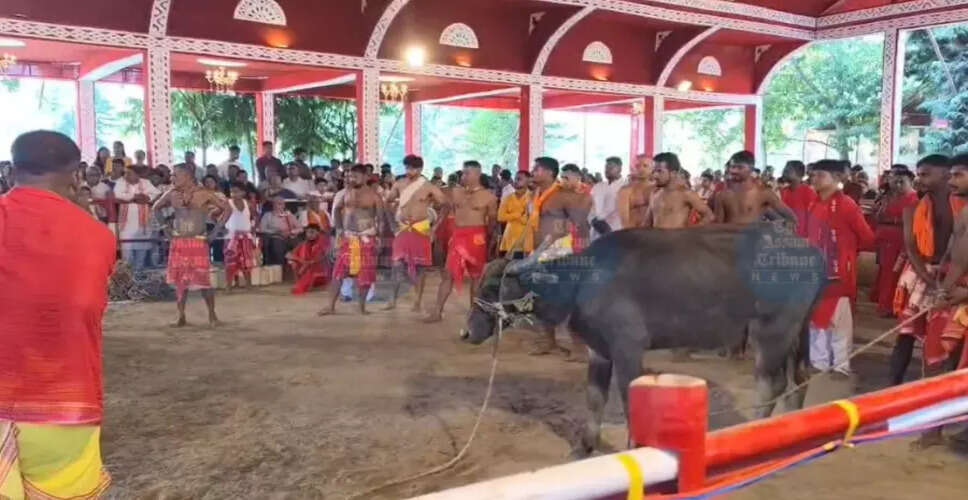

Mahabali Ritual at Billeswar Devalaya
Nalbari, Oct 20: On Tuesday, the historic Shri Shri Billeswar Devalaya in Assam's Nalbari district witnessed the sacrifice of 28 buffaloes as part of the age-old Mahabali ritual, coinciding with the observance of Maha Navami through traditional religious practices.
The ceremony commenced at 8 am and proceeded without any incidents, as confirmed by a temple representative. Out of the 40 buffaloes brought for the event, 28 were sacrificed, while the remaining 12 were set free in open fields.
According to the temple official, "The animal sacrifice ritual at Billeswar Temple concluded today. A total of 40 buffaloes were present, with 28 sacrificed and 12 released into open grounds."
Biswajyoti Barman, a priest and authority at the temple, stated that the Mahabali ritual was conducted in accordance with the shrine's rich religious traditions during Maha Navami, the ninth day of Durga Puja.
Thousands of devotees flocked to the temple for the rituals, with Barman noting that the turnout on Monday was remarkable.
In addition to buffaloes, offerings included goats, ducks, pumpkins, and sugarcane, as part of the customary rituals, Barman added.
The Mahabali ceremony is a significant aspect of Durga Puja at Billeswar Devalaya, showcasing traditions that have been maintained through generations.
This shrine is recognized as a historic Shaivite-Shakti Peeth, with its traditions tracing back to royal patronage.
Unlike many other places that observe a four-day public celebration, this temple adheres to a traditional 11-day Durga Puja schedule, commencing with invocations and rituals rooted in ancient practices.
The history of the shrine is linked to King Nagaksha, with subsequent rulers, including the Ahom kings, contributing to its growth and support.
The ritual attracted numerous devotees as temples and puja pandals throughout Assam celebrated Maha Navami with special prayers and ceremonies.