
Trader's Grueling Journey Through Flooded Himachal Pradesh
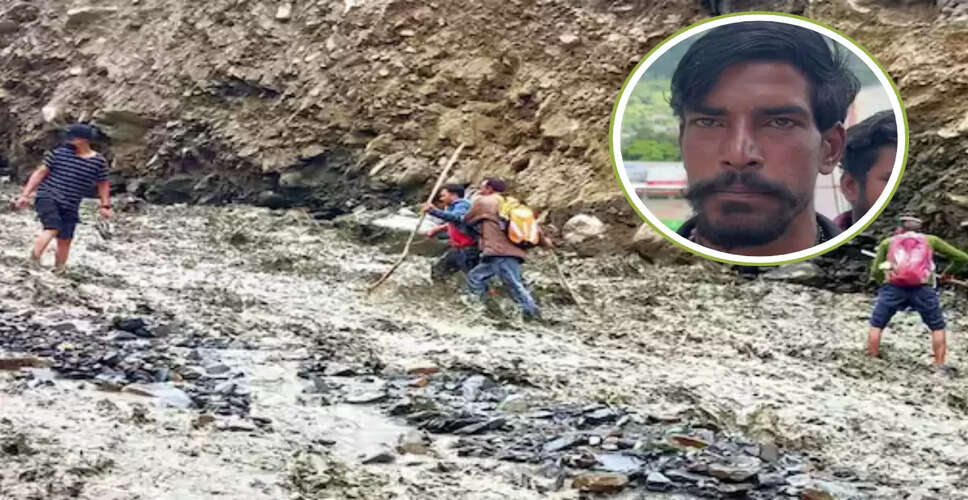
A Grueling Trek Amidst Natural Calamity
Munish Sood
MANDI: What started as a routine return from a local fair turned into a challenging ordeal for Vijay, a cloth merchant, and his twelve companions. On August 24, they found themselves stranded near Chatdu in Lahaul-Spiti when sudden flash floods obstructed their route. Faced with no alternatives, the group embarked on a daunting 130 km trek on foot, navigating through flooded streams, landslides, and fallen trees, ultimately reaching Kullu on Thursday.
“We had no other option. The streams were overflowing, vehicles were stuck everywhere, and mobile networks were down,” Vijay recounted. “We survived on minimal food, walked continuously, and managed to reach Manali in three days before finally arriving in Kullu. Assistance at the Atal Tunnel was helpful, but a fallen tree beyond Dhoondi forced us to take a perilous detour.”
This harrowing experience mirrors the broader humanitarian crisis unfolding in Himachal Pradesh, where relentless rain and landslides have isolated districts and left thousands stranded.
In Chamba, the swelling Ravi River inundated low-lying areas, eroding homes and necessitating mass evacuations. The Manimahesh Yatra, a pilgrimage that attracts thousands annually, has been halted due to washed-out roads leading to Bharmour and Salooni.
The extent of the disruption is significant, affecting areas beyond Chamba and Kullu. Hundreds of roads remain blocked across Himachal, with over 240 in Mandi, 100 in Kullu, and nearly 80 in Chamba. The crisis has been exacerbated by washed-out bridges, downed power lines, and disrupted drinking water supplies. Schools in several districts have been closed as a precautionary measure.
The tourism industry, vital to the region's economy, is suffering from both damaged infrastructure and stranded tourists. Hotels are largely empty while many travelers remain trapped in remote valleys.
Authorities have established a 24/7 control room at Sissu in Lahaul to manage rescue efforts. More than 550 tourists are currently stuck between Sissu and Keylong due to highway damage at Teling nullah. Air rescues, road clearance operations, and supply drops are ongoing, although continuous rain and unstable terrain hinder progress.
Deputy Commissioners in various districts are overseeing relief operations, with disaster response teams deployed to the most affected areas. Food supplies, tents, and medical aid are being sent to isolated villages, but access remains a significant hurdle.
Government Seeks National Calamity Status
The state government has projected losses exceeding Rs 2,600 crore across infrastructure, agriculture, and tourism since the monsoon began. During the Assembly's monsoon session, MLAs from all parties unanimously called on the Centre to classify the devastation as a national calamity and to provide a special relief package.
Deputy Chief Minister Mukesh Agnihotri stated that helicopter missions are evacuating stranded pilgrims and villagers from remote locations. He assured that rescue operations would persist “until every individual is brought to safety.”
For survivors like Vijay, the memory of their arduous trek will remain etched in their minds. “We just wanted to return alive,” he expressed, feeling exhausted yet relieved in Kullu. However, with rain showing no signs of abating, Himachal Pradesh remains on high alert, contending with washed-out highways, isolated communities, and a tense wait for the weather to improve.