
TMC Challenges Election Commission's Directive in Supreme Court Amidst Political Tensions

Political Tensions Rise in India as TMC Approaches Supreme Court
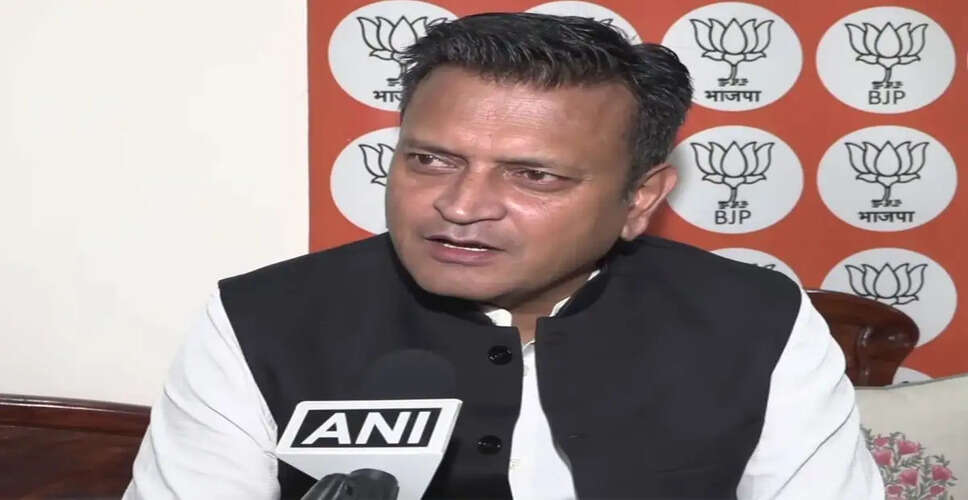
The political landscape in India has intensified as the Trinamool Congress (TMC) has taken its challenge against the Election Commission's (EC) recent directives regarding counting observers to the Supreme Court. This move has drawn sharp criticism from the Bharatiya Janata Party (BJP), with national spokesperson Ajay Alok stating that the TMC is revealing its own desperation ahead of the final vote count. Speaking to the media, Alok questioned the rationale behind TMC's ongoing legal hurdles, stating, 'After being dismissed by the High Court, they have now approached the Supreme Court. What are they thinking? Have they previously manipulated the counting process? They are exposing themselves at every turn.' He further remarked that this action by the TMC could mark an unprecedented moment in the history of the world's largest democracy.
Concerns Over TMC's Potential Boycott of Counting Process
Alok expressed concerns that the TMC might completely boycott the counting process, which he noted would be a first in Indian political history. This controversy stems from procedural changes made by the Election Commission for the counting day. Following an unfavorable ruling from the High Court, Chief Minister Mamata Banerjee's party has escalated the matter to the Supreme Court. The TMC argues that the EC's decision lacks transparency, while the BJP contends that this legal challenge is a premeditated effort to justify a potential electoral defeat.
Legal Developments and Statements from Senior Advocates
Previously, Rajya Sabha MP and senior advocate Kapil Sibal clarified that the Supreme Court not only dismissed the TMC's petition regarding the deployment of central government employees for counting but also agreed with the arguments supporting the Election Commission's circular. During a press conference in the national capital, Sibal stated that the circular explicitly directed the deployment of both central and state government employees for the counting day of the West Bengal Assembly elections. He mentioned to reporters, 'I do not comment on cases I represent in court; however, this is an exception.' In the High Court, the TMC had argued that the circular was flawed, as it indicated that the EC suspected irregularities at certain booths, necessitating the presence of a central government officer at each booth. A micro-observer appointed by the central government is already present at the booths.