
Theatrical Performance on Women’s Day Emphasizes Girls’ Education and Cultural Heritage
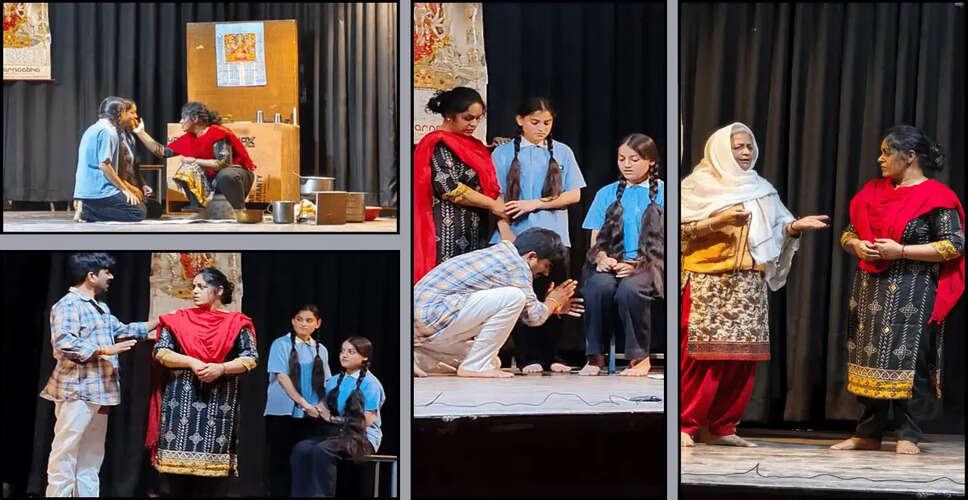
Theatre Presentation Highlights Gender Issues and Cultural Decline
Women’s Day theatre presentation highlights girls’ education, patriarchy and the fading culture of stage performances
Munish Sood
Mandi
A poignant and impactful play addressing gender inequality and the significance of girls' education was performed in Mandi to commemorate International Women’s Day, leaving a lasting impression on the audience.
Titled “Kohre Se Ladti Dhoop,” the play conveyed a compelling message against the discrimination faced by daughters compared to sons, while also exploring the hurdles women encounter in a patriarchal society. The audience was captivated by the gripping narrative and powerful performances, with many visibly moved during the show.
This theatrical event was organized by Utsav United Theatre Society in partnership with the Art Village and the Language and Culture Department of District Mandi, taking place at the Saraswati Vidya Mandir auditorium.
The narrative is based on a story by local writer Arpana Dhiman, showcasing the struggles women endure while highlighting their resilience and determination to break through societal barriers. The adaptation and direction were skillfully handled by Daksha Sharma, a prominent figure in Himachal theatre, whose sensitive approach enriched the storytelling.
The play effectively illuminated pressing social issues, including the discrimination against girls, the lack of educational opportunities for them, and the entrenched patriarchal attitudes that influence family and societal structures.
In her role as Gomti, director Daksha Sharma delivered a compelling performance that vividly depicted a woman's emotional journey against social injustice and inequality. Her powerful acting and commanding stage presence garnered widespread acclaim from the audience.
Actor Ved Kumar, portraying Gomti’s husband, contributed a realistic performance that enhanced the story's authenticity. Young talents Vanshika and Harshita, who played Munni and Guddi, impressed the audience with their natural and confident acting.
Senior artist Sarita Handa, in the role of the mother-in-law, made a significant impact with her nuanced portrayal of a traditional family figure influenced by societal expectations.
The play's narrative was guided by Jai Chauhan, who served as the Sutradhar (narrator) and also directed the music. His narration and musical direction added emotional depth to the performance, keeping the audience engaged throughout.
During the event, director Daksha Sharma emphasized the necessity of preserving theatre in today's digital age. She noted that while entertainment is easily accessible through smartphones and various OTT platforms, live theatre remains a vital medium for storytelling and social consciousness, fostering a direct connection between audiences and performers.
Sharma expressed concern over the decline of theatrical activities in Mandi, stating that performances are now primarily limited to the annual Shivratri festival, with few events occurring throughout the year.
“In such circumstances, it is crucial to continue efforts that sustain the spirit of theatre,” she remarked, stressing the need for regular theatrical events to rekindle public interest and promote cultural engagement.
She also highlighted that theatre can guide youth towards positive creative outlets, especially at a time when many are susceptible to negative influences like substance abuse.
Adding a cultural touch to the evening, young artist Alisha from Nritya Tap Academy showcased a beautiful Kathak dance performance, which was well-received by the audience.
At the end of the program, Daksha Sharma, who also serves as the secretary of the Utsav organization, expressed her gratitude to the audience and dignitaries for their presence and support for the artists.
She announced that the theatre group is currently preparing for its next production, “Twelfth Night,” a renowned play by William Shakespeare, set to be performed in July.
This event not only celebrated International Women’s Day but also underscored the ongoing significance of theatre as a medium for addressing crucial social issues and enhancing cultural expression in the region.