
The Role of CSEL in Modern Combat Survival
Introduction to Combat Ejection
For combat pilots, ejecting from an aircraft marks the start of a new battle rather than the conclusion of a mission. In the aftermath of a recent incident involving a US Air Force F-15E Strike Eagle near Isfahan, the immediate focus shifted to survival for both the pilot and the Weapons System Operator (WSO). Once they landed in hostile territory, their training would instinctively kick in. This is where the Survival, Evasion, Resistance, and Escape (SERE) doctrine becomes crucial. The US Air Force has designed this doctrine specifically for situations like these, equipping aircrew to navigate enemy lines, evade detection, and endure until rescue arrives. However, in contemporary warfare, survival hinges not only on training but also on advanced technology.
Understanding CSEL — The Lifeline for Survivors
What Is CSEL — The ‘Invisible Lifeline’
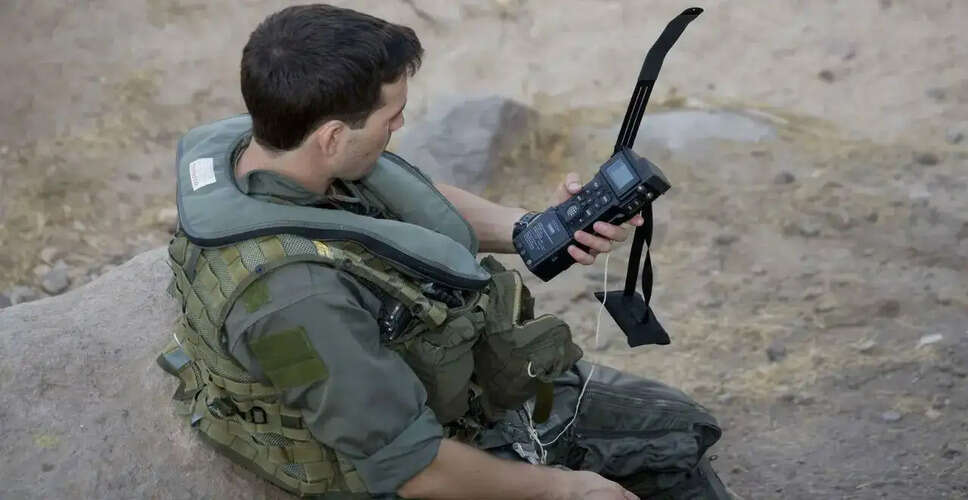
At the heart of survival operations is the AN/PRQ-7 Combat Survivor Evader Locator, commonly referred to as CSEL. This handheld survival radio, utilized by US and NATO forces, is often likened to a global emergency response system for downed aircrew. Its primary strength lies in its discreet functionality. Unlike conventional radios that continuously transmit and can reveal a user's location, CSEL communicates through short, encrypted bursts. These signals utilize satellite systems like SARSAT and Ultra High Frequency (UHF) channels, allowing for two-way communication while minimizing the risk of detection — a vital advantage in environments where enemies may employ sophisticated tracking and jamming technologies.
Operational Mechanics of CSEL
How It Works In Combat Conditions
The design of CSEL focuses on reducing exposure. It sends GPS-based location data in pre-set bursts instead of continuous signals, making it challenging for adversaries to pinpoint the source. Additionally, it incorporates anti-spoofing features and encrypted messaging protocols, ensuring that only authorized personnel can decode the information. Furthermore, the system includes 23 pre-programmed encrypted messages, enabling pilots to relay status updates — such as injuries or the need for extraction — without lengthy transmissions. This combination of precision and brevity is particularly effective in contested airspaces like that of Iran.
Integrating SERE Training with Technology
SERE Training Meets Technology
While technology plays a significant role, the downed crew must also rely heavily on SERE protocols, which emphasize concealment, avoiding populated areas, and careful movement to evade detection by both military and civilian observers. At the same time, they must maintain radio silence while staying connected with rescue teams. CSEL effectively bridges this gap, allowing communication without compromising stealth, acting as a digital shield. This balance between invisibility and connectivity is essential in modern combat search and rescue missions.
Safe Extraction Strategies
Extraction Without Exposure
The CSEL system has been pivotal in enabling rescue teams to locate and extract crews during various missions. By providing accurate yet discreet location data, it allows rescuers to strategize operations without alerting enemy surveillance. In high-risk environments, where every signal can be monitored, this capability can be the deciding factor between a successful recovery and capture.
The Evolving Landscape of Warfare
The Bigger Picture
The F-15E incident highlights a significant transformation in warfare. Survival now encompasses not just endurance or concealment but also the management of information. In a battlefield filled with sensors, satellites, and intelligence-gathering systems, even a brief transmission can be perilous if not carefully controlled. Technologies like CSEL signify this evolution, enabling presence without visibility and communication without exposure. For the pilots on the ground, it represented more than just equipment; it was the critical distinction between isolation and rescue.