
The Rising Threat of GPS Interference in Modern Warfare
The Impact of Electronic Warfare on Navigation Systems
Electronic disruption of satellite navigation systems is increasingly becoming a significant challenge in contemporary conflicts. As military operations increasingly depend on drones, precision-guided missiles, and digital navigation, tactics such as GPS jamming and spoofing are being employed by armed forces to mislead enemy systems. However, these tactics are also affecting civilian navigation, disrupting commercial shipping, aviation, and global trade routes. Recent events in the Middle East illustrate how this form of warfare is escalating and posing serious risks beyond combat zones.
Navigation Systems Disrupted Following Iranian Strikes
After the initial US-Israeli strikes on Iran, vessels navigating the Gulf encountered severe navigation issues within a day. Maritime tracking data revealed that numerous ships appeared to be in impossible locations, including airports and even deep within Iranian territory. These anomalies were attributed to GPS interference, specifically jamming and spoofing attacks aimed at satellite navigation signals. A commercial shipping intelligence firm reported that over 1,100 vessels operating near the UAE, Qatar, Oman, and Iran faced navigation disruptions on February 28. Although these ships were not the primary targets, the electronic interference severely impacted their navigation systems, leading to confusion in one of the world's busiest shipping areas.
Understanding GPS Jamming and Spoofing
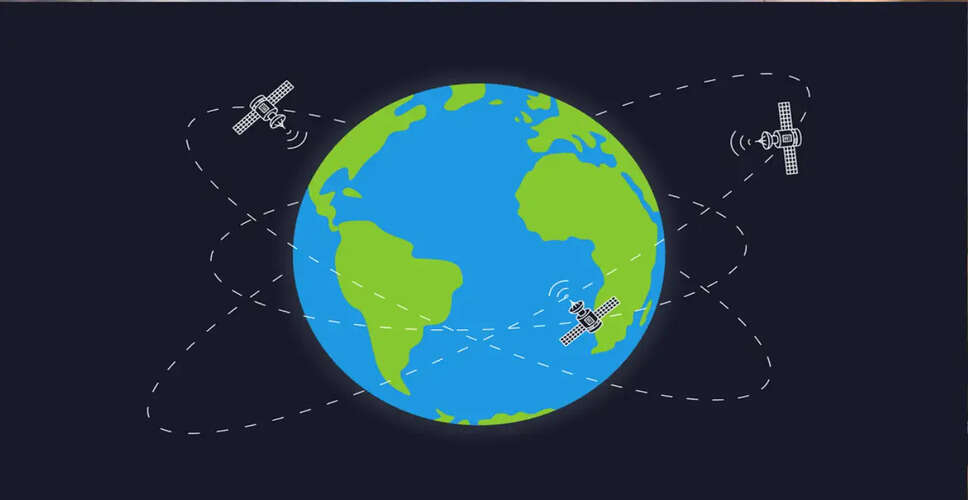
Satellite navigation systems like GPS rely on weak signals transmitted from satellites located approximately 20,000 kilometers above the Earth. These signals are vulnerable to interference. Two main techniques are commonly used in electronic warfare:
- GPS Jamming: High-power radio signals are sent on the same frequency as satellite navigation signals, overwhelming the legitimate signals and causing navigation receivers to lose their satellite connection.
- GPS Spoofing: False satellite signals are transmitted, tricking navigation systems into believing they are receiving valid data, resulting in incorrect position reporting.
Both methods are frequently employed in conflict zones to disrupt GPS-guided drones, missiles, and surveillance systems. Unfortunately, civilian infrastructures that depend on these signals, such as shipping, aviation, and telecommunications, often find themselves caught in the electronic crossfire.
Disruption of Marine Traffic in the Strait of Hormuz
One immediate consequence of GPS interference has been the disruption of maritime traffic in the Strait of Hormuz, a crucial energy route responsible for about 20% of global oil and gas exports. Accurate navigation is vital due to the narrow and congested nature of the channel. Analysis revealed that GPS interference significantly hampered shipping movements, leading to situations where tankers had to reverse course, vessels temporarily disabled tracking systems, and maritime monitoring systems lost sight of ship locations. When ships turn off or lose their Automatic Identification System (AIS), which broadcasts their location, speed, and direction, the risk of collisions at sea increases dramatically. A maritime analyst warned that the situation is perilous, as the AIS is essential for collision avoidance.
Escalating Incidents of Interference
Data indicates that GPS interference incidents surged sharply following the onset of the Iran conflict. Reports showed:
- 21 clusters of GPS interference detected within the first 24 hours of the war.
- 38 clusters identified just one day later.
Another maritime analytics firm reported even higher figures, with 1,735 GPS interference incidents affecting 655 vessels between the start of the war and March 3, each lasting an average of 3–4 hours. Daily incidents rose from around 350 at the conflict's onset to 672 by March 2, creating clusters of vessels appearing in identical positions on tracking maps.
A Growing Global Concern
While GPS interference is not a new issue, experts note that its frequency and scale have increased significantly since the Russian invasion of Ukraine, which marked the first large-scale deployment of GPS-guided drones in combat. Experts now describe the jamming and spoofing of satellite signals as an endemic problem in several conflict-adjacent regions, including the Baltic Sea, Black Sea, and parts of the Middle East. The simplicity and effectiveness of these tactics make them appealing for military use, but they also disrupt civilian navigation systems that were not designed to cope with such interference.
Aviation Sector Also Affected
The aviation industry is experiencing similar challenges. For instance, a plane carrying a prominent official encountered GPS jamming while landing in Bulgaria, forcing pilots to rely on manual navigation. Reports indicate that incidents of GPS signal loss affecting aircraft surged by 220% from 2021 to 2024, with pilots experiencing various system failures during interference events, such as maps drifting from the actual flight path and incorrect altitude data triggering false warnings.
Why GPS Signals Are Vulnerable
Multiple global navigation satellite systems exist today, including GPS, Galileo, BeiDou, and GLONASS. Most civilian navigation signals are open and unencrypted, making them susceptible to manipulation. Additionally, the weak signal strength, due to the vast distances from orbit to Earth, allows even simple ground transmitters to overpower them.
Returning to Traditional Navigation Methods
Modern vessels heavily depend on automated systems reliant on satellite navigation. However, when GPS signals fail, crews must revert to traditional navigation techniques, such as radar navigation, inertial sensors, visual watchkeeping, and celestial navigation. Many younger mariners lack experience with these methods, akin to younger drivers unfamiliar with manual transmission vehicles.
Safety Risks at Sea
Beyond navigation issues, GPS interference can jeopardize safety equipment. Many modern maritime safety systems depend on satellite positioning to locate individuals who fall overboard. If GPS signals are compromised, the transmitted location could be inaccurate, complicating rescue operations. Experts warn that the worst-case scenario could involve a ship being attacked or sinking during the ongoing conflict, with emergency beacons transmitting incorrect coordinates due to GPS interference, leading to dangerous delays in rescue efforts.
A New Era of Electronic Warfare
Experts assert that the conflict in the Middle East is becoming a significant real-world test of the resilience of global navigation systems when satellite positioning becomes unreliable. While technological solutions exist, such as anti-spoofing receivers and encrypted navigation signals, upgrading global fleets will require considerable time and investment. Researchers are also exploring alternative navigation technologies that utilize quantum sensors, although these systems are still years away from widespread implementation. For decades, GPS has been a cornerstone of modern life, but experts warn that this era may be coming to an end.