
The Rising Human Toll of the Ongoing Conflict in the Middle East

Understanding the Human Cost of War
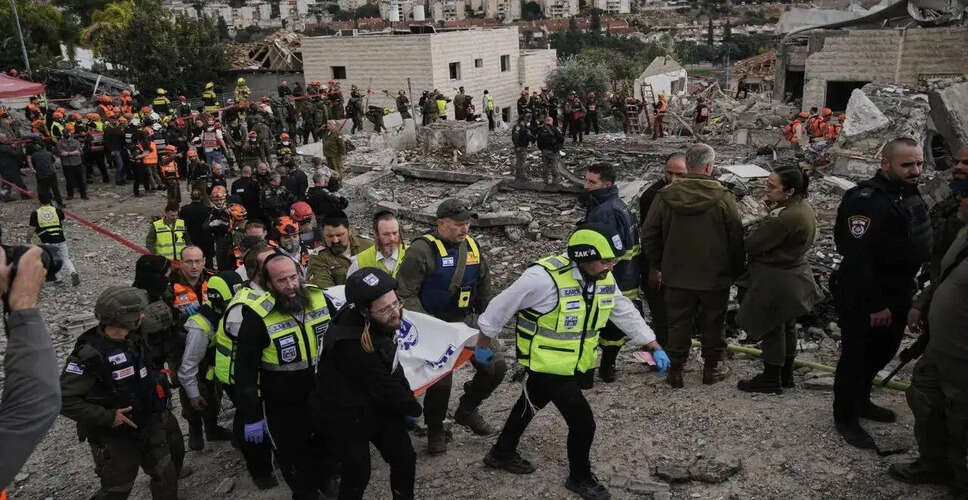
Determining the total human cost of the ongoing conflict is challenging. Since the US and Israeli strikes on Iran began on February 28, casualty reports have emerged from various sources, including human rights organizations, local officials, military updates, and humanitarian groups. These figures often differ, overlap, and many remain unverified. However, they collectively indicate a significant scale of loss. In just a few weeks, thousands have died across Iran, Lebanon, Iraq, and the Gulf as the conflict has expanded beyond its initial boundaries.
Iran: The Center of Casualties
Iran has reported the highest number of casualties, though these figures are highly disputed. A US-based rights organization, HRANA, estimates that 3,492 individuals have lost their lives, including 1,574 civilians and at least 236 children. This data is gathered from field reports, medical sources, and publicly available information. Conversely, the International Federation of Red Cross and Red Crescent Societies estimates around 1,900 deaths and 20,000 injuries, highlighting the difficulties in accurately tracking casualties in active conflict zones. This discrepancy raises the question of whether the true toll lies somewhere in between or exceeds both estimates.
Lebanon: A New Front with Significant Civilian Losses
In Lebanon, the conflict has escalated into a sustained front, with authorities reporting 1,268 fatalities due to Israeli strikes since early March, including at least 124 children. The fighting has also severely impacted armed groups, with over 400 Hezbollah fighters reportedly killed, although it remains unclear if these figures are included in the official count. Additionally, three United Nations peacekeepers from Indonesia have lost their lives in separate incidents, underscoring that even non-combatants are affected by the escalation.
Iraq and the Gulf: The Expanding Impact
The war's effects are also evident in Iraq and the Gulf states. Iraqi officials report at least 105 deaths, encompassing civilians, militia members, Kurdish fighters, and security personnel. This diversity reflects Iraq's complex security environment, where various factions operate in overlapping territories. In the Gulf, while the numbers are smaller, they carry significant implications:
- United Arab Emirates: 10 fatalities from Iranian attacks
- Kuwait: 7 deaths, including security personnel
- Bahrain: 2 fatalities, including a civilian contractor
- Oman: 2 killed in a drone strike, plus one related to a tanker incident
- Saudi Arabia: 2 civilians killed in a projectile strike
These incidents indicate a shift in the conflict's dynamics, as it now affects multiple nations, even those not directly involved in combat.
Israel, the West Bank, and Beyond
Within Israel, missile attacks from Iran and Lebanon have resulted in 19 civilian deaths, according to emergency services. The Israeli military has reported the loss of 10 soldiers during operations in southern Lebanon.
In the West Bank, four Palestinian women were killed due to an Iranian missile strike, while four others died in Syria when a missile struck a building in Sweida on the conflict's opening day. Even nations farther from the frontline have not remained untouched, as evidenced by the death of a French soldier in northern Iraq during a drone attack, highlighting the increasing exposure of international forces.Casualty Figures, Uncertainty, and the Human Cost
When viewed collectively, these figures tell a compelling story, albeit an incomplete one. Many casualty counts lack independent verification, and some may overlap or change as new information emerges. This uncertainty is a hallmark of modern warfare, where information often circulates faster than it can be confirmed. Nevertheless, one clear pattern emerges: the conflict is no longer limited to a single battlefield. Its human cost is spreading across borders, affecting civilians, soldiers, aid workers, and bystanders alike. As the conflict continues, these numbers are likely to rise, providing only a snapshot of an ever-increasing toll.