
The Rise of the Cockroach People's Party: A New Force in Indian Politics
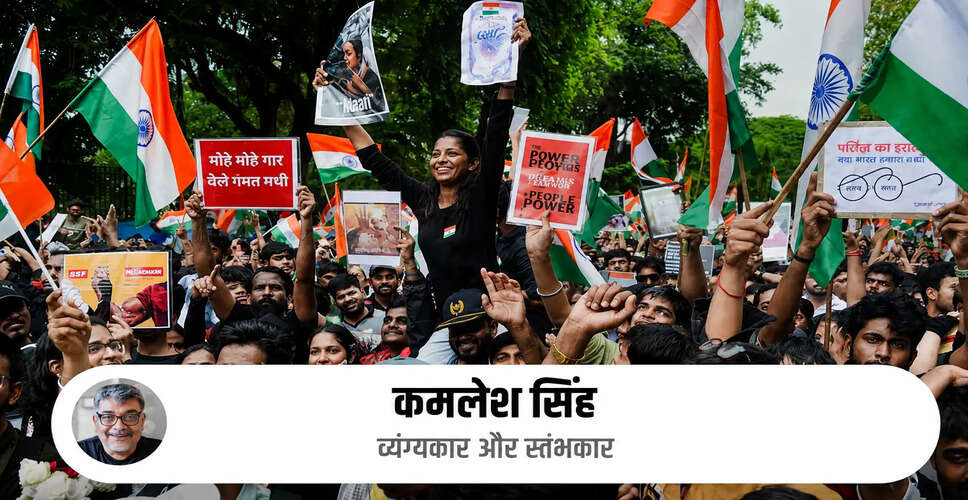

Introduction to the Cockroach People's Party
The Cockroach People's Party (CJP), led by its founder Abhijit Deepke, has recently transformed the political discourse in India. Initially focused on issues like education and employment, this youth movement has gained significant traction in national politics. Major protests at Jantar Mantar and subsequent political developments have compelled parties like the BJP and Congress to reassess their influence and credibility among young voters.
CJP's Emergence in Political Discourse
The CJP began as a satirical political initiative on social media, with Abhijit Deepke emerging as its prominent figure. What started as online discussions quickly escalated into street protests. The party has centered its campaign around critical issues such as examinations, recruitment, education, and employment.
Protests associated with CJP in June and July 2026 garnered considerable attention. Deepke demanded accountability from the government regarding student issues and emphasized prioritizing youth-related matters. Following the July protests at Jantar Mantar, discussions about the movement's political strength intensified.
Challenges for BJP and Congress
The rise of CJP is significant as it focuses on youth issues rather than traditional caste or party-based politics. Deepke stated in an interview that the movement aims to hold politicians accountable for neglecting youth and to bring education and employment to the forefront of the political agenda.
This shift poses a challenge for established political parties. If young voters express their discontent through non-traditional platforms, maintaining communication and trust with them becomes crucial for major parties like the BJP and Congress.
Congress Questions CJP's Intentions
Amid CJP's growing popularity, questions have arisen within Congress regarding its nature and political background. Some party leaders expressed concerns that the movement could influence votes in favor of a particular political party. However, no public evidence has emerged to suggest that CJP is controlled by any political entity.
Deepke has publicly stated that he was previously associated with AAP but later moved to the U.S., asserting that CJP is not affiliated with any political party. He describes it as an independent youth movement.
Political Parties Eye CJP
The impact of the CJP movement has sparked interest among various political leaders. Reports indicate that both factions of Shiv Sena in Maharashtra have attempted to reach out to Deepke, signaling that political parties are not overlooking this new youth influence.
However, many questions remain regarding CJP's political direction. Deepke has previously indicated that the organization's goal may not necessarily be to contest elections but to pressure political parties to prioritize youth issues.
Funding and Organizational Transparency
For any new political or activist platform, transparency in funding and organizational structure is crucial. Questions have been raised about how CJP operates financially and organizationally. Reports suggest that CJP claims a large number of online supporters, while its core team is relatively small.
Addressing these questions will be vital for the movement's future direction. If CJP aims to remain active on a national level, it may need to provide greater clarity regarding its organization, funding, and decision-making processes.
Youth Issues Take Center Stage
The emergence of CJP raises a significant question: Are traditional political parties giving enough importance to youth priorities? Issues like education, government recruitment, employment, and examination systems directly affect a large youth demographic.
Thus, the CJP movement has evolved beyond just being a story of an organization. It sends a clear message to political parties that young voters no longer want to be mere topics of discussion during elections; they demand ongoing responses and actions regarding their issues.
In summary, while CJP has not completely altered the political landscape in India, it has undeniably brought youth issues to the forefront of political debate. The challenge now for all parties, including the BJP and Congress, is to establish trustworthy communication with young voters and present a solid political agenda on education, employment, and recruitment.