
The Rights of Protesters vs. Police Safety: A Call for Balance in Democracy

The Dilemma of Protest and Violence
In a democratic society, the right to protest is fundamental. However, when such demonstrations escalate into violence, resulting in injuries to law enforcement officers, it raises a critical question: who will voice the pain of those injured in the line of duty? On July 20, during the 'Chalo Parliament' march organized by the Cockroach People's Party (CAZPA), family members of injured Delhi police personnel and the Delhi Police Federation conveyed a unified message. They emphasized that discussions in Parliament and across the nation should not only focus on the injuries of protesters but also acknowledge the suffering of police officers harmed while performing their duties.
Personal Accounts from the Frontline
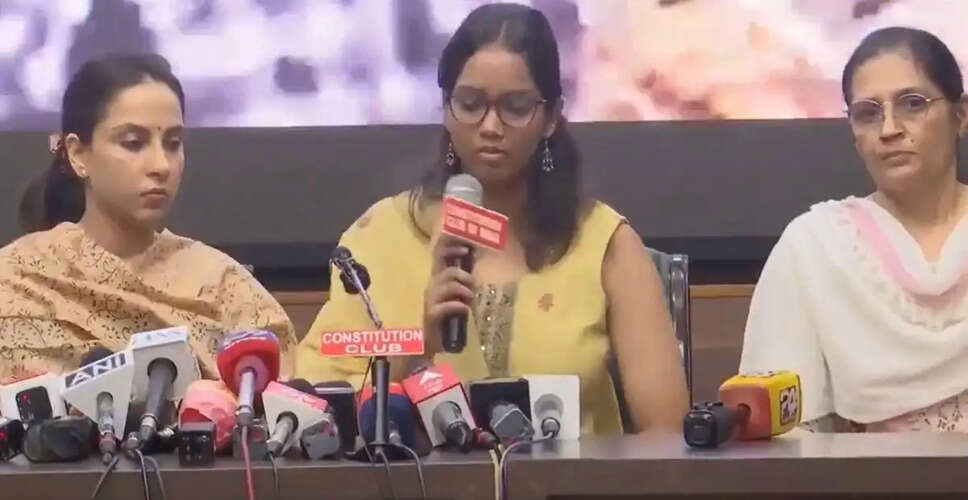
At a press conference held at the Constitution Club of India, relatives of injured police officers shared harrowing experiences from the night of violence. The wife of an Assistant Police Commissioner, Upneet Kaur, described that night as deeply traumatic for her family, particularly for their two-year-old daughter. She recounted how the police repeatedly urged the crowd to maintain peace, only to be met with stones, bottles, sandals, and other projectiles. Kaur highlighted that behind every uniformed officer is a family whose concerns and suffering often go unnoticed in public discourse.
The Need for Broader Discussion
Families of the injured officers pointed out that public discussions have predominantly centered on police actions and allegations of misconduct, while the hardships faced by officers and their families have been largely overlooked. They expressed the agony of waiting for calls from hospitals, witnessing their bloodied loved ones return home, and seeing their suffering ignored on social media, which felt like a second tragedy.
Defending Police Actions
In this context, the Delhi Police Federation staunchly defended police actions. Senior member and retired ACP K.P. Kukreti stated that when a crowd turns violent and becomes an unlawful assembly, every individual in that crowd is held accountable under the law. He explained that if a crowd breaches barricades and attacks with stones, sticks, and other objects, while ignoring warnings issued under Section 163, the police have limited options to maintain order.
The Responsibility of Law Enforcement
Kukreti made it clear that allowing protesters to reach the Parliament premises would not only signify a serious lapse in security but could also lead to international embarrassment for the country. He noted that in such situations, the senior officer present must make critical decisions to protect lives, civilians, and public property. At that moment, neither the governor, the chief minister, nor the home minister is present; the responsibility lies solely on the officer on duty.
A Call for Accountability
The Delhi Police Federation raised a significant question. Kukreti asked that if police are accused of attacking protesters, it should also be clarified who was responsible for the injuries sustained by the 128 police officers during the violence. Who is accountable for the blood of those officers who were on duty to protect the democratic framework and the Parliament?
Balancing Rights and Responsibilities
While the right to dissent and protest is undeniably crucial in a democracy, no movement should be permitted to devolve into violence. If protesters break the law, assault security forces, and challenge the safety of constitutional institutions, questioning only police actions presents a biased perspective. It is equally important to ask who crossed the line of peaceful protest, who injured the police officers, and who will take responsibility for the pain of their families. A balanced democracy will be one that respects the rights of protesters while equally valuing the honor, safety, and sacrifices of police officers standing to uphold the law.