
The Political Fallout of the Iran Conflict: Implications for the 2026 Elections

The Domestic Impact of Foreign Policy Decisions
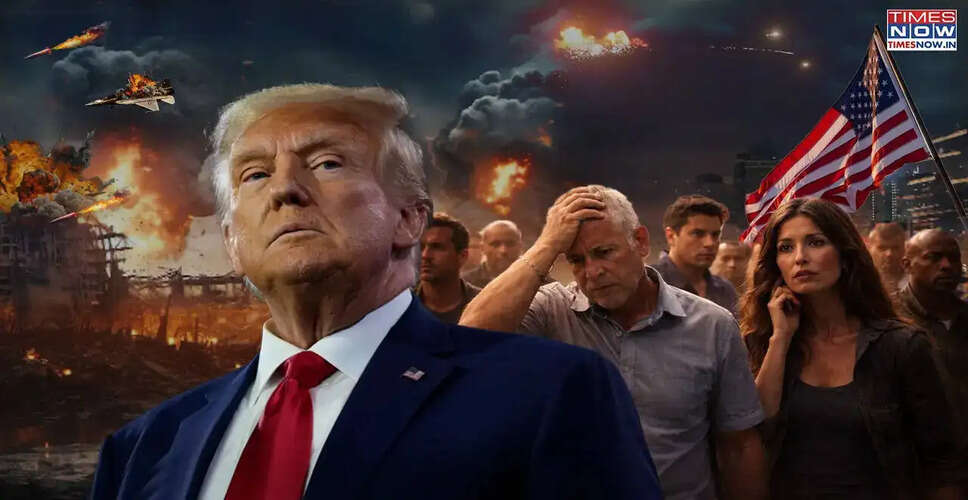
What initially appeared to be a robust display of American influence abroad is now spiraling into a potential political crisis domestically. The ongoing conflict in Iran, which was once portrayed as a strategic move to reaffirm U.S. dominance globally, is increasingly causing unrest within the nation. Beneath the fragile ceasefire lies a different struggle, one that is not fought with weapons but rather through public opinion, economic pressures, and political narratives. For Donald Trump and the Republican Party, the stakes are rising beyond international relations, manifesting in rising gas prices, grocery costs, and shifting polling figures, all just months before the pivotal 2026 midterm elections.
Warning Signs for Republicans: Declining Approval Ratings
Cracks in the Numbers: A Warning Sign Republicans Can’t Ignore
Early indicators of trouble are becoming apparent and are difficult to overlook. Trump's approval ratings have noticeably declined since the escalation of the conflict, signaling growing unease among the electorate. Historically, midterm elections serve as a referendum on the current president's performance, and a drop in approval ratings often leads to electoral challenges.
This decline is particularly alarming for Republicans as it is occurring in crucial swing states, the battlegrounds that could determine congressional control. For a party relying on momentum, the timing is unfortunate.
The Identity Crisis of 'America First'
The ‘America First’ Dilemma
At the core of this political turmoil lies a significant issue: identity. Trump's political identity has been built on the promise of prioritizing domestic concerns and steering clear of prolonged foreign conflicts. The slogan “America First” has resonated with many voters who are weary of endless overseas wars. However, the Iran conflict is beginning to blur these lines. For numerous voters, especially independents, this war feels like a deviation from that commitment. The perception of Trump as an outsider challenging interventionist policies is shifting towards that of a wartime leader embroiled in a complex and indefinite conflict. This subtle shift carries substantial political implications; once a brand loses its clarity, regaining voter trust becomes increasingly challenging.
Economic Factors as the Real Deciding Force
The Real Battlefield: The American Economy
While international strategy dominates the headlines, it is the economy that may ultimately dictate the political landscape. Wars rarely influence elections based solely on military outcomes; their effects are felt through everyday expenses, fuel prices, inflation, and financial uncertainty. These economic pressures are already beginning to take their toll. Rising oil prices are affecting transportation costs and straining household budgets. Market volatility and concerns about prolonged instability are on the rise.
For voters, the equation is straightforward: conflict abroad is making life more expensive at home. In an election cycle, this connection can be pivotal.
Democrats Capitalize on the Situation
Democrats Seize the Narrative
Recognizing an opportunity, Democrats are acting swiftly and strategically. Their messaging is clear and designed to resonate: the war is unnecessary, avoidable, and costly. Campaign narratives are increasingly linking Republican leadership to rising fuel prices, economic anxiety, and strategic blunders. In midterm elections, where voter attention is often limited and messaging needs to be sharp, this approach could prove highly effective. Economic hardship is tangible and does not require extensive explanation; it is felt directly by the electorate. If this narrative gains traction, it could significantly alter the electoral landscape.
Internal Divisions Within the Republican Party
A Party Divided
The Iran conflict is not only testing Trump's leadership but also revealing divisions within the Republican Party. While some GOP leaders have supported the administration's actions, others, particularly younger and more populist figures, are expressing doubts. Questions are emerging regarding the long-term strategy, associated costs, and the absence of a clearly defined objective. This internal rift poses risks; midterm elections often depend on voter turnout, and a divided base can dampen enthusiasm. Even a slight decrease in voter mobilization can have significant consequences in closely contested races.
The Uncertainty of the Conflict's Outcome
The Problem With No Clear Endgame
Perhaps the most politically perilous aspect of the conflict is its uncertainty. Voters are more inclined to support military action when there is a clear objective and a visible path to success. In the absence of such clarity, support tends to wane over time. Currently, many Americans are unconvinced about what success in this conflict entails. Without a tangible outcome to reference, the war risks being characterized not by its goals but by its costs, which are accumulating across economic, political, and strategic dimensions.
Long-Term Consequences of the Conflict
Even Peace May Not Undo the Damage
Even if the war concludes, whenever that may be, it might not be sufficient to reset the political narrative. Economic repercussions, particularly rising fuel prices, tend to linger. More critically, once voter perceptions are formed, they are challenging to reverse. If the conflict becomes synonymous with financial strain and strategic ambiguity, that association could persist long after the ceasefire. In this regard, the political ramifications of the Iran conflict may outlast the conflict itself.
A Crucial Test Ahead of the 2026 Elections
A Defining Test Ahead of 2026
The Iran war has transformed into a challenge that extends beyond foreign policy. It is now a test of leadership, messaging, and political resilience. It is reshaping Trump's core narrative, straining the Republican coalition, and providing Democrats with a compelling line of attack. As the situation continues to evolve overseas, the real battleground may ultimately be at home, in the minds of voters preparing to cast their ballots in 2026. In American politics, wars are not solely fought on distant battlefields; they are won or lost at the ballot box.