
The May Fourth Movement: A Pivotal Moment in Chinese History

Understanding the May Fourth Movement
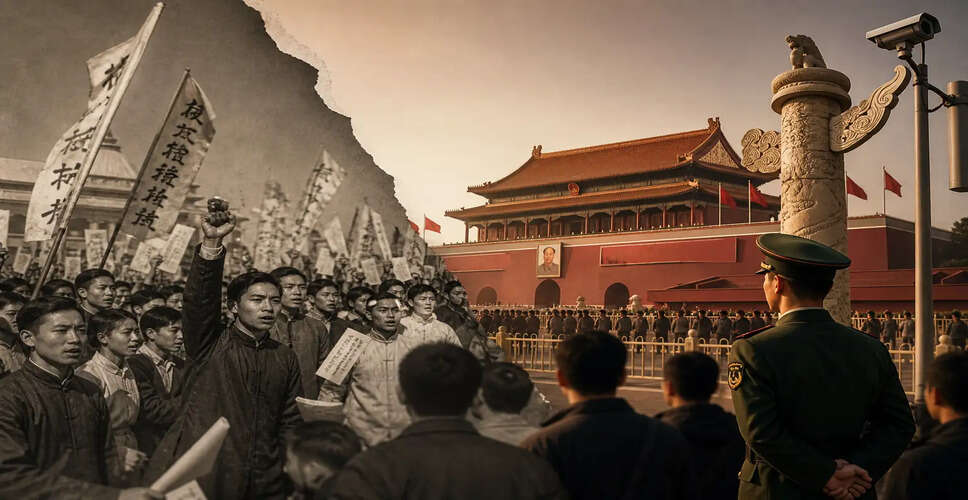
On June 3, 1919, a significant protest erupted, involving around 3,000 students from various prominent universities across China. While it may seem minor at first glance, this event is now recognized as the May Fourth Movement, a pivotal chapter in Chinese history. The catalyst for this demonstration was the signing of the Versailles Treaty, which was intended to return control of German territories to China. However, due to prior political negotiations, Japan retained control over Shandong province, sparking outrage among students. Yet, the roots of the May Fourth Movement extend beyond this diplomatic setback; it reflected broader discontent with both domestic and foreign policies.
Influenced by the New Culture Movement, students adopted slogans like “Mr. Science” and “Mr. Democracy,” expressing their opposition to the autocratic governance and Confucian values upheld by the older generation. This social upheaval culminated in a general strike in Shanghai later that summer.
To grasp the context of this protest, it is essential to recognize that the Qing Dynasty had been dismantled just a few years prior. The Republic of China, which succeeded it, struggled with numerous challenges, particularly its reliance on local warlords. The government was unable to assert its national interests in international affairs, leading to widespread dissatisfaction that fueled the movement in 1919. Notably, this protest was distinct in that it was not affiliated with any political parties or organizations, as the Communist Party of China (CPC) had not yet been established, emerging two years later in 1921. Chen Duxiu, a prominent figure in the May Fourth Movement, played a crucial role in founding the CPC, linking the party to the events of that summer.
In a short time, the CPC claimed the events of 1919 as part of its narrative, with many publications highlighting the movement's role in awakening Chinese national consciousness and laying the groundwork for the CPC's formation. Mao Zedong referred to the May Fourth Movement as a “chief landmark” in the party's history. For China, this period marked the realization of the aspirations of its youth, eventually leading to the establishment of the People’s Republic of China in 1949.
This situation exemplifies how historical narratives can be manipulated to create a misleading portrayal of origins. The CPC has utilized the May Fourth Movement to illustrate the inevitability of communism's rise. In educational settings, students are taught a linear narrative connecting the protests of 1919 to the establishment of communism in 1949, while alternative perspectives from that era remain largely overlooked.
It is important to note the discrepancies between the values championed by the May Fourth Movement and the current policies of the Chinese government. The movement advocated for public discourse, critical thinking, and freedom of expression—principles that are frequently disregarded by contemporary authorities. Although government officials often reference the May Fourth slogan in their speeches, they simultaneously exhibit hostility towards public demonstrations, indicating a strong presence of censorship in society.
Moreover, Tiananmen Square, the birthplace of the May Fourth Movement, is now under government control and is used for propaganda purposes. The tension between the ideals of the May Fourth Movement and the actions of the authorities has not gone unnoticed by activists, as evidenced by the “New May Fourth Manifesto” published by protesters in 1989. This highlights that the May Fourth Movement was fundamentally opposed to authoritarianism, characterized by open dialogue and the free exchange of ideas. Thus, the CPC's appropriation of this movement serves to distort public understanding of history.