
The Legacy of Silvio Gazzaniga: Creator of the FIFA World Cup Trophy
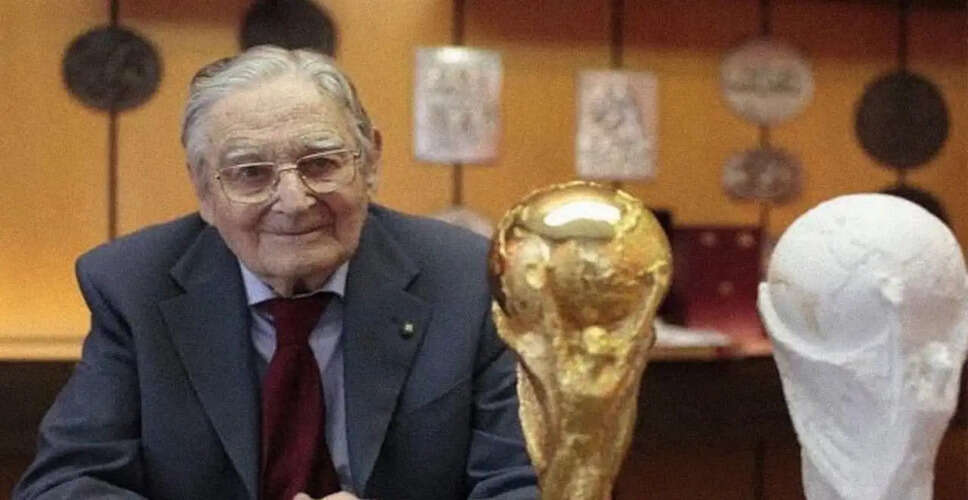

A Tribute to Silvio Gazzaniga
Silvio Gazzaniga, an Italian sculptor, may not be widely recognized among casual football enthusiasts, yet his artistic contributions are celebrated by top players every four years.
As Argentina, the reigning champions, face Spain in the thrilling FIFA World Cup 2026 Final at MetLife Stadium in New Jersey, the focus of the football community is not only on the match but also on the prestigious trophy that Gazzaniga designed over fifty years ago. One of these teams will emerge victorious and claim the esteemed award.
Gazzaniga passed away before witnessing France and Argentina secure their World Cup victories in 2018 and 2022, respectively, but his legacy continues to inspire both fans and athletes.
The Creation of an Iconic Trophy
Silvio Gazzaniga was a talented sculptor whose journey to crafting the FIFA World Cup trophy began in 1971. Prior to this, he created several notable pieces that refined his skills as a goldsmith and artist.
When FIFA decided to retire the Jules Rimet Trophy, originally designed by French sculptor Abel Lafleur, they approached Gazzaniga for a new trophy that would symbolize the pinnacle of football. Competing against numerous entries, Gazzaniga worked diligently to create a design that deviated from the conventional, static forms of previous awards.
His concept of two victorious athletes lifting the trophy in a dynamic spiral distinguished his design from 53 submissions from seven countries, securing his place in football history and shaping the visual identity of the FIFA World Cup.
The Design Details
The trophy features two bands of green malachite at its base, contrasting beautifully with the shimmering 18-carat gold used for the figures of the athletes and the globe. Gazzaniga's choice of materials was intentional, aiming to balance the raw, natural quality of the semi-precious stone with the ethereal energy of the gold figures.
The original Jules Rimet Trophy, named after the former FIFA President who championed the tournament, was crafted from gold-plated sterling silver and depicted Nike, the Greek goddess of victory. It was awarded from the inaugural tournament in 1930 until 1970.
The Evolution of the FIFA World Cup Trophy
Unlike its predecessor, Silvio Gazzaniga's trophy does not carry a specific name beyond its official title, the 'FIFA World Cup Trophy.' This new design was intended to embody the spirit of the game rather than honor a single individual.
Unveiled in 1971, the trophy was first lifted by West Germany after their victory in the 1974 FIFA World Cup against the Netherlands in Munich, with captain Franz Beckenbauer being the first to raise it.
Since then, several nations have claimed the FIFA World Cup trophy designed by Gazzaniga, including Argentina (1978, 1986, 2022), Brazil (1994, 2002), Italy (2006), France (1998, 2018), and West Germany (1990, 2014).
The Anticipation of the Final
At MetLife Stadium, Argentina aims to defend their title and secure a fourth championship, while Spain hopes to end a 16-year wait for World Cup glory.
As excitement builds in the stands and on the field, both teams understand that the winner will not only make history but also have their nation's name inscribed on the iconic trophy.