
The Legacy of Prafulla Govinda Baruah: A True Guardian of Journalistic Integrity
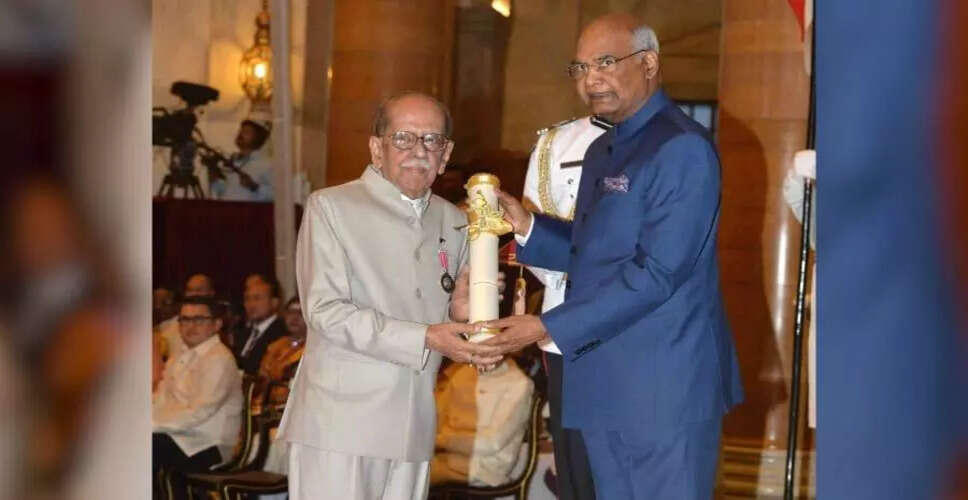
A Remarkable Journey in Journalism
Around 2011-2012, television was thriving, and I was a well-known TV anchor, full of innovative ideas and ambitious show concepts. One of my projects was a people's choice program that involved online nominations, voting, and several elimination rounds, culminating in winners from various categories, including singers, athletes, environmentalists, and notably, the most influential individuals in Assam.
To my surprise, one of the nominees was Prafulla Govinda Baruah. I vividly recall the thrill of announcing the nominations live, encouraging viewers to cast their votes. The following morning, I received a call from Prafulla Govinda Baruah himself. His tone was gentle and somewhat apologetic as he requested, "Could you please remove my name from the list?"
There was no debate or justification, just a humble request. Out of respect, I could only respond with a soft, "Yes Sir."
I promptly took his name off the list without informing anyone, including my editors or management. However, that single phone call left a lasting impression on me.
In the early nineties, I had a brief stint at The Assam Tribune as a young journalist, absorbing the dynamics of a newsroom steeped in history. My interactions with Prafulla Govinda Baruah were minimal; he was not the type of proprietor to dominate the newsroom or announce his presence. Yet, over the next 35 years, as I worked in various media organizations across Assam and nationally, I grew to admire him profoundly, especially when comparing him to other newsrooms.
From a close perspective, the newsroom at The Assam Tribune exuded a unique gentleness in its management style. It was a place where journalists were not haunted by fear or pressure, and the editor's office was not an extension of political influence, except for a brief period in the early nineties.
However, the broader narrative was even more remarkable.
Throughout my extensive career in media, where owners often seek proximity to power and editorial lines bend under political influence, I observed how rare it was for a media owner to deliberately distance themselves from authority. Prafulla Govinda Baruah exemplified this by remaining completely detached from Dispur. He never permitted any government to encroach upon his independence, nor did he seek favors or protection. He refrained from trading access for influence.
In doing so, he became an enigma. At a time when media owners were increasingly seeking the spotlight, he chose to remain in the background. While others flaunted their wealth and connections to the ruling powers, he upheld a dignified distance and led a simple life. He neither preached nor moralized; he simply embodied his principles. This principle—keeping power at bay while embracing simplicity—made him perhaps the last true guardian of journalistic integrity in Assam.
Although I left The Assam Tribune long ago, like many who ventured into other media realms, I often found myself measuring media ethics against the silent standard set by Prafulla Govinda Baruah. Most fell short.
In an era dominated by loud owners and even louder opinions, he demonstrated that restraint could be a form of strength, and distance from power could signify the highest level of independence. Prafulla Govinda Baruah remained an enigma until the end, leaving behind not just a newspaper but a moral benchmark that is rare, elusive, and profoundly Assamese.