
The Legacy of Drug Lords: Escobar, El Chapo, and the Rise of El Mencho

The Origins of Infamy
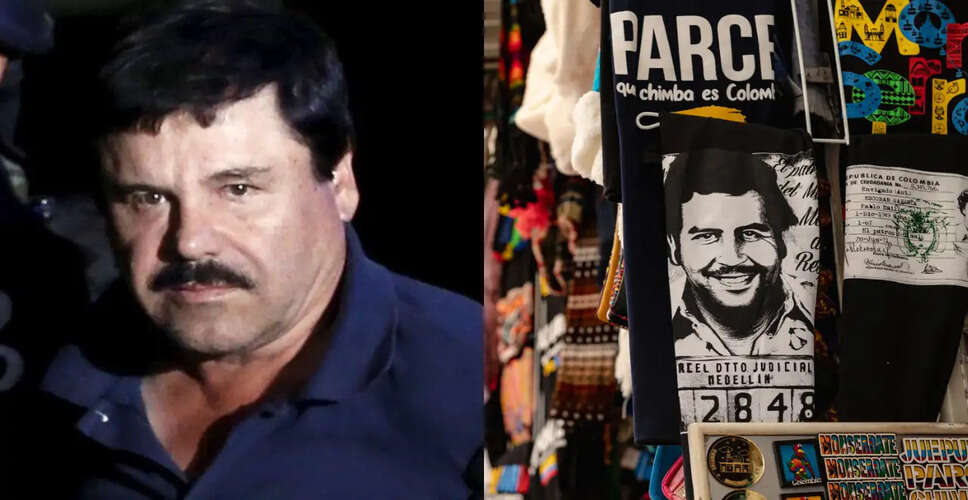
Pablo Escobar, born to a farmer in rural Colombia, and Joaquín "El Chapo" Guzmán, hailing from the Sierra Madre mountains of Mexico, both ascended to power in the drug trade, creating empires that transformed global narcotics trafficking. Their reigns were marked by the distribution of vast amounts of cocaine and other drugs, crafting legends that continue to captivate and disturb society. Escobar's reign concluded tragically in late 1993 with a shootout on a Medellín rooftop, while Guzmán's saga ended in a courtroom after numerous escapes, culminating in his extradition to the U.S. in January 2017, signaling a significant shift in the drug underworld.
Escobar vs. El Chapo: A Clash of Titans
Escobar vs. El Chapo: The Myth, the Money, and the Machinery of Terror
In comparing their empires, Escobar stands out as an unparalleled force. While exact figures are elusive, estimates suggest he was earning around $420 million weekly by the mid-1980s, translating to approximately $22 billion annually. By the decade's end, he was responsible for 80% of the world's cocaine supply, smuggling 15 tons into the U.S. daily, and amassing a net worth nearing $30 billion. His influence permeated Colombian society, intertwining with politics and law enforcement, effectively turning Colombia into a stage for narco-terror. Escobar was more than a drug trafficker; he was a folk hero and a figure of terror.
Conversely, El Chapo represented a different breed of drug lord. He was methodical and adaptable, navigating the complexities of globalization and shifting political landscapes with remarkable finesse. Unlike Escobar's flamboyant empire-building, El Chapo focused on creating a discreet yet powerful network. His cartel diversified into methamphetamine and heroin, eventually becoming a key player in the fentanyl trade, reshaping North America's drug landscape. While Escobar ruled through fear, El Chapo thrived on logistics and resilience, building a system rather than a kingdom.
The Bigger Picture: Who Reigns Supreme?
So who was bigger?
While Escobar epitomized narco power, El Chapo's business model proved more sustainable and adaptable. The unsettling truth is that the answer hinges on which era of terror one considers more catastrophic. El Chapo's impact was profound; U.S. court documents and DEA estimates indicate that his Sinaloa Cartel moved over $14 billion worth of drugs into the U.S. during his indictment period alone. At its peak, the cartel's revenue rivaled that of Fortune 500 companies, driven by large-scale trafficking of various drugs. Testimonies during his trial revealed shipments of 8–10 tons of cocaine at once and elaborate tunnels costing millions to construct. While net worth estimates vary, it is clear that El Chapo not only amassed wealth but also established a global supply chain that redefined the drug trade's economics.
The Current Landscape: El Mencho's Impact
The New Narco Reality: What El Mencho’s Death Means for Mexico Right Now
As Escobar and El Chapo dominated their respective eras, the world now observes the rise and fall of another figure: El Mencho. The leader of the Jalisco New Generation Cartel (CJNG) was notorious for his violent tactics and military-grade weaponry. Following his death during a security operation in Jalisco, Mexico is witnessing a significant upheaval. Cartel factions have retaliated violently, igniting chaos across multiple states, with attacks on law enforcement and disruptions to daily life. This situation highlights a harsh reality: eliminating a kingpin does not dismantle a cartel; it often leads to fragmentation and increased violence.
The Ongoing Legacy of Drug Lords
So, Who Was the Biggest Drug Lord of All Time?
Escobar remains the original narco-myth, while El Chapo exemplifies the modern drug trade's operational prowess. El Mencho signifies the evolving, militarized future of cartel power. In terms of historical significance, Escobar is still viewed as the most infamous, while El Chapo's operational reach and longevity are unmatched. The ongoing violence in Mexico serves as a reminder that the era of the 'biggest drug lord' is far from over; as one falls, another rises, perpetuating a cycle that the world continues to grapple with.