
The Implications of the Growing Rift Between Donald Trump and Elon Musk
Understanding the Trump-Musk Divide
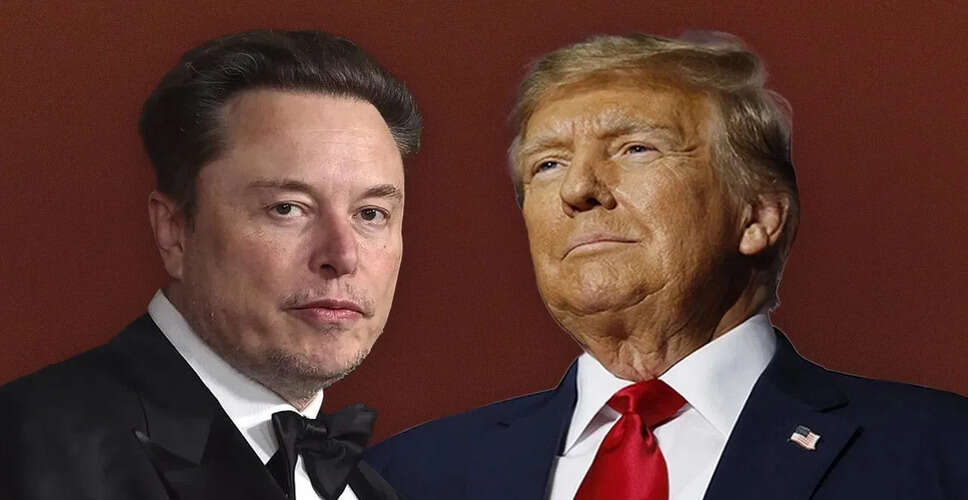
The ideological clash between Donald Trump, the visionary behind 'Make America Great Again,' and Elon Musk, the tech billionaire leading SpaceX and Tesla, has become a focal point for examining capitalist democracy and governance. This rift is significant not only for Americans but also for global audiences, as it reflects broader implications for political dynamics worldwide. The increasing distance between Trump and Musk is evident, and understanding its ramifications is crucial, given Trump's role as a global power broker.
The deteriorating friendship between these two figures echoes an Indian proverb that likens political alliances to fleeting romances, suggesting that such relationships are often temporary. Just as a relationship with a courtesan may end when a wealthier suitor arrives, so too do political friendships dissolve when individuals no longer serve a purpose. It is believed that Trump's political team may have treated Musk similarly, as is often seen in Indian politics.
Political allies often include prominent leaders, officials, business magnates, celebrities, and successful professionals, all vying for influence. This competitive environment necessitates caution among those who seek to maintain close ties with politicians. Consequently, Musk's recent announcement to part ways with the Department of Government Efficiency (DOGE) under Trump's administration is telling.
On May 29, 2025, Musk expressed gratitude to Trump for the opportunity to reduce unnecessary expenditures as his tenure as a 'Special Government Employee' came to an end. This designation allowed him to serve in a federal capacity for up to 130 days annually, with his term concluding at the end of May 2025, coinciding with Trump's inauguration on January 20 of the same year.
Bigg Boss: Will Salman Khan's Fee Cross 300 Crores in Bigg Boss 19?
Experts in international relations suggest that Musk's departure from government signals his discontent with Trump's budget proposals, which include multi-trillion dollar tax cuts and increased defense spending. While Trump touted his budget as 'big and beautiful,' Musk criticized it, highlighting a significant disconnect between the two. The White House announced that Musk's status as a 'Special Government Employee' would be terminated effective Wednesday, indicating a larger upheaval within the Trump administration.
Musk's exit not only reflects a shift in Trump's administration but also hints at strategic failures, especially considering Musk's previous role as a major donor to the Republican Party, contributing approximately $250 million last year. This financial support had seemingly strengthened their relationship, yet Musk's electric vehicle company, Tesla, has recently faced significant profit declines, prompting concerns among investors about the sustainability of his dual commitments to business and politics.
Political analysts note that Musk's tenure in a prominent role within the Trump administration was marred by controversies that affected Trump's domestic reputation and drew international criticism. Several key disputes contributed to the growing rift, including Musk's criticism of Trump's budget, which he argued would exacerbate the federal deficit rather than reduce it.
Musk's involvement in cabinet meetings also led to tensions, particularly regarding budget cuts and staffing reductions. Disagreements escalated during discussions about government spending, with Musk openly criticizing Secretary of State Marco Rubio and other officials. Trump's intervention during these disputes indicated a desire to limit Musk's influence within the administration.
Additionally, the abrupt departure of Vivek Ramaswamy from DOGE, a position he shared with Musk, further complicated the dynamics. Ramaswamy's significant role in establishing DOGE was overshadowed by Musk's prominence, leading to friction between the two.
Musk's controversial decisions, such as the proposed layoffs of federal employees and the abrupt closure of the U.S. Agency for International Development (USAID), also contributed to his strained relationship with the administration. His characterization of USAID as a 'criminal organization' drew backlash and highlighted the contentious nature of his role.
As Musk's DOGE department began operations, it faced criticism for its aggressive cost-cutting measures, which led to significant staff reductions and conflicts with other government officials. Musk's advocacy for free trade clashed with Trump's proposed tariffs, culminating in a legal ruling that supported Musk's position.
With Musk's resignation, questions arise about the future direction of Trump's policies and the potential for renewed debates over government efficiency. This event underscores the complexities of balancing private sector interests with governmental operations, revealing the challenges inherent in such collaborations.
Musk's departure may signal instability in U.S. economic policies, potentially impacting international perceptions of American innovation and competitiveness. As he shifts his focus back to Tesla and SpaceX, the implications of this rift will likely resonate beyond U.S. borders, affecting global economic dynamics.
In conclusion, Musk's resignation from the Trump administration marks a significant political and business event with far-reaching consequences. It reflects the ideological clash between Musk's vision for innovation and Trump's nationalist approach. The future of their relationship remains uncertain, as both figures navigate the complexities of their respective roles in the evolving political landscape.