
The Impact of AI on Mental Health Care: Opportunities and Challenges
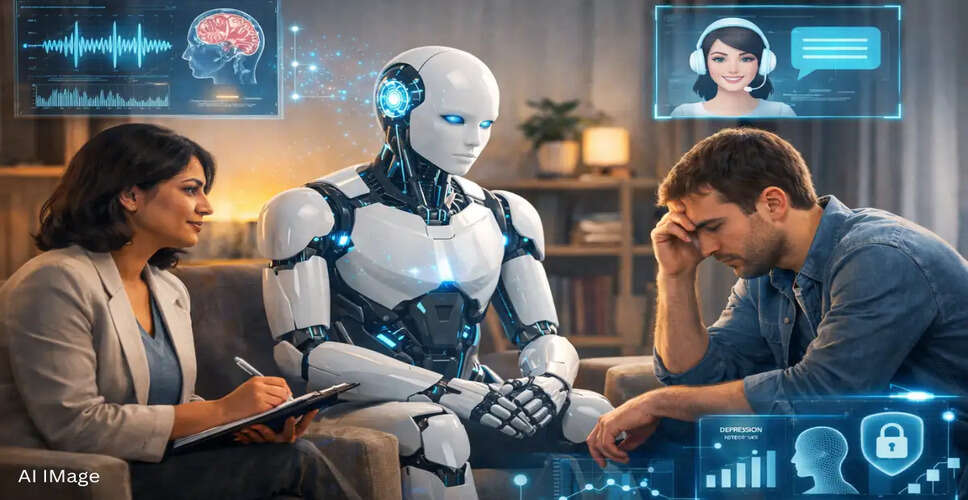

AI's Role in Transforming Mental Health Services
Artificial intelligence is revolutionizing the field of psychology, enhancing access to mental health services while simultaneously raising critical concerns about the implications of replacing human therapists with machines.
Anupriya
AI has made its way into therapy sessions, not merely as a tool for organization but as an active participant in diagnosing and treating psychological issues. Advanced machine learning algorithms are now capable of identifying early indicators of depression through voice analysis, predicting the likelihood of therapy dropout, and powering chatbot applications utilized by millions globally.
The most significant advancements are seen in diagnostic capabilities. A study from Harvard Medical School revealed that a machine learning model could accurately diagnose PTSD with 89% precision using just a three-minute voice recording, eliminating the need for traditional questionnaires or clinical interviews. However, critics caution that relying on algorithms may oversimplify the intricate nature of mental health. Dr. James Okonkwo from the Maudsley Institute states, “Depression is not a singular condition; a model that is accurate on average may fail dramatically in individual cases.”
“Machines do not tire or judge, but they lack the ability to truly comprehend suffering, and this gap is critically important.”
The more profound issue arises when AI transitions from diagnosis to treatment. Research indicates that individuals may feel more comfortable sharing personal information with AI than with human therapists, largely due to the absence of judgment. This raises concerns about the therapeutic alliance—the emotional connection between therapist and client—which is crucial for successful therapy outcomes. Can a sophisticated algorithm genuinely replicate this bond, or does it merely mimic care without addressing its essence?
Regulatory measures have not evolved in tandem with these technological advancements. AI-driven mental health tools often exist in a legal grey area, lacking the medical device regulations and ethical oversight that govern human practitioners. Experts are advocating for enforceable regulations regarding data privacy, algorithm transparency, and necessary professional supervision.
Dr. Priya Sharma from University College London notes, “If used judiciously as a supplement to human care rather than a replacement, this technology could revolutionize mental health services. However, there is a risk that commercial interests may lead us to implement it before fully understanding its implications.”
The challenges posed by AI in psychology extend beyond practical concerns—such as efficacy, safety, and accountability—to deeply human questions: What does it mean to genuinely care for another person's mind? Currently, there are no algorithms that can answer that.
Key Statistics
1 in 4 adults worldwide experience a mental health disorder annually.
89% accuracy in voice-based PTSD detection (Harvard Medical School, 2026).
1.2 million+ global shortage of mental health professionals (WHO).
About the Author
Anupriya
Ph.D. Scholar, Department of
Human Development and Family Studies,
PAU, Ludhiana, 141004