
The Impact of AI on Junior Careers: Navigating Future Challenges
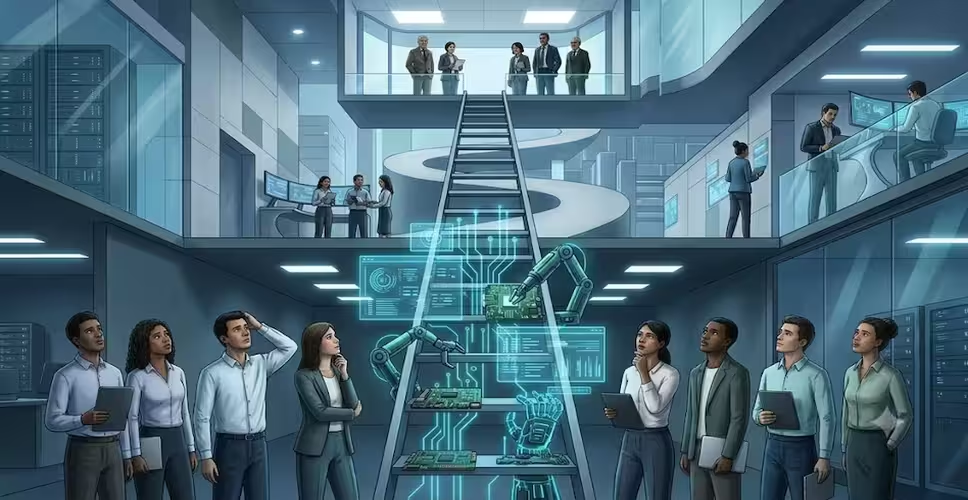

Transforming Work with Artificial Intelligence
Artificial Intelligence (AI) is rapidly changing the way we work across various sectors, including technology and banking. Companies are leveraging AI to streamline processes and enhance efficiency. While this shift is expected to boost productivity, it raises significant concerns regarding job security and career advancement for young professionals. The recent discussions surrounding Microsoft's buyout program have intensified these concerns, prompting questions about how the next generation of employees will gain experience and ascend to senior roles.
Concerns Arising from Microsoft's Buyout Program
The conversation around buyout programs at major tech firms like Microsoft has drawn attention to the future of employees and the evolving nature of work. Typically, a buyout involves offering financial packages to employees who voluntarily leave under certain conditions. While such programs do not necessarily indicate that AI will replace every position, they do raise questions about the types of skills and employees companies will require in the future.
AI's capabilities have expanded beyond answering basic queries; it can now assist in coding, report generation, data analysis, and summarizing documents, potentially taking over tasks traditionally handled by entry-level employees.
Challenges for Junior Employees
For many, the junior level is not just the starting point of a career but also a crucial time for learning and gaining experience. New employees typically begin with smaller tasks, learn from their mistakes, seek guidance from seniors, and gradually take on more significant responsibilities. This process is essential for developing decision-making skills and problem-solving abilities.
For instance, in the software industry, entry-level employees gain experience through coding, testing, and debugging. In marketing, junior staff learn to gather data, create reports, and monitor campaigns. If AI begins to handle a substantial portion of these tasks, companies will need to rethink how they provide practical training to new hires.
Path to Senior Roles in an AI-Driven Environment
Advancing to a senior position is not solely about years spent in a job; it also requires experience, decision-making skills, teamwork, and the ability to navigate challenging situations. These competencies cannot be developed merely by using AI tools; they require real-world experience and facing challenges.
Consequently, companies may need to innovate training and learning methods for junior employees. Alongside utilizing AI, it is crucial to teach employees how to evaluate outcomes, identify mistakes, and make informed decisions when necessary.
Essential Skills for the Youth
In a changing job market, relying solely on a degree or knowledge of a specific software may not suffice for young professionals. Strengthening foundational knowledge in their field while learning to effectively use AI tools will be beneficial. Additionally, skills such as problem-solving, communication, teamwork, and verifying information will remain vital.
Young individuals should seek projects that encourage them to not only rely on AI for answers but also to understand the reasoning behind solutions, identify potential flaws, and explore ways to improve outcomes. This approach fosters the ability to use technology wisely rather than becoming overly dependent on it.
Corporate Responsibility in the Age of AI
The transformation brought about by AI is not solely the responsibility of employees. Companies must ensure that while focusing on cost and productivity, they do not overlook the training of new talent. If entry-level tasks become fully automated, alternative pathways must be created to provide young people with experience through internships, mentorships, training programs, and real projects.
The future job landscape will likely continue to evolve with the roles of AI and humans. It is premature to assert that AI will completely replace all entry-level jobs. However, it is clear that both companies and employees must be prepared to adapt their learning and working methods.
The pressing question remains: if AI can handle today's tasks, how will we prepare experienced employees to take on tomorrow's responsibilities? The answer lies not only in new technologies but also in how companies provide opportunities for young people to learn, correct mistakes, and progress.