
The Hypocrisy of Nuclear Policies: A Closer Look at Iran and Global Dynamics

Understanding the Global Response to Iran's Nuclear Aspirations
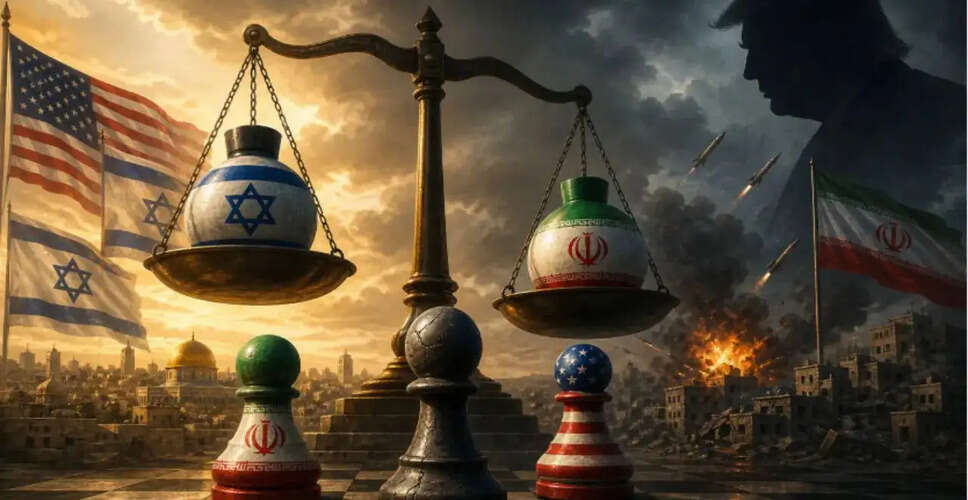
The international backlash against Iran's nuclear ambitions is less about promoting peace and more about exerting control. If the focus were genuinely on principles, Israel would be the first nation scrutinized, given its suspected nuclear arsenal and refusal to allow international inspections, all while receiving unwavering support from the United States. This dynamic has enabled Israel to engage in military actions, such as its incursions into Southern Lebanon, under the guise of regional security.
It is essential to recognize that this situation reflects a power-based order rather than a rules-based one. Iran is being pressured to adhere to standards that others blatantly disregard. Historical context reveals a deeper hypocrisy; for instance, in 1953, the U.S. and Britain orchestrated the coup against Iran's democratically elected Prime Minister, Mohammad Mossadegh, primarily due to his efforts to nationalize Iran's oil resources.
This covert operation, known as Operation Ajax, was not merely a historical footnote but a significant event acknowledged by the CIA itself. The removal of Mossadegh led to the establishment of a pro-Western monarchy, demonstrating that the West's commitment to democracy is conditional, particularly when oil interests are at stake.
Fast forward to the early 2000s, the U.S. justified the invasion of Iraq on the premise of weapons of mass destruction, which were never found. This pattern of intervention continued with Venezuela, where the U.S. attempted to replace its president under the pretext of regime change, further highlighting the manipulation of narratives surrounding national sovereignty and resource control.
Currently, the U.S. claims that Iran is on the verge of developing nuclear weapons, a statement that has evolved over time. Meanwhile, Iran has endured extensive economic sanctions since 1979, which have severely impacted its economy and citizens. These sanctions, often labeled as 'non-military,' function as a form of economic warfare aimed at coercing compliance.
Expecting Iran to trust the very nations that have historically undermined its sovereignty is unrealistic. The lessons from modern geopolitics are clear: nations without nuclear deterrents are more susceptible to aggression, as seen in Ukraine's experience after relinquishing its nuclear arsenal.
Moreover, India's experience following its nuclear tests in 1998 serves as a cautionary tale. The U.S. imposed sanctions on India, demonstrating that nuclear deterrence is crucial for national security. Critics argue that allowing Iran to develop nuclear capabilities would destabilize the region, yet the reality is that the region is already fraught with instability due to external interventions.
The critical question remains: who determines who can possess nuclear weapons? The U.S. has a history of using the narrative of nuclear threats as a pretext for military action, particularly in resource-rich nations. The hypocrisy is glaring when considering Israel's nuclear program, which began in the late 1950s and remains unregulated by international treaties.
Israel's nuclear opacity stands in stark contrast to the scrutiny faced by Iran, which has complied with the Nuclear Non-Proliferation Treaty. The global nuclear order is not governed by moral principles but by power dynamics, where the rules seem to apply selectively.
In conclusion, the disparity in how nuclear policies are enforced reveals a broader issue of dominance and control. The ongoing narrative surrounding Iran's nuclear ambitions is a reflection of historical injustices and geopolitical maneuvering, underscoring the need for a more equitable approach to global security.