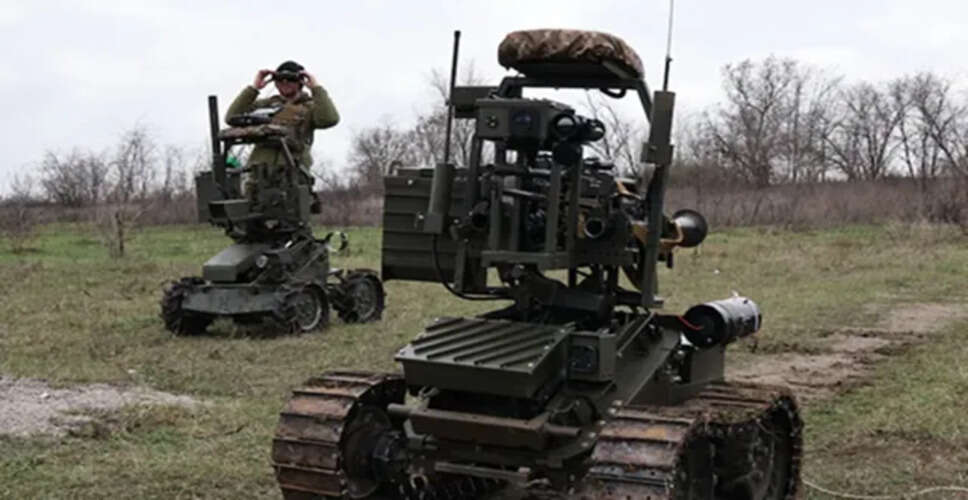
Kyiv: A recent image from the battlefield in Ukraine has captured global attention, showcasing advanced unmanned machines and robotic systems taking the place of traditional soldiers. Military analysts suggest that this scene is not just a snapshot but a glimpse into the future of warfare, where human roles may gradually be replaced by machines and artificial intelligence (AI) technologies.
The ongoing conflict between Ukraine and Russia has accelerated the development of modern warfare technologies. Initially dominated by soldiers and tanks, the battlefield now prominently features drones, automated vehicles, robotic platforms, and AI-driven surveillance systems. The recent image revealed several unmanned ground vehicles (UGVs) actively participating in a military operation, astonishing military analysts and defense experts.
The Changing Face of Warfare
Experts indicate that contemporary warfare is no longer solely reliant on the strength of weapons. Information, data analysis, and artificial intelligence are playing crucial roles on the battlefield. Robotic systems can conduct surveillance, supply logistics, detect landmines, and even assist in offensive operations in hazardous areas.
The primary advantage of these machines is their ability to carry out challenging missions without endangering soldiers' lives. In warfare, where every human life is invaluable, such technologies are proving to be extremely beneficial for the military.
Drones and Robots: The New Strategic Focus
Drone technology has already demonstrated its effectiveness in the Ukraine conflict. From surveillance to precision strikes, drones have transformed various aspects of warfare. The increasing use of robotic ground vehicles indicates that the role of automated machines in military operations is set to expand further.
Defense experts predict that in the coming years, robots may be developed capable of making complex military decisions without human intervention. However, this potential raises ethical and legal debates, with many international organizations expressing concerns over the use of fully autonomous lethal weapon systems.
Growing Global Interest
The image from Ukraine has sparked discussions on social media and international defense forums. Many countries' armed forces are already heavily investing in robotic technologies and AI-based military systems. Experts believe that the Ukraine conflict has become a testing ground for future military technologies, where new systems are being evaluated in real-world conditions.
Will Machines Fight Wars in the Future?
Analysts suggest that while the prospect of wars fought entirely by machines is still distant, the era of joint operations between humans and machines is rapidly advancing. The role of soldiers will not disappear, but robotic systems and AI technologies will continue to become increasingly capable in supporting them.
This image from the Ukrainian battlefield symbolizes not just a military event but a technological revolution. It signals that the nature of warfare may become more automated, digital, and technology-driven than ever before. The world is moving towards an era where decisions on the battlefield may be made not only by humans but also by intelligent machines.