
The Future of Iran's Islamic Republic Amidst Leadership Uncertainty
Is Khamenei Really Dead?
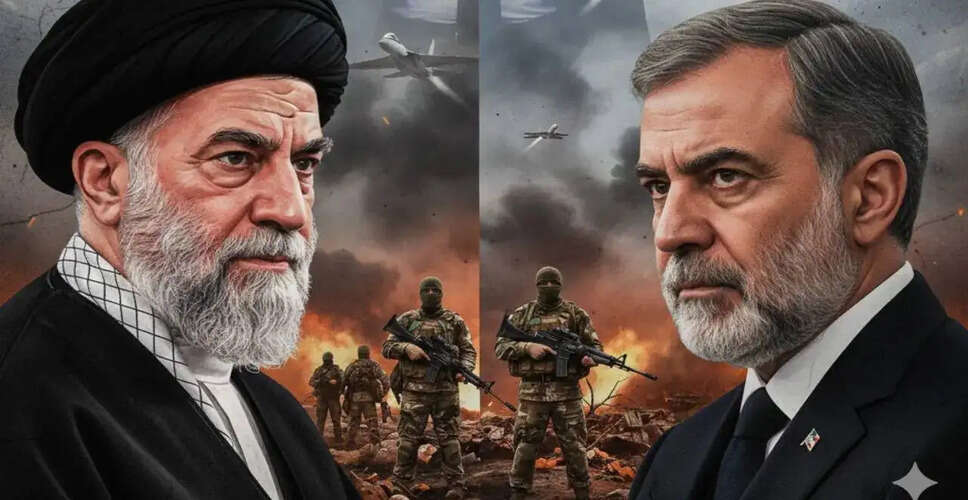
Recently, US President Donald Trump suggested that Iran's Supreme Leader, Ali Khamenei, might be deceased in a post on Truth Social. This raises the question: does this imply the end of Iran's Islamic Republic? Reports indicate that the Supreme Council may have already identified a loyal successor to Khamenei—former IRGC commander and prominent politician, Ali Larijani.
Israeli Claims and US Assertions
Is Khameini Dead?
Israeli Prime Minister Benjamin Netanyahu mentioned on Saturday that there are "many indications" pointing to Khamenei's death due to joint US-Israeli airstrikes, although he refrained from confirming it definitively. Trump labeled Khamenei as "one of the most evil people in history" and stated, "Khamenei… is dead," commending US intelligence for their advanced tracking systems that ensured Iranian leaders could not evade the attack. However, independent verification of this claim is still lacking. Iran has dismissed these assertions from the US and Israel as mere "psychological warfare." An official post from Khamenei's account later displayed an image of the 'Sword of Ali' or 'Zulfiqar sword,' possibly serving as a visual rebuttal.
The Resilience of the Islamic Republic
The Islamic Republic System
The structure of the Islamic Republic is built to endure against significant challenges. Its authority is not reliant on a single individual but is supported by a network of clerical and military institutions. Even if Khamenei's death is confirmed, the regime's core—the IRGC, the Supreme National Security Council, and the Assembly of Experts—remains intact. The Assembly of Experts, a conservative clerical body, is responsible for appointing a new Supreme Leader. Khamenei, who took over from Ayatollah Khomeini in 1989, had quietly reinforced the regime's continuity mechanisms, particularly following Israel's unexpected attack last June, which disrupted parts of Iran's military command. He reorganized leadership structures and established contingency plans to ensure the Islamic Republic's functionality, even in the event of the assassination of key figures. Reports suggest that a successor to Khamenei may have already been designated.
Ali Larijani: A Potential Successor
Who Is Ali Larijani
Ali Larijani, a former IRGC commander and seasoned political figure, has taken on a more significant role since early January amid domestic unrest and concerns over US military actions. Currently, he serves as the secretary of the Supreme National Security Council, overseeing many critical state portfolios. Senior Iranian officials indicate that Larijani was responsible for quelling the protests that erupted in December and January, which called for an end to Islamic governance. He has engaged in nuclear negotiations with the US while also coordinating with regional mediators like Qatar and Oman, and has consulted with Russia regarding the nuclear deal. During a visit to Moscow, he discussed various aspects of the agreement with President Vladimir Putin. Additionally, Larijani has been preparing for the possibility of direct conflict with the US. In an interview with Al Jazeera during a visit to Doha, he stated, "We are ready in our country. We are not looking for war, and we won't start the war. But if they force it on us, we will respond." Experts note that while Larijani is not a senior Shiite cleric, making him an unlikely candidate for Supreme Leader, in Tehran, titles and power do not always align. As a trusted insider, Larijani could symbolize institutional continuity rather than disruption.
Implications for Iran's Future
Currently, Washington may view the strike as an opportunity for regime change, while Tehran is likely to interpret it as a test of its systemic resilience. Khamenei's fate may change the leadership at the top, but it will not necessarily dismantle the underlying structure of the regime.