
The Evolving Role of UAVs in Modern Warfare Highlighted by IAF Chief
Air Chief Marshal A.P. Singh has underscored the transformative impact of unmanned aerial vehicles (UAVs) in modern warfare. During a recent address, he highlighted the shift from centralized air power to a decentralized approach, emphasizing the need for adaptation in military strategies. Singh noted that UAVs not only enhance operational capabilities but also reduce risks to human life. He further praised the coordination among the armed forces during military operations, asserting that collective efforts are crucial for success in future conflicts. Air Marshal Ashutosh Dixit also stressed the strategic necessity of integrating UAVs into the defense framework, marking them as essential tools in contemporary warfare.
| May 15, 2026, 14:44 IST

Significance of UAVs in Contemporary Combat
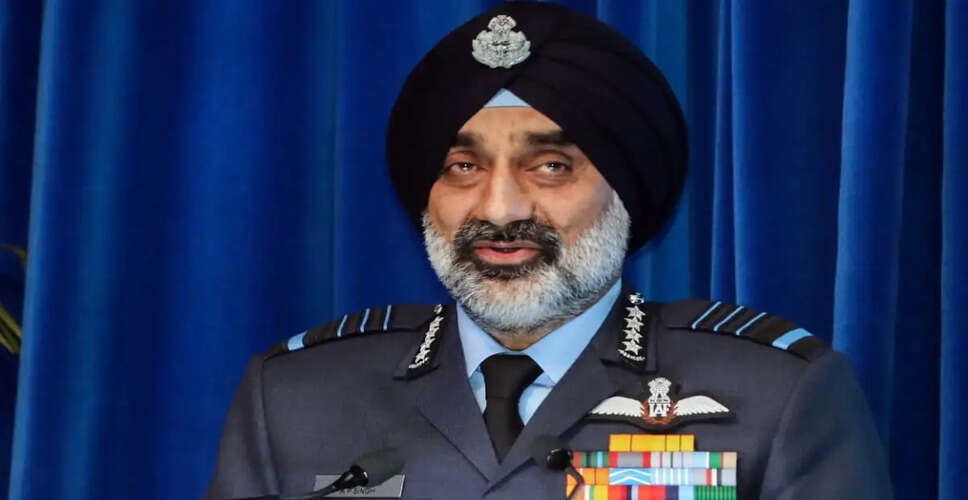
The Chief of the Indian Air Force, Air Chief Marshal A.P. Singh, emphasized the critical role of emerging technologies in modern warfare, particularly focusing on the expansion of air power through unmanned aerial vehicles (UAVs). Speaking at the Aerospace Power and Strategic Studies Centre on Friday, he noted a shift from centralized air power to a decentralized and autonomous approach, necessitating adaptation.
Singh remarked that the relevance of drones and UAVs cannot be overstated, stating, "The battlefield has transformed. We are transitioning from concentrated air power to decentralized and autonomous methods. It is essential to recognize that UAVs are an extension of air power, reducing risks to human life during operations. As I mentioned, this is an extension of air power, and all rules governing air power will apply when utilizing UAV systems."
He likened counter-UAV systems to a cat-and-mouse game, explaining that as technology advances in one area, counter-technologies must also evolve to keep pace. Air Chief Marshal Singh praised the coordination among the three armed forces during 'Operation Sindoor,' a military response to the Pulwama terrorist attack, stating, "I believe we performed exceptionally well in Operation Sindoor, and this was made possible due to our coordination. Without a central agency's coordination, it would not have been feasible. We have a structure that enables us to tackle such incidents effectively. Full coordination is essential when all three forces operate in the same airspace."
Additionally, Air Marshal Ashutosh Dixit stressed the necessity of integrating UAVs into the country's defense framework. He stated, "I want to start with a simple yet powerful truth: strengthening the capabilities and integration of UAVs, UAS, and counter-UAS across all three armed forces is not just desirable but a strategic imperative for our operational freedom in national defense. No single army can fight the next war alone. Only collective leadership, integrated systems, and shared situational awareness can lead to decisive victories in future conflicts. UAVs are no longer just supportive; they are a means of warfare in their own right."