
The Evolution of Warfare: US Deploys Experimental Drone in Iran Strikes
Introduction to LUCAS
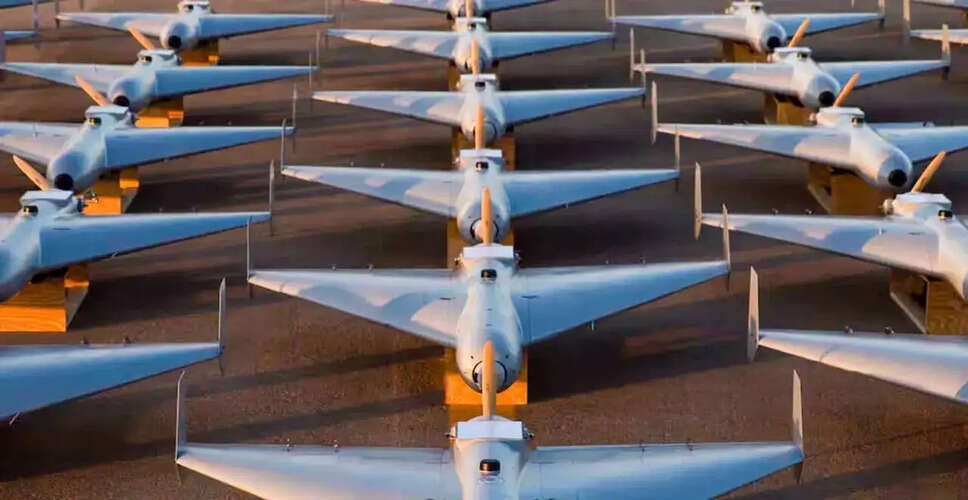
The United States has utilized an innovative weapon in its operations against Iran, specifically a "one-way" attack drone known as the Low-Cost Unmanned Combat Attack System (LUCAS). This deployment is noteworthy not only for its immediate impact but also for the insights it provides into the evolving nature of warfare. Unlike traditional surveillance drones that return after gathering intelligence, LUCAS is designed for a singular purpose: to launch an attack and self-destruct, leaving no chance for recovery.
These types of weapons are often referred to as loitering munitions, capable of hovering in the air for a duration before executing a strike. They effectively merge the functionalities of both drones and missiles. Defense analysts have noted that LUCAS shares conceptual similarities with Iran's Shahed drones, which have been prominently utilized in recent conflicts. The US Central Command has confirmed that this marks the first combat deployment of this experimental weapon.
The Rationale Behind Using Experimental Weapons
Experts argue that contemporary battlefields present challenges that cannot be replicated in testing environments. Factors such as electronic jamming, intricate air defense systems, complex terrains, and the need for rapid decision-making create conditions that reveal both the strengths and weaknesses of new weaponry. Insights gained from actual combat scenarios enable engineers to enhance their systems and software, addressing vulnerabilities more swiftly than traditional development timelines would allow.
Rather than waiting for a weapon to be fully developed, militaries are now opting to deploy these systems while they are still undergoing refinement. This approach reflects the rapid pace of technological advancement, as drones, communication networks, sensors, and countermeasures evolve quickly. Consequently, battlefields have transformed into testing grounds for new weapons, which are continuously assessed, improved, and redeployed in accelerated cycles.
Transformations in Modern Warfare
The contrast between current warfare and that of a decade ago is stark. Previous conflicts relied heavily on fighter jets, armored units, and well-defined frontlines, with campaigns progressing at a slower pace. In contrast, today's conflicts are more dispersed and layered, particularly due to advanced technology.
In the ongoing Russia-Ukraine conflict, numerous small drones have been introduced for reconnaissance and direct assaults. Naval drones have also targeted vessels in the Black Sea without conventional fleet confrontations. In West Asia, drones have facilitated cross-border strikes without the need for large troop mobilizations, supported by satellite imagery and real-time video feeds that inform command decisions almost instantaneously. This allows for precision strikes to be executed remotely, repeatedly, and with significantly reduced risk to personnel.
Anticipating Future Warfare
If current military trends persist, future conflicts are likely to be characterized by sustained, low-intensity engagements rather than large-scale invasions. Exchanges of drones and missiles may occur without formal declarations of war. Military analysts predict the emergence of swarm tactics and cyber warfare aimed at disrupting financial networks and transportation and communication systems.