
The Evolution of Pitha Making During Bhogali Bihu
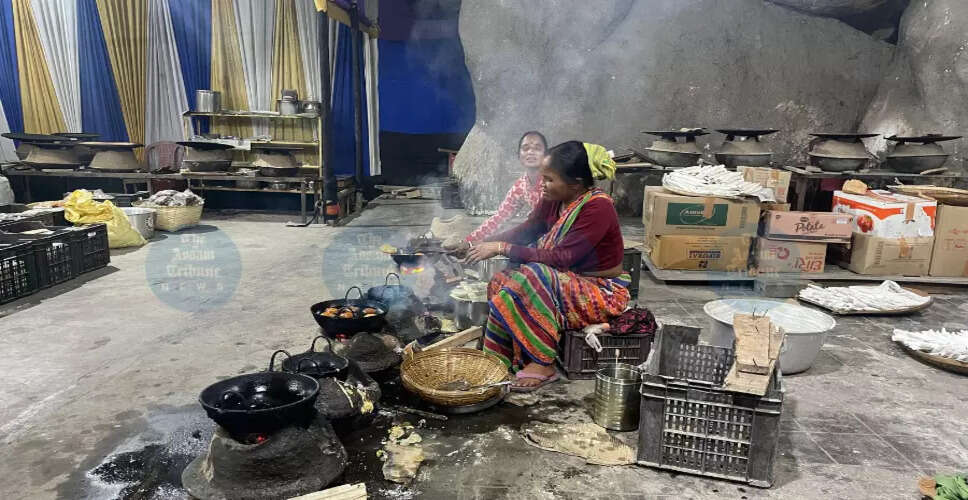
Tradition Meets Modernity in Assam's Pitha Culture
On chilly January mornings, the villages of Assam awaken to the rhythmic sound of the dheki. The bora saul, soaked overnight, is spread out under the soft winter sun and pounded diligently for hours, eventually transforming into pitha, a product of communal effort and leisurely time.
Bhogali Bihu has always been more than just a feast; it embodies the spirit of creation. The kitchen courtyard becomes a vibrant cultural hub where women gather, folk songs fill the air, and traditions are transmitted not through formal teaching but through observation and participation.
Champa Das, a 60-year-old resident of Guwahati, reminisces, "In our time, every household prepared pithas. Families would unite; one would operate the dheki, while another sorted the pounded grain. It was a community endeavor."
Not too long ago, crafting pitha was a cherished ritual, deeply rooted in time, effort, and togetherness.
For Das, the process was as significant as the end product. Rice was soaked overnight, carefully dried in the winter sun, and prepared on specific days when women from various families came together. "It was intricate, but it was our tradition. Only we could create this. Pithas were ours," she expressed.
The Subtle Transformation
Today, the delightful scent of pitha still heralds the arrival of Bhogali Bihu, yet the preparation has gradually transitioned from home courtyards to urban kitchens and increasingly to store shelves.
In bustling cities, hectic lifestyles dictate daily routines. More often than not, pithas are purchased rather than made. This shift raises concerns about the fading of traditions, even as it reflects the adaptation to contemporary life.
In urban centers like Guwahati, Bhogali Bihu is frequently celebrated amidst work commitments, nuclear families, and apartment living. The lengthy, labor-intensive process of making pitha from scratch has become challenging to maintain.
"In the past, women were primarily homemakers with ample time. Nowadays, people are busy with work. The younger generation lacks the skills to make pithas—hence, they opt to buy them," Das noted. "While I’m pleased that pithas are still enjoyed, I miss the sense of community. Back then, Bhogali Bihu meant waking up before dawn and spending hours together. No one thought about buying them. Life has become so fast-paced now."
Her sentiments resonate with many elders who worry that traditional knowledge may fade if pitha preparation remains confined to commercial outlets.

Women workers packing Til Pithas for mass distribution in Guwahati (Photo: AT)
For younger urban dwellers, purchasing pitha often represents both convenience and a connection to cultural heritage.
Hemant Saikia, a 35-year-old businessman from Guwahati with roots in Teok, Jorhat, fondly recalls his childhood Bihu experiences. "I remember my mother cooking while my cousins and I snuck hot pithas. It was filled with emotion," he shared.
Today’s life is markedly different. Saikia and his wife both work, live in a compact apartment, and seldom enjoy extended breaks. "Preparing pithas the traditional way with a dheki is unfeasible. There’s no room or time," he explained.
He believes that buying pitha helps bridge the gap. "We still attempt to make simpler versions like tel pitha, but for other types, we rely on external sources. There’s no right or wrong here. Purchasing pithas still connects us to Bhogali Bihu," he added.
"The essence of Bihu remains. It may not be prepared in our kitchen, but it keeps us connected to home," he concluded.
Pitha’s Urban Guardians
Cultural initiatives like Biponon Kshetra have emerged at the crossroads of tradition and urban life. Established in 2016 as a Bhogali fair, it began with a dheki, ural, and 25 women crafting pithas.
"We started with just one pan. We sourced various rice types; black rice from Assam Gaurav awardee Upendra Rabha, kumol rice from Tengakhat, and maintained traditional methods," shared Anjumani Bhattacharjya, the owner.
Her motivation stemmed from a simple inquiry - why should pithas be exclusive to Bihu? "Why can’t pithas be enjoyed as cultural snacks year-round? Children grow up familiar with pizza and burgers—why not pitha?" she questioned.
Bhattacharjya recognizes that urban living has transformed celebration practices. "For many, executing the entire process is challenging. Buying pitha simplifies things for those lacking time, space, or skills."
However, she dismisses the notion that commercialization undermines tradition. "We have live, open kitchens where children can observe pitha preparation. It’s not about forgetting our roots. Cultural spaces and shops can serve as new custodians of tradition."

Various types of pitha packaged for sale during Bhogali Bihu at Biponon Kshetra (Photo: AT)
Approximately 90% of Biponon Kshetra’s workforce consists of women, many from marginalized backgrounds. "Some women who left their partners or lacked employment find dignity here. We train those unfamiliar with pitha preparation. This work empowers them," Bhattacharjya noted.
She views commercial vendors as partners in cultural preservation. "Creating one pitha involves numerous hands, from soaking rice to pounding and cooking. Those engaged in mass production are also advancing this tradition."
The emotional significance of pitha now extends beyond Assam. Biponon Kshetra has seen customers transport pithas to Dubai and the United States to celebrate Bihu abroad.
"Although preservation is challenging due to the use of natural ingredients, this demand illustrates a deep emotional connection to our roots," Bhattacharjya remarked.
This connection is evident among younger generations as well. Eleven-year-old Pratyusha Hazarika, who resides in Guwahati but visits her village in Jorhat, experiences both worlds.
"I’ve watched Borma prepare til pitha in the village. In Guwahati, my parents buy it from stores. I love eating hot black rice til pitha fresh from the pan," she shared.
The evolution of pitha, from dheki-filled courtyards to neatly organized counters, mirrors the changing dynamics of Assamese society.
Perhaps Bhogali Bihu today represents not the end of tradition, but a pivotal moment. Whether crafted at home or purchased from a shop, pitha continues to embody memory, effort, and belonging, reminding us that culture, much like life, thrives through adaptation.