
The Complex Relationship Between Nehru and Bose: A Historical Perspective
This article delves into the intricate relationship between Jawaharlal Nehru and Subhas Chandra Bose during India's freedom struggle. It highlights their ideological differences, personal correspondence, and the historical events that shaped their paths. The narrative reveals how their contrasting views on leadership and strategy led to a significant rift, influencing the political landscape of modern India. Readers will gain insights into the complexities of their relationship and its lasting impact on the nation's history.
| May 20, 2026, 19:22 IST
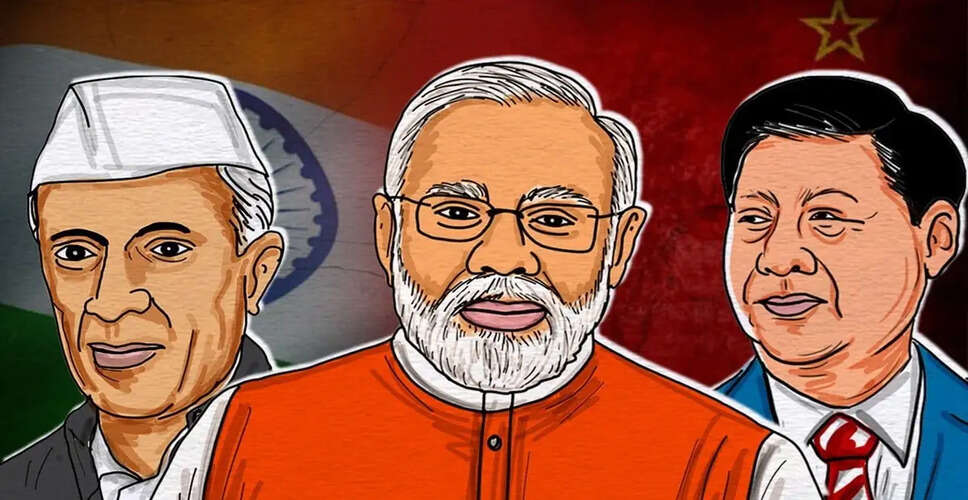

The Clash of Titans in India's Freedom Struggle
During the struggle for independence, the political landscape of India would often shift dramatically when two towering figures clashed: Pandit Jawaharlal Nehru and the revolutionary leader Netaji Subhas Chandra Bose. While many believed these two leaders were aligned in their vision, the reality was far more complex. The year 1939 marked a pivotal moment when their differences became glaringly apparent. Bose, in his diary, attributed his political setbacks largely to Nehru, while Nehru himself suggested that he would even take up arms against Bose during the war. In this segment, we will explore the untold letters where Bose refers to Nehru as his 'big brother,' only for Nehru to respond bluntly that he disapproves of Bose's methods. Was this merely a clash of personalities, or was it a deeper ideological divide that set these two sons of India on divergent paths? Let us delve into the historical pages that continue to influence contemporary politics.
The 1939 Tripura Session: Where Differences Turned Bitter
The underlying tension in the relationship between Nehru and Bose came to the forefront during the 1939 Tripura session. While many envisioned a bright future post-independence, Bose held Nehru responsible for his political losses in his diary. Their ideological rift had escalated to such an extent that when rumors of Bose's alliance with the Japanese army surfaced, Nehru adopted a hardline stance, even declaring his readiness to take up arms. The true nature of their relationship is revealed in their correspondence. While Bose regarded Nehru as an elder brother, Nehru candidly expressed his disapproval of Bose's approach. According to Nehru, the fundamental difference between them lay in their temperaments and perspectives. This exchange of letters illustrates that while their hearts were united in the fight for freedom, their paths and ideologies were distinctly different. In one letter, Bose wrote that he considered Nehru a significant political mentor and often sought his advice, to which Nehru replied with gratitude but also noted his disagreements with Bose's methods. Nehru's unwavering loyalty to Gandhi contrasted with Bose's respectful yet critical stance towards him.
Vienna, October 20, 1952
Anita is excelling in school and is in good health. She is growing up but not gaining weight. She is enjoying her English lessons. This letter was sent from Vienna to Shishir Bose in India but first passed through the scrutiny of intelligence officials. In Kolkata, Shishir Kumar Bose was not the first to read the letter; several Intelligence Bureau (IB) officers had quietly photocopied it for their secret files. Reports indicate that IB agents were covertly tracking the family members of Bose, gathering information on their interactions and discussions. These files, now housed in the Ministry of Home Affairs and the National Archives, reveal the dark secrets of post-independence India. For two decades, from 1948 to 1968, the government kept a close watch on Bose's family members. The spies intercepted, read, and recorded letters from a freedom fighter's family, who had been political colleagues of Nehru for 25 years. During their travels in India and abroad, the IB meticulously tracked family members, detailing whom they met and what was discussed. However, the reasons behind this surveillance remain unclear. The IB closely monitored Bose's nephews, Shishir Kumar Bose and Amiya Nath Bose. In a letter written in 1939, Netaji stated that no one had harmed him more than Jawaharlal Nehru. The two contenders for Gandhi's political legacy diverged when Nehru chose to appoint himself as his political successor over Bose, as he felt uncomfortable with Bose's push for complete independence. Meanwhile, Nehru was uneasy with Bose's admiration for Nazi Germany and Fascist Italy. Ultimately, Netaji resigned as Congress president in 1939.
Was Nehru Afraid of Bose?
M.J. Akbar suggests that the only plausible explanation for the Congress's apprehension was the fear of Subhas Chandra Bose's return. The government likely believed that if he were alive, he would certainly reconnect with his family in Kolkata. He was the only charismatic leader capable of uniting the opposition against Congress in the 1957 elections. It can be argued that had Bose been alive, he could have achieved what the coalition did in 1977 to defeat Congress, potentially as early as 1962, fifteen years prior.