
The Complex Dynamics of China-Pakistan Relations Amid Balochistan Insurgency
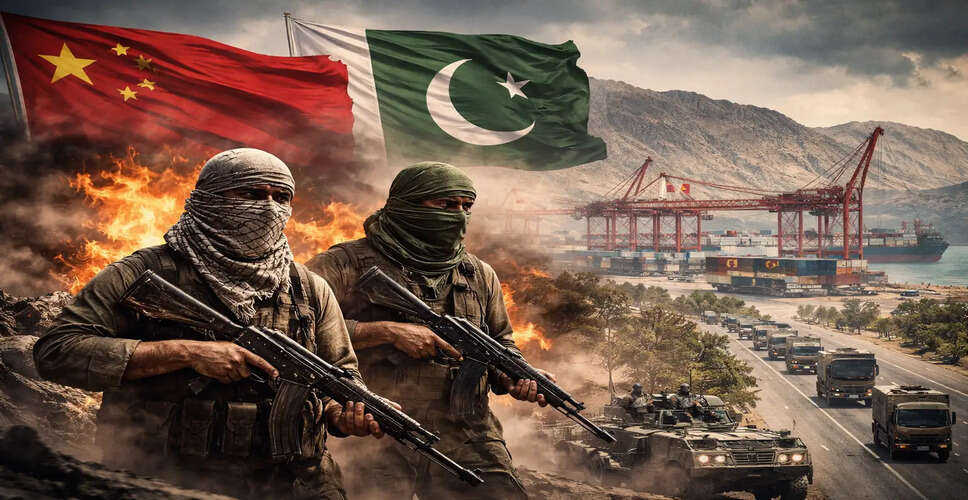
Background of Attacks on Chinese Interests
In November 2018, armed members of the Balochistan Liberation Army (BLA) attempted to breach the Chinese Consulate in Karachi, although they did not succeed. This incident marked the beginning of a series of attacks targeting Chinese interests in Pakistan. Just six months later, the BLA struck the Pearl Continental Hotel in Gwadar, a known hub for Chinese engineers and foreign investors involved in local infrastructure projects. Another significant attack occurred in June 2020 at the Pakistan Stock Exchange in Karachi, justified by the militants as a legitimate target due to the presence of Chinese companies.
Throughout 2022 and 2023, the BLA continued its campaign against Chinese engineers and construction teams in Balochistan, indicating a clear stance against China's involvement in the region. The BLA perceives China not as a neutral party but as an active participant in the conflict, particularly following Beijing's substantial investments in Balochistan through the China-Pakistan Economic Corridor (CPEC).
Understanding CPEC and Its Implications
Launched in 2015, CPEC is a vast initiative that connects western China to the Arabian Sea via a network of highways, railways, pipelines, and ports, with Gwadar Port in Balochistan serving as its southern terminus. This ambitious project, estimated to cost around $62 billion, aims to modernize Pakistan's economy and uplift neglected regions. However, Baloch insurgent groups tell a different story, viewing CPEC as a means of resource extraction from Baloch territory without their consent.
They argue that while roads and ports are developed, the local population sees minimal benefits, with the burden of increased military presence falling on them. Despite the ongoing violence, Beijing has maintained a low profile, repeatedly stating that it is Pakistan's responsibility to ensure the safety of Chinese nationals. Following each attack, Chinese diplomats have urged Islamabad to enhance security measures around project sites, yet Beijing has not publicly acknowledged the political implications of its investments.
The Need for Political Solutions
The ongoing insurgency poses significant challenges for any long-term political resolution with Baloch rebel factions, which would likely require renegotiating how natural resources are managed and revenue is shared. In areas where Chinese firms hold long-term contracts with the Pakistani government, it is difficult to envision negotiations occurring without China's involvement.
China has historically viewed its economic initiatives and the political struggles surrounding them as separate issues, but this distinction is becoming increasingly challenging to maintain. Since 2015, over 30,000 Chinese nationals have participated in CPEC projects in Pakistan, particularly in Balochistan, where the insurgency has persisted for decades. The very nature of these projects has, in some cases, exacerbated economic marginalization and led to allegations of human rights abuses, further fueling the insurgency.
Strategic Implications for China-Pakistan Relations
The relationship between China and Pakistan extends beyond infrastructure, encompassing military cooperation, nuclear support, and diplomatic backing at international forums. Pakistan's preference for a military approach to the Baloch insurgency complicates the situation, as maintaining stability in CPEC and the broader strategic partnership with China is crucial.
Any political compromise necessary to renegotiate key CPEC agreements could strain the relationship both nations deem strategically vital. Observers have drawn parallels to the Hambantota Port in Sri Lanka, which was leased to a Chinese company amid a debt crisis, highlighting the potential for long-term foreign scrutiny. However, Balochistan's issues are rooted in a persistent insurgency intertwined with demands for autonomy, political representation, and human rights.
Since 2016, the BLA has executed over 20 attacks targeting Chinese nationals or explicitly citing Chinese economic involvement as the motive. This violence serves not only as a challenge to Islamabad but also as a message to Beijing, urging China to confront the political realities of its investments in Balochistan. Thus far, Beijing has chosen not to respond.