
The Alarming Rate of Ice Melt: What It Means for Global Sea Levels
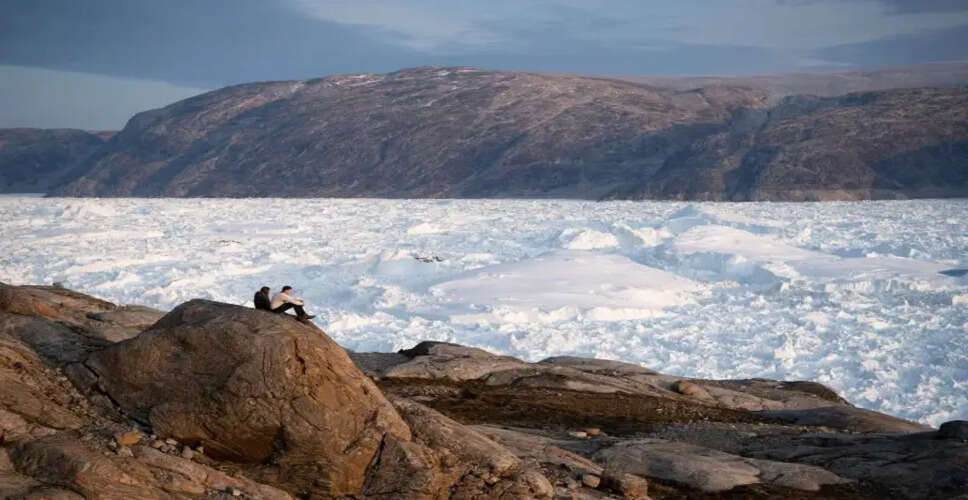

Significant Ice Loss from Greenland and Antarctica
Since 1979, approximately 12.5 trillion tonnes of ice from the glaciers of Greenland and Antarctica have melted, which is enough to cover the entire continental United States with a layer of ice measuring 5 feet deep. This alarming statistic comes from a comprehensive scientific report highlighting the ongoing crisis of ice sheet melting due to climate change.
The report indicates that the primary cause of this ice loss is not just rising air temperatures but rather warmer ocean waters eroding the ice sheets from below and the sides. This phenomenon is leading to glaciers flowing more rapidly into the oceans, which poses a significant threat to future sea levels. Eric Rignot, an ice scientist at the University of California, Irvine, emphasized the urgency of the situation, stating, "The ice sheets are melting away fast. Sea levels are rising globally, increasing the risk for coastal areas." The melted ice has contributed nearly 3 quadrillion gallons of water to the oceans, resulting in a rise of about an inch in global sea levels since 1979.
While an inch may seem minor, it has serious implications. For every third of an inch of sea-level rise, an estimated 2 to 3 million people experience flooding at least once a year, according to Ines Otosaka, an ice scientist at Northumbria University. The Jakobshavn glacier in Greenland is currently retreating at a staggering rate of up to 164 feet per day. This study, conducted by an international team of polar scientists led by the European Space Agency, utilized data from NASA satellites to analyze ice-sheet volumes dating back to 1972 in Greenland and 1979 in Antarctica.
The findings reveal that ice sheets were relatively stable during the 1970s, 1980s, and into the 1990s, but a marked acceleration in melting has been observed since the 2010s. Otosaka noted, "There is a clear trend that the ice sheets are losing more mass," linking this pattern directly to climate change. Andrew Shepherd, another co-author of the study, warned that these changes could persist for decades, even if global warming were to cease, due to the delayed response of the ice sheets to warming. Although there was a temporary pause in the melting trend from 2020 to 2023, the authors attributed this to short-term weather fluctuations rather than a reversal of the long-term trend. Record snowfall in East Antarctica has helped stabilize the region, countering rapid melting in West Antarctica.
The research incorporated 45 independent surveys and data from 27 satellites. David Holland, an ice scientist from New York University who was not part of the study, expressed confidence in the findings, stating that the independent methods used bolster the credibility of the upward trend. Scientists are particularly worried about "dynamic" ice loss, where glaciers quickly release ice into the ocean, potentially leading to instability and tipping points.