
The Aftermath of Khamenei's Death: A New Era for Iran and the Middle East
The Legacy of Ayatollah Khamenei
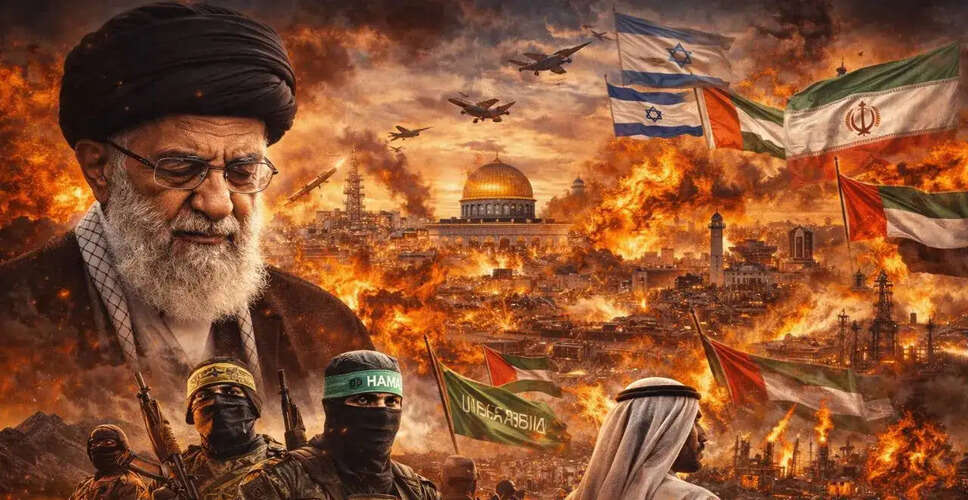
For nearly five decades, the geopolitical landscape of the Middle East has been influenced by a singular reality: a regime in Tehran that sought to diminish Western presence, particularly targeting Israel and American influence. This regime has financially supported various groups aiming to achieve these goals. The Islamic Republic of Iran has been pivotal in shaping alliances among Arab nations, with U.S. military bases in Bahrain and Qatar, as well as diplomatic strategies in Saudi Arabia, Egypt, and Jordan, all designed to counter Tehran's ambitions. The late Supreme Leader, Ayatollah Ali Khamenei, who was killed in a U.S.-Israeli operation on Saturday, was a central figure in this narrative for 36 of those years. While not a military leader, Khamenei was a charismatic figure, revered by many, and a master of bureaucratic control who transformed a revolutionary state into a structured regime. He expanded the Islamic Revolutionary Guard Corps (IRGC) into a powerful entity with its own economy and extended Iran's influence through a network of proxy militias, a feat unmatched by any of his predecessors. His absence marks a significant turning point for the region, raising questions about what will emerge in its place—something potentially better or merely a different kind of threat.
The Proxies: A Dangerous Legacy
What Khamenei Actually Built — and What Survives Him
The immediate threat lies within the network of proxies, often referred to as the 'Axis of Resistance'. This includes Hezbollah in Lebanon, Hamas in Gaza, the Houthis in Yemen, and Shia militias across Iraq and Syria. Khamenei either established or significantly bolstered these groups as part of a strategy to encircle Israel and exert pressure on U.S. leaders without direct military engagement. This approach proved effective for nearly four decades.
However, even before Khamenei's death, this network was already under strain. Following the October 7, 2023 attack, Israel intensified its assaults on these proxies. Hezbollah suffered significant losses in leadership due to Israeli strikes in 2024, while Hamas faced the deaths of key figures in Tehran and Gaza. The Assad regime in Syria, which facilitated the transfer of weapons to Lebanon, collapsed in December 2024 amid ongoing civil conflict and U.S. intervention. The Houthis, though battered, continue to launch missiles into the Red Sea. As one analyst noted, while Khamenei's leadership has ended, the armed groups he cultivated remain intact. The Council on Foreign Relations emphasized that eliminating Khamenei does not equate to regime change; the IRGC continues to be the backbone of the regime.
Navigating Succession
The Succession Problem
Iran has a constitutional framework for selecting a new supreme leader, involving an 88-member Assembly of Experts. In the interim, a three-member council, comprising the president, judiciary head, and a jurist from the Guardian Council, governs the country. Recently, Iran appointed this council, which includes Ayatollah Alireza Arafi, President Masoud Pezeshkian, and judiciary chief Gholam-Hossein Mohseni-Eje'i. Arafi, a 67-year-old cleric with a reputation for being tech-savvy and fluent in Arabic and English, is seen as a trusted figure by Khamenei. However, he lacks close ties to the IRGC, which may prompt the IRGC to seek a successor aligned with its interests. The Assembly of Experts faces the daunting task of selecting a new leader amid external pressures, including calls from U.S. and Israeli leaders for regime change.
Regional Implications
The Gulf: Years of Careful Distance, Undone in 48 Hours
The recent escalation of attacks has profound implications not only for Iran but for the broader Middle East. Gulf Arab states, including Saudi Arabia, the UAE, and Qatar, have spent years managing their relationship with Iran, seeking to avoid entanglement in its conflicts. However, the recent missile strikes by Iran on multiple Arab nations have shattered this delicate balance. The UAE, Bahrain, and Kuwait reported missile impacts, and disruptions occurred at major airports and ports. Analysts suggest that the years of diplomatic efforts to build détente with Iran may now be in jeopardy, as the Gulf states find themselves in a precarious position, hosting U.S. military bases that have made them targets.
The Israel Factor
The Israel Factor
In the short term, Israel has achieved significant strategic gains following Khamenei's death, dismantling key leadership structures within Hezbollah and Hamas, and neutralizing threats from Syria. The New York Times likened the implications of Khamenei's death to the collapse of the Soviet Union, suggesting that Iran's internal crises will limit its ability to destabilize the region as it has in the past. This shift could create opportunities for a more moderate Israeli government to pursue Palestinian statehood, potentially altering the dynamics of regional power. However, experts caution that Iran's immediate response may involve escalating costs for Israel and its allies, as Tehran seeks to assert its influence even in the face of adversity.
Public Reaction in Iran
Divided Iranians
As the geopolitical landscape shifts, the Iranian populace is left to grapple with the absence of a supreme leader for the first time in 36 years. Reactions across the country have been mixed, with some celebrating the change while others express concern over the future. In various cities, public demonstrations have erupted, reflecting a desire for democratic transformation rather than mere regime change. However, the fragmented nature of the opposition poses challenges to achieving these aspirations. The international community's response to this pivotal moment will be crucial in determining whether it leads to meaningful change or merely another chapter in the ongoing struggle for power in the region.