
Thailand and Cambodia Forge Ceasefire Agreement Amid Ongoing Border Tensions
Ceasefire Agreement Signed
In a significant development, Thai Defence Minister Natthapon Nakpanich and Cambodian Deputy Prime Minister and Defence Minister Tea Seiha have formalized a ceasefire agreement at a border checkpoint located in Chanthaburi Province, Thailand.
Earlier, the Cambodian Ministry of Defence announced that an agreement had been reached with Thailand regarding the draft Joint Statement from the third Special Cambodia-Thailand General Border Committee meeting held the previous night, which included ASEAN observers, according to reports.
The ceasefire discussions commenced at approximately 9:40 a.m. local time on Saturday at the same border checkpoint.
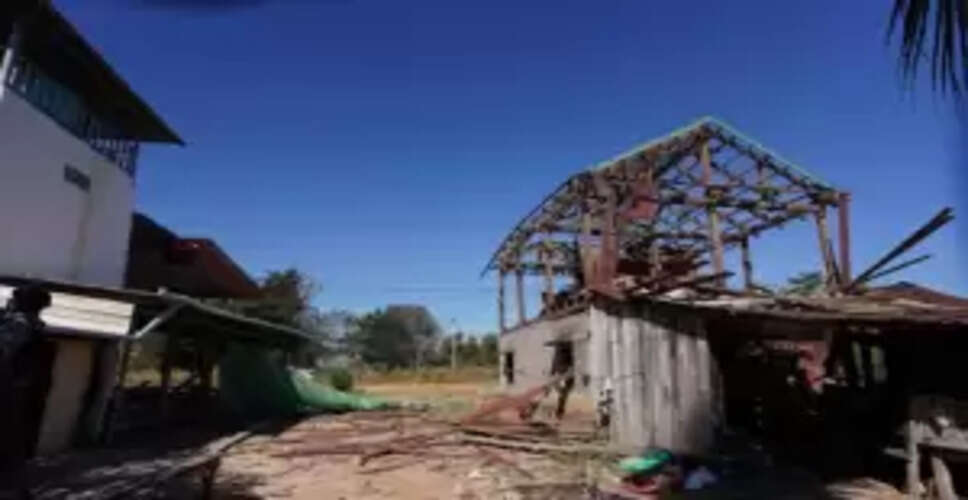
The situation escalated dramatically on December 8-9 following the collapse of a ceasefire established in July, leading to Thailand deploying fighter jets and artillery, while Cambodia retaliated with rocket fire.
Clashes have been reported in various contested areas along the Thailand-Cambodia border, particularly around the Dangrek mountain range, which stretches across northeastern Thailand and northern Cambodia.
This border region is home to numerous ancient Khmer temples, many situated near the frontier. Control over the adjacent elevated areas has been a long-standing issue, with recent troop movements, shelling, and aerial operations marking the latest round of conflict.
The origins of this dispute trace back to the early 1900s, when boundary lines were drawn during the French colonial period in Cambodia. Thailand argues that some maps from that era inaccurately delineated the border and did not adhere to natural watershed boundaries referenced in earlier treaties.
A major point of contention is the Preah Vihear temple. In 1962, the International Court of Justice ruled that Cambodia holds sovereignty over the temple, yet the ruling did not clearly define ownership of the surrounding land, leading to differing interpretations by both nations.
During the recent escalation, US President Donald Trump stated he had engaged in discussions with the leaders of both Thailand and Cambodia, claiming they had agreed to halt hostilities. He characterized the talks as constructive, with both nations committing to cease all military actions and work towards a peace arrangement akin to previous ceasefires.
Despite these diplomatic overtures, reports of ongoing clashes persisted, revealing a gap between official statements and the reality on the ground. Officials from both countries later acknowledged the outreach but indicated that the conditions for a ceasefire had not yet been fully met.
Thailand’s caretaker Prime Minister Anutin Charnvirakul confirmed his conversation with Trump but stated that military operations would continue until there were no further threats to Thai territory or civilians. He accused Cambodian forces of violating ceasefire agreements and noted that the border situation remained unstable.
Cambodian Prime Minister Hun Manet reiterated Cambodia's commitment to peace and dialogue. Public statements from Phnom Penh, including social media posts, emphasized support for a ceasefire and diplomatic engagement while accusing Thailand of escalating military actions along the border.
Tensions initially flared in May after a confrontation near the Emerald Triangle, where Thailand, Cambodia, and Laos meet, resulting in the death of a Cambodian soldier. The situation deteriorated in July, with both sides exchanging artillery fire and deploying heavy weaponry at multiple border sites, leading to large-scale civilian evacuations.
Although a ceasefire declared later in July provided a brief respite, isolated incidents continued. Renewed exchanges of fire in December resulted in further military casualties and ultimately led to the collapse of the truce.
Authorities from both nations have confirmed that soldiers were killed and several others injured during the clashes. Civilians in border regions have also suffered, with tens of thousands displaced during the July conflict and again following the renewed violence in December.
ASEAN member states have called for both countries to return to the negotiating table. Diplomatic efforts are focused on preventing further civilian displacement and restoring peace along the border.