
Texas Supreme Court Upholds Lawmakers' Rights Amid Redistricting Controversy

Court Decision on Lawmakers' Absence
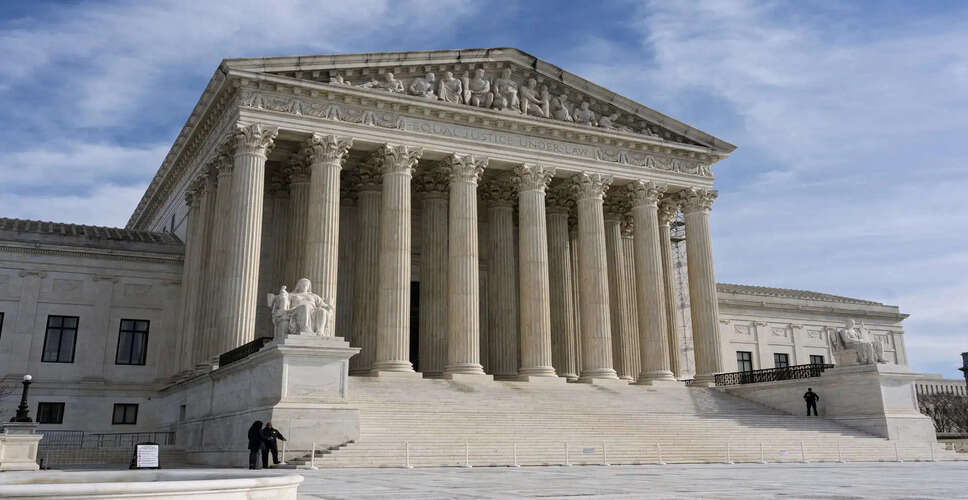
On Friday, the Texas Supreme Court declined to rule that Democratic legislators who temporarily left the state in 2025 to obstruct a vote on new congressional maps proposed by President Donald Trump had vacated their positions. This ruling represents a setback for Governor Greg Abbott and the Republican Party, who aimed to impose strict penalties on over 50 Democrats who fled to states like New York, Illinois, and Massachusetts to prevent the vote during a special session.
The redistricting efforts in Texas have sparked similar initiatives nationwide as both parties strive to redraw voting maps ahead of the upcoming midterm elections. Republicans, motivated by Trump, aim to maintain their narrow majority in Congress, while Democrats are working to counteract these efforts. The urgency of these initiatives has increased following the U.S. Supreme Court's decision to further dilute the Voting Rights Act, which now prohibits considering race in the drawing of congressional and other districts.
Governor Abbott contended in a lawsuit directed at the state’s highest civil court that state Representative Gene Wu, who leads the House Democratic caucus, and other lawmakers had effectively abandoned their responsibilities. If successful, this legal action could have served as a tool to intimidate legislators contemplating future quorum breaks. Wu countered that he was not abandoning his duties but rather exercising his right to dissent.
In rejecting Abbott’s request, Justice James Blacklock's opinion highlighted that the Republican-majority Legislature had sufficiently addressed the issue through measures like imposing fines on absent lawmakers, who eventually returned within a few weeks. Blacklock stated, “Ultimately, a quorum was restored in two weeks without judicial intervention, driven by political and practical dynamics.”
The opinion further noted that courts generally do not intervene in disputes between legislative branches that can be resolved internally. Should the situation arise again and the Legislature struggle to compel lawmakers to return, the court may reconsider its stance.
Wu remarked, “When Greg Abbott threatened to arrest and expel us for denying him a quorum, we told him he should ‘come and take it.’ He tried!” He emphasized that Abbott's threats were ineffective, stating, “Abbott was wrong, weak, and after all his bluster, he couldn’t come and take a damn thing.” Following their return to Texas, the new congressional map was passed and signed into law by Abbott.
Wu argued that since he returned to the Capitol and the map was ultimately enacted, there was no longer a need for the court's involvement. However, Abbott's spokesperson, Andrew Mahaleris, indicated that if lawmakers leave again, the governor would revisit the issue in court. Mahaleris asserted, “No elected official has the right to abandon their duties, flee the state, and shut down the people’s business. Governor Abbott’s legal action is what brought derelict Democrats back to Texas to do their jobs and pass the Big Beautiful Map.”