
Terror Attack in Kulgam Claims Lives of Two Migrant Workers from Chhattisgarh
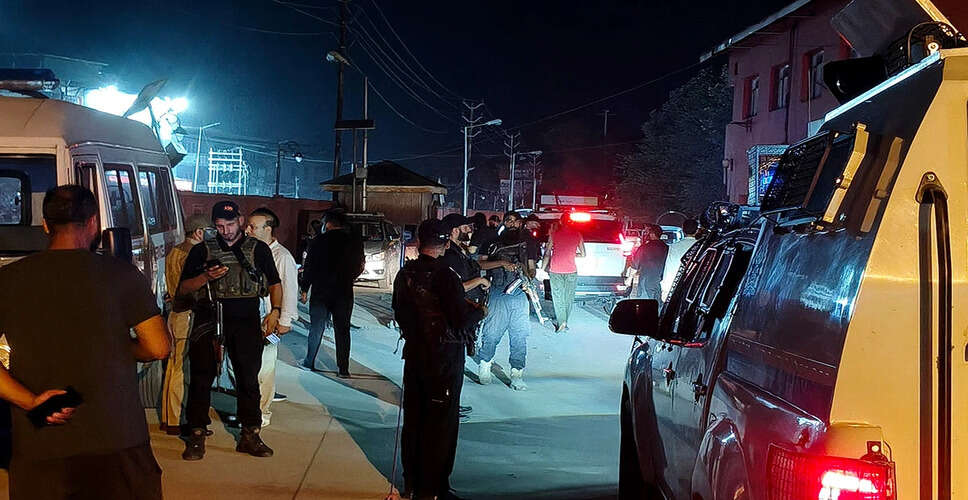

Tragic Incident in Kulgam
Once again, South Kashmir has become the site of a brutal terrorist plot. On Friday, two migrant laborers from Chhattisgarh were shot at close range by terrorists while working at a brick kiln in the Kulgam district's Kilam village. Deepak was killed instantly, while Bhupinder, who was critically injured, succumbed to his wounds on Saturday morning at the Sher-i-Kashmir Institute of Medical Sciences (SKIMS) in Srinagar. This incident has raised the death toll from this attack to two.
Immediate Response from Security Forces
Following the attack, security forces and Jammu and Kashmir police quickly arrived at the scene, cordoning off the area and launching a search operation. Bhupinder was initially taken to the Government Medical College Hospital in Anantnag, but due to his critical condition post-surgery, he was referred to SKIMS in Srinagar. Despite the doctors' best efforts, he could not be saved.
Concerns Over Rising Violence
This attack is particularly alarming as it marks the second significant terrorist incident in South Kashmir within just ten days. Previously, on July 22, a police officer from the Special Operations Group (SOG) was shot dead in Anantnag. Notably, this is the first time since October 2024 that terrorists have targeted migrant workers.
Historical Context of Violence Against Migrant Workers
Data from the past six years raises serious concerns regarding the safety of migrant workers in the valley. Over this period, more than 25 migrant laborers have lost their lives in various terrorist incidents. For instance, on October 18, 2024, a 30-year-old laborer from Bihar, Ashok Chauhan, was murdered by terrorists. Just two days later, a major attack on the under-construction Z-Morh tunnel base camp on the Srinagar-Leh National Highway resulted in the deaths of six migrant workers and a Kashmiri doctor. The recent attack indicates that terrorist organizations are reverting to their strategy of targeting civilians and migrant workers seeking livelihoods.
Political Reactions to the Attack
In the aftermath of the incident, Jammu and Kashmir's Lieutenant Governor Manoj Sinha condemned the attack, labeling it a cowardly act. He stated that he had instructed the Director General of Police Nalin Prabhat and other senior security officials to intensify operations against the terrorists and ensure their elimination. The Lieutenant Governor assured that those responsible for the attack would soon face justice and expressed deep condolences to the victims' families.
Unified Condemnation from Political Parties
Political parties have also condemned the attack in unison. Mehbooba Mufti, president of the People's Democratic Party (PDP), described it as "unimaginably brutal" and "senseless violence," emphasizing that these workers had traveled hundreds of kilometers to support their families but became victims of terror. She asserted that the killing of innocent individuals is unacceptable under any circumstances.
The ruling National Conference expressed grave concern over the incident, questioning how such heinous murders can occur despite claims of robust security measures. Altaf Bukhari, the party president, called the attack "tragic and inhumane," demanding strict action against the perpetrators. The People's Conference also condemned the targeting of innocent civilians and extended condolences to the affected families.
Ongoing Security Challenges
The Kulgam incident highlights the ongoing challenges faced by security agencies in the valley, indicating that the threat of terrorism is far from over. The continuous targeting of migrant workers and civilians raises serious questions about security arrangements and puts the claims of restoring normalcy in Kashmir to a rigorous test. All eyes are now on the security forces' efforts to apprehend or neutralize the attackers swiftly.