
Tensions Rise in the Middle East as Trump Delays Military Action Against Iran
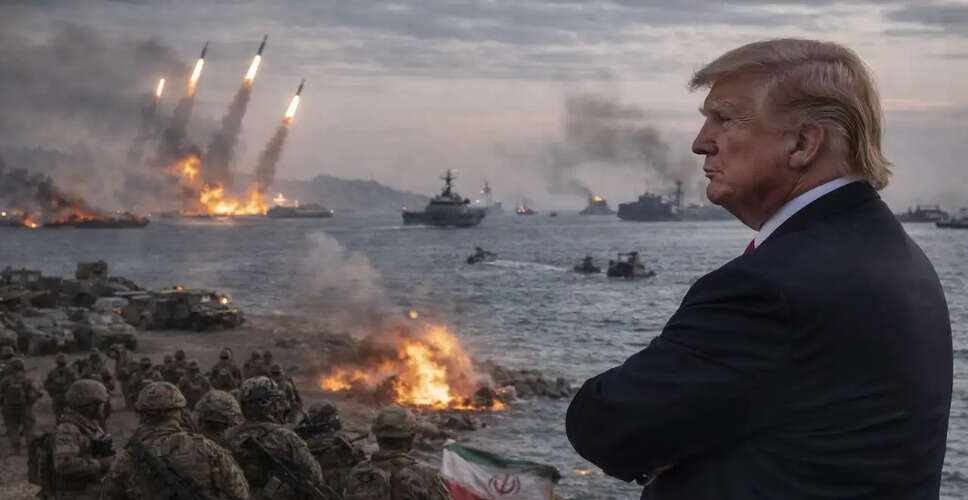

Middle East on Edge Following Trump's Decision
On Tuesday, the Middle East found itself engulfed in a climate of anxiety after President Donald Trump declared a postponement of a significant US military operation against Iran, allowing additional time for diplomatic negotiations. During a statement on Monday, Trump revealed that he had approved a 'very major attack' set for Tuesday but chose to delay it following appeals from leaders in Qatar, Saudi Arabia, and the UAE. He indicated that the US military was prepared for a 'full, large-scale assault' if necessary, while expressing optimism for a diplomatic resolution regarding Iran's nuclear ambitions.
Iran's Reaction
Iran did not provide an immediate response to Trump's remarks. Nonetheless, Brig. Gen. Mohammad Akraminia, a spokesperson for the Iranian Army, cautioned that any renewed US aggression would lead Iran to open 'new fronts' employing 'new tools and methods,' as reported by state media.
Pakistan's Role as Mediator
Pakistan has stepped up its efforts as a mediator in the ongoing conflict. Reports from Iranian state media indicate that Pakistan's Interior Minister Mohsin Naqvi met with Iran's Foreign Minister Abbas Araghchi in Tehran on Monday evening to discuss strategies for ending the hostilities. Naqvi's visit, which reportedly commenced on Sunday, coincides with high-level discussions involving Pakistan's army chief, Asim Munir, with both US and Iranian officials. The Pakistani government has yet to publicly address these recent meetings. Qatar's Foreign Ministry spokesperson, Majed al-Ansari, expressed support for Pakistan's mediation endeavors but warned that the likelihood of success remains uncertain. He characterized Trump's decision to delay the military strike as providing diplomacy with 'another chance.'
Ceasefire Under Pressure
These recent developments unfold against the backdrop of a fragile ceasefire that has been increasingly strained. Trump's tendency to issue severe threats followed by last-minute delays has become a hallmark of the current standoff. Although the ceasefire is technically still in effect, both Washington and Tehran have accused one another of breaching agreements established through indirect talks. Incidents involving drones, military alerts in the Gulf, and rising tensions around the Strait of Hormuz have heightened concerns that the ceasefire could collapse at any moment. Regional powers, including Qatar, Saudi Arabia, and the UAE, have ramped up diplomatic efforts in recent days, fearing that renewed hostilities could disrupt energy markets and jeopardize vital shipping routes for global oil supplies. Pakistan has also emerged as a crucial intermediary, maintaining lines of communication with both the US and Iran to avert a return to large-scale conflict. The situation remains highly dynamic, with both parties navigating between military posturing and diplomatic avenues as the region prepares for what could be a pivotal phase in the ongoing conflict.