
Tensions Rise in Chhattisgarh Village Over Religious Conversion Issues
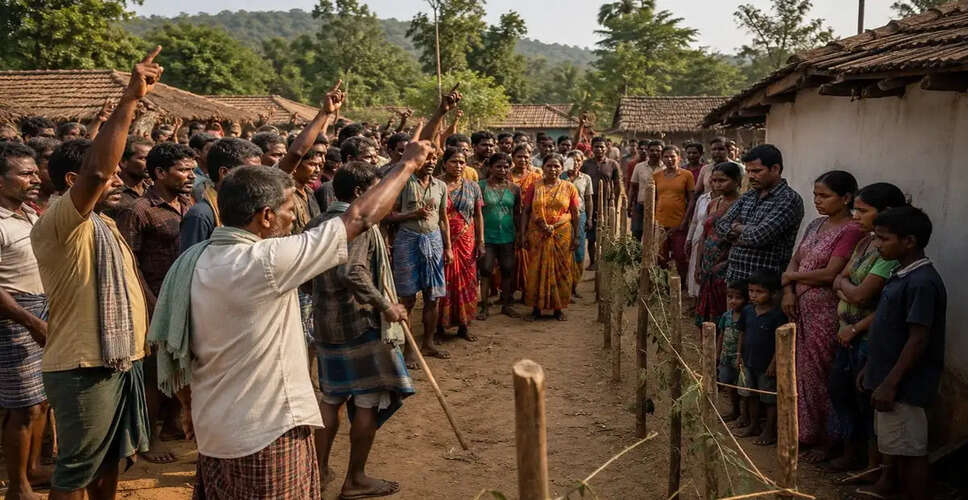

Conflict Erupts in Narayanpur District
In the Bastar region of Chhattisgarh, a long-standing issue regarding religious conversions has resurfaced, leading to significant unrest among the local Hindu community. On Tuesday, residents of Barhanda village in Narayanpur district expressed their discontent by demanding that 26 Christian families vacate the area. The villagers issued a clear warning against any interference with their traditional tribal customs, local deities, and social practices, stating that no new religious activities or prayer meetings would be permitted within the village.
The situation escalated quickly, prompting a heavy police presence and intervention from local authorities.
Police Deployment and Negotiations
According to reports, a substantial police force was deployed throughout the sensitive Bastar area, with officials attempting to mediate discussions between the conflicting parties. Late in the evening, an agreement was reached, allowing the affected families to return home. However, the Christian families gathered outside the village claimed they faced social ostracism and discrimination based on their religious beliefs, staging protests and demanding safety and justice from the administration.
Conversely, the tribal villagers argued that religious conversions were undermining their traditional beliefs, social order, and community customs.
Ongoing Tensions and Historical Context
Officials noted that the dispute in Barhanda is not a new phenomenon, with tensions having persisted since December of the previous year. The situation worsened following a clash between the two groups on June 9. Despite ongoing meetings and discussions, a permanent resolution remained elusive until the recent escalation during a village meeting, where accusations arose regarding the Christian families conducting religious activities within the village.
In response to the seriousness of the situation, police and district administration acted swiftly. Additional Superintendent of Police Sushil Nayak reported that approximately 13 to 14 rounds of discussions were held to peacefully resolve the matter.
Terms of the Agreement
The agreement reached stipulates that the Christian families may remain in the village but are prohibited from conducting any religious activities within its boundaries. This includes holding prayer meetings or performing religious rites associated with funerals. Villagers insisted that any such activities must take place outside the village. Some residents also suggested that those who have converted to Christianity should revert to their original faith within a month.
Other villagers emphasized that any activities deemed contrary to tribal traditions, local deities, and social customs would not be tolerated within the village. They argued that maintaining the traditional social structure is essential and that external religious influences are threatening the village's cultural identity.
Current Situation and Future Outlook
Despite the tensions, authorities confirmed that there were no reports of violence during the incident. However, the situation remained sensitive enough to warrant the continued presence of additional security forces throughout the day. Police maintained vigilance in the village and surrounding areas to prevent any untoward incidents.
As of Wednesday, police reported that the situation in Barhanda was calm, but security forces would remain deployed as a precaution. The administration urged both parties to foster mutual harmony and resolve their differences through dialogue.
Broader Implications of Religious Conversion Disputes
It is important to note that disputes over religious conversions have periodically emerged in the remote areas of Bastar. In recent years, similar conflicts have arisen between tribal communities and families who have adopted Christianity. Experts suggest that these disputes extend beyond mere religious beliefs, encompassing issues of cultural identity, social structure, and traditional rights. The greatest challenge for the administration in such cases is to maintain peace while balancing the rights and sensitivities of all communities involved.
The incident in Barhanda has once again brought to the forefront discussions surrounding religious conversion and social harmony in the Bastar region. The administration's current objective is to ensure that both sides can coexist peacefully and prevent any resurgence of tension that could lead to violence.