
Tensions Rise Between Military and Political Leadership in Pakistan
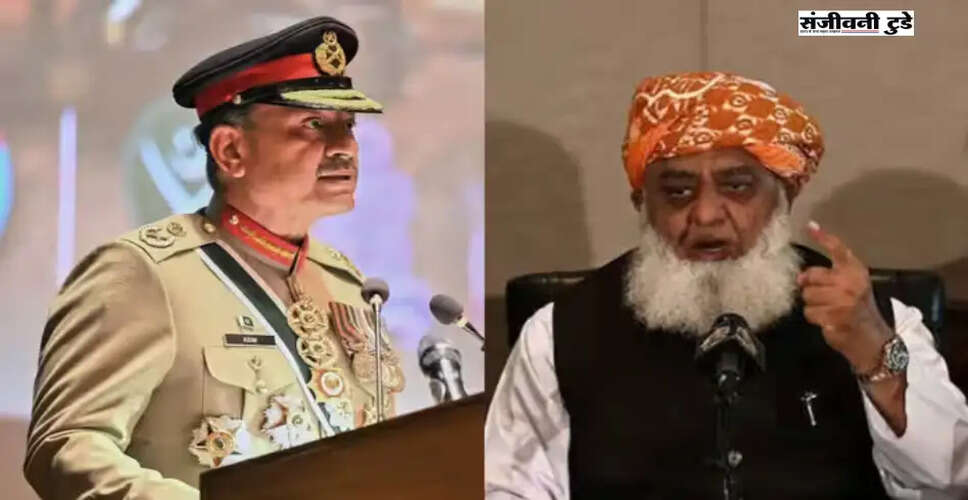

Political Tensions in Pakistan
The political landscape in Pakistan is once again witnessing heightened tensions between the military and political leaders. Maulana Fazlur Rehman, a senior political figure and head of the Jamiat Ulema-e-Islam (F), has launched a sharp critique against Army Chief General Asim Munir, raising serious concerns about the situation in Balochistan and the overall political climate in the country. His remarks have sparked a new debate within Pakistan's political corridors.
During a public event, Maulana Fazlur Rehman asserted that the government's position in Balochistan is increasingly deteriorating, with rising challenges related to security and administration. He accused the current policies of exacerbating the situation, claiming that both the government and security apparatus have failed to manage the circumstances effectively.
In his address, the Maulana also targeted Army Chief General Asim Munir, stating that if the military wishes to play a significant role in the country's politics, it must engage in the democratic process. He provocatively suggested that if the military claims to have public support, they should abandon their uniforms and contest elections to earn the people's mandate.
Furthermore, Maulana Fazlur Rehman alleged that democratic institutions in Pakistan are under constant pressure, limiting political parties' ability to operate freely. He emphasized that the resolution of the country's issues can only be achieved through democratic processes, respect for the constitution, and adherence to the people's mandate.
Balochistan has long been in the spotlight due to security challenges, separatist activities, and developmental issues. In recent years, the region has witnessed numerous violent incidents, prompting the central government and security agencies to launch ongoing operations. However, opinions on the situation in the region vary among different political parties and analysts.
Following the Maulana's statements, there are expectations of intensified political rhetoric in Pakistan. However, no immediate official response has been issued from General Asim Munir or the Pakistan Army regarding these remarks.
Political analysts believe that such statements could further fuel the ongoing debate about the relationship between the military and political leadership in Pakistan. All eyes are now on how the government, opposition, and military will respond to this issue in the coming days.