
Tensions Rise Between India and Bangladesh Amid Violent Incidents
Escalating Strain in India-Bangladesh Relations
Recent violent incidents in Bangladesh have intensified the existing strain in the relationship between Dhaka and Delhi. Following the murder of a Hindu youth in northern Bangladesh's Mymensingh, distrust and accusations have surfaced prominently between the two nations. This situation raises concerns about whether the long-standing, reliable relationship between India and Bangladesh is entering a critical phase.
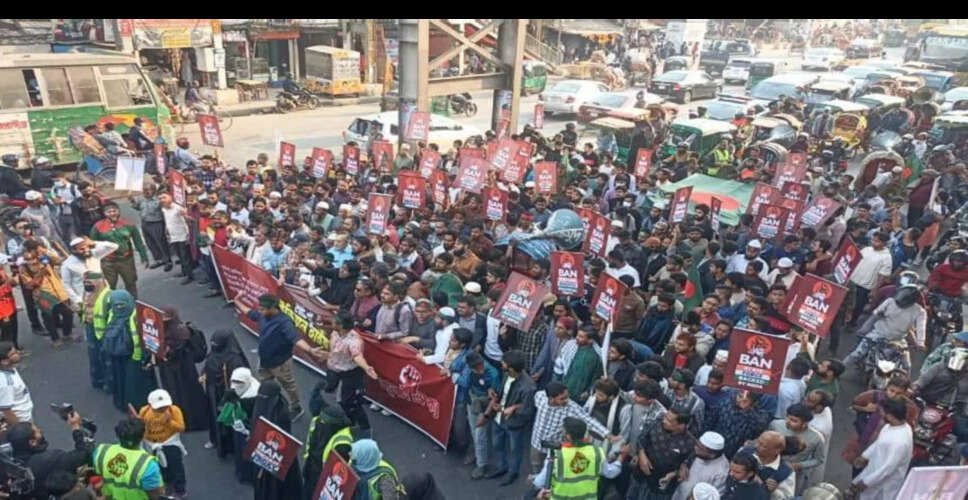
The victim, 27-year-old Dipu Chandra Das, a member of Bangladesh's Hindu minority, was allegedly beaten to death by a mob on charges of blasphemy. This tragic event coincided with planned large-scale protests in the capital, Dhaka, over the murder of student leader Sharif Usman Hadi. Supporters of Hadi claim that the main suspect, reportedly linked to the Awami League of ousted Prime Minister Sheikh Hasina, has fled to India, although Bangladeshi police have not confirmed this allegation.
Notably, these events have fueled anti-India sentiments in Bangladesh. In India, Hindu organizations have staged protests against the killing of Dipu Das. Both nations have accused each other of negligence regarding the security of their diplomatic missions. Consequently, visa services have been temporarily suspended in several cities, including Delhi, and both countries have summoned their high commissioners to express their concerns.
Dissatisfaction regarding India's influence in Bangladesh is not a new phenomenon. During Sheikh Hasina's 15-year rule, a segment of the population felt that India interfered excessively in Dhaka's politics. This discontent has deepened following Hasina's ousting and her seeking refuge in India, especially as India has yet to agree to demands for her repatriation.
The situation worsened after videos of Dipu Das's murder went viral on social media. Muhammad Yunus, the interim government head and Nobel laureate, stated that "there is no place for such violence in the new Bangladesh," assuring that the perpetrators would not be spared. According to police, twelve individuals have been arrested in connection with this case.
Analysts suggest that religious extremist elements have become more vocal since Sheikh Hasina's departure. Reports of attacks on Hindus, damage to Sufi shrines, bans on women's sports events, and disruptions to cultural programs have emerged in various regions. Human rights organizations have also expressed concern over the rise in mob violence over the past year.
Political analyst Asif Bin Ali notes that extremist groups are increasingly positioning themselves as mainstream and are unwilling to accept diversity or dissent. He claims that violence is being justified against individuals or organizations labeled as "pro-India."
Meanwhile, uncertainty looms over the upcoming elections in Bangladesh scheduled for February 12. With the Awami League opting out of the elections, the Bangladesh Nationalist Party is seen as a potential winner, although Islamic parties like Jamaat-e-Islami could pose a challenge. Experts believe that maintaining law and order and balancing foreign policy will be difficult for the interim administration until an elected government is in place.
Indian policymakers are closely monitoring the situation. A parliamentary committee has described the recent developments as the most significant strategic challenge for India since 1971. Former Bangladeshi diplomat Humayun Kabir emphasizes that both countries should acknowledge the ground realities and restore trust through dialogue.
Experts argue that Bangladesh's stability is crucial for India's security, particularly for its northeastern states. Therefore, both nations must ensure that the anger emerging on the streets does not overshadow their diplomatic relations, as this could severely impact ordinary citizens, minorities, and democratic values.