
Tensions Rise as US-Iran Ceasefire Faces New Challenges

Ceasefire Under Pressure
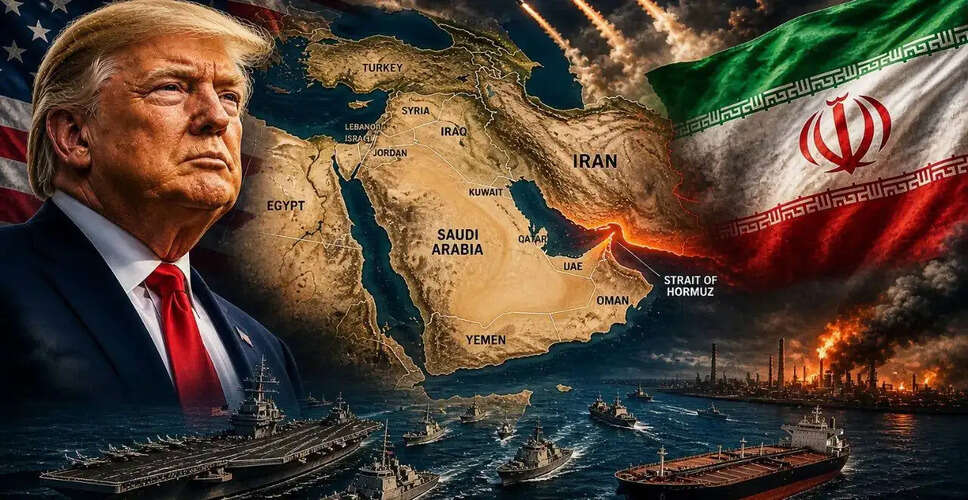
The delicate ceasefire between the United States and Iran is showing signs of strain, with reports emerging of new missile strikes from Iran and ongoing naval confrontations in the Strait of Hormuz. Despite President Trump and other senior officials asserting that the ceasefire remains intact, the situation in the region appears increasingly precarious. On Tuesday, Trump announced a temporary halt to US operations in the Strait of Hormuz, known as 'Project Freedom,' following requests from Pakistan and other nations. He stated, 'While the blockade will remain in effect, we have agreed to pause Project Freedom to explore the possibility of finalizing an agreement with Iranian representatives.'
Escalating Attacks in the Middle East
Ceasefire Tested by Strikes Across Middle East
Recent tensions escalated as Iran reportedly launched a new wave of missiles targeting the United Arab Emirates, marking the second such incident within 48 hours. Authorities indicated that their air defense systems intercepted the incoming threats, but it remains uncertain if any damage occurred. These strikes coincided with American naval forces' efforts to reopen the Strait of Hormuz. Despite the rising tensions, Trump expressed confidence, claiming, 'We have total control. The blockade is solid; no one will challenge it.'
While Trump downplayed the violence, US officials acknowledged that Iranian forces had targeted American ships multiple times since the ceasefire began on April 8. Trump described these incidents as minor and did not clarify what would constitute a breach of the ceasefire.
Strait of Hormuz: A Critical Flashpoint
Competing Claims Over Strait of Hormuz
The Strait of Hormuz is a crucial maritime passage, through which approximately 20% of the world's oil and liquefied gas is transported. Since hostilities erupted, traffic has nearly halted. Defense Secretary Pete Hegseth stated that the US has secured control over the strait, emphasizing that their operations are defensive. 'We're not looking for a fight,' he added.
However, Iranian officials have dismissed these claims, asserting that Tehran's control over the waterway has intensified. Conflicting narratives have created uncertainty regarding the actual balance of power, even as both sides attempt to project strength. A cargo ship, the CGM San Antonio, was reportedly struck by a suspected missile, injuring several crew members. Since Sunday, there have been multiple incidents involving commercial vessels, including a fire and projectile strikes.
US Military Strategy and Global Implications
What the US Plans Next
US officials have consistently framed their military posture as defensive. The Central Command reported that its forces intercepted cruise missiles and drones targeting US vessels and destroyed six Iranian speedboats. Secretary of State Marco Rubio emphasized the necessity of safeguarding global commerce, warning that ships stranded in the region face dire conditions. 'You can't leave a ship out there for long; they run out of food and water,' he stated.
Rubio noted that nations not directly involved in the conflict are feeling the repercussions, with many urging the US to restore safe passage. He accused Iran of trying to normalize its control over the strait, stating, 'We cannot allow them to normalize the destruction of commercial ships.'
Ongoing Military Activity and Economic Impact
What's Happening on the Ground
While neither side has officially declared the ceasefire broken, military activities continue unabated. General Dan Caine reported that Iran has conducted ten attacks on US forces since the ceasefire took effect, describing these actions as 'below the threshold' for resuming major combat operations. He accused Iran of leveraging the strait to manipulate the global economy, claiming they have 'weaponized the global supply chain.'
The Impact of the Standoff
The ongoing standoff has significant economic repercussions, disrupting global energy markets and driving up fuel prices. Over 800 ships and approximately 20,000 crew members are believed to be stranded west of the strait, underscoring the scale of the disruption. Iran has threatened to deploy mines and drones to deter passage, while the US has responded with a blockade of Iranian ports, resulting in a maritime stalemate.
Future Prospects for Peace
What Happens Next
Efforts to transition from the ceasefire to a more sustainable resolution have seen little progress. US and Iranian officials held a round of talks in Islamabad last month, mediated by Pakistan, but further negotiations have stalled. A senior Pakistani official indicated that 'backdoor diplomacy' is ongoing, with some gaps narrowing, although no breakthroughs have been reported. Iran has proposed a 14-point peace plan focused on lifting blockades and establishing a new management mechanism for the strait. While Iranian Foreign Minister Abbas Araghchi stated that negotiations are progressing, he warned that the US and its allies risk being drawn into a 'quagmire.' For now, the ceasefire appears to be tenuous, with ongoing exchanges of fire and stalled negotiations indicating a fragile situation that could deteriorate rapidly.