
Tensions Rise as IRGC Confronts US Forces in Strait of Hormuz
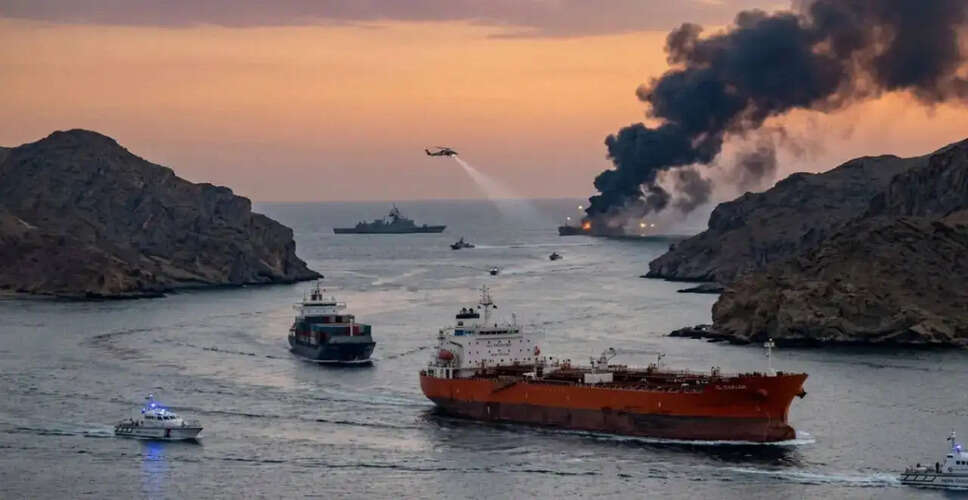

Escalating Tensions in the Strait of Hormuz
Tehran: According to reports from Press TV, the Islamic Revolution Guards Corps (IRGC) compelled US military personnel stationed in the Sea of Oman to withdraw. This incident occurred following the alleged seizure of an Iranian-flagged vessel, Touska, by US forces as it attempted to navigate through the Strait of Hormuz, which is currently under a US naval blockade. The US forces reportedly attacked the Iranian merchant ship, prompting it to retreat to Iranian waters. This incident has heightened tensions between the US and Iran amidst an ongoing ceasefire, although the US has yet to issue an official statement regarding the matter.
Press TV indicated that the IRGC's naval units responded swiftly, leading to the US forces' retreat from the area. The Strait of Hormuz is a crucial maritime route, accounting for 20% of global crude oil and liquefied natural gas shipments prior to the onset of the Iran war on February 28. Following failed negotiations earlier this month, the US imposed a naval blockade in this vital waterway, restricting vessels from entering or exiting Iranian ports.
On Friday, Iran had temporarily lifted restrictions on non-hostile commercial shipping in the strait. However, the IRGC announced on Saturday that the Strait of Hormuz has been closed again due to the US's continued blockade of Iranian ports, which violates a ceasefire declared by US President Donald Trump on April 8. The IRGC stated, "Due to the breach of ceasefire conditions and the ongoing blockade on Iranian vessels and ports, the Strait of Hormuz has been closed as of this evening until the blockade is lifted."
Uncertainty Surrounds Future Peace Talks:
As the next phase of US-Iran diplomacy approaches, uncertainty looms over a potential second round of discussions in Islamabad. While President Trump announced that American negotiators would be traveling to Pakistan for talks, Iranian officials have denied any agreement for such a meeting, labeling the reports as inaccurate. Trump stated on Sunday that his representatives would arrive in Islamabad on Monday for negotiations, mentioning, "My Representatives are going to Islamabad, Pakistan - They will be there tomorrow evening, for Negotiations." According to the White House, Vice President JD Vance, who led the initial round of talks last weekend, will head the American delegation, accompanied by Jared Kushner and Steve Witkoff.
There has been no official response from Iranian representatives regarding Trump's announcement of new talks in Pakistan. However, Iranian media have dismissed the reports as false, with Foreign Minister Abbas Aragchi expressing concerns about the US's intentions, stating that they reflect a lack of seriousness in diplomatic efforts during discussions with Pakistan’s Foreign Minister, Ishaq Dar.