
Tensions Rise as Afghanistan Accuses Pakistan of Deadly Airstrikes
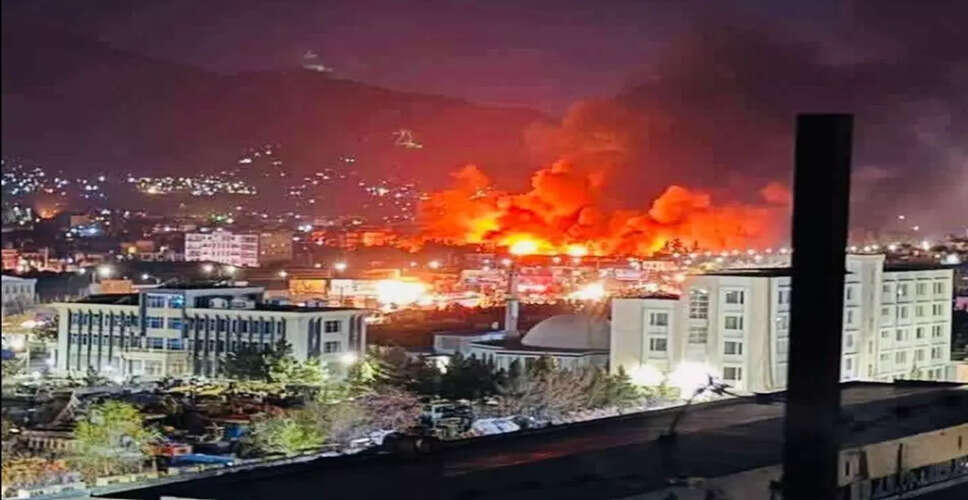
Airstrikes in Kabul: A Deadly Incident
On March 17, reports emerged from Afghanistan claiming that airstrikes attributed to Pakistan resulted in the deaths of nearly 400 individuals and left 250 others injured in Kabul. Pakistan has refuted these allegations, asserting that only militant targets were struck.
Hamdullah Fitrat, the deputy spokesman for the Afghan government, stated that the airstrikes occurred on the night of March 16, targeting a hospital in Kabul that was treating drug users, leading to significant destruction and numerous casualties.
Rescue teams are reportedly still working to extinguish fires and recover bodies from the affected area.
Initially, Afghanistan’s Health Ministry reported over 200 fatalities, with numbers expected to rise as rescue efforts continue.
In contrast, Pakistan denied any attacks on civilian facilities. The Ministry of Information and Broadcasting clarified that the strikes were part of a broader operation aimed at dismantling 'terrorist support infrastructure' in Kabul and the eastern Nangarhar province.
The statement indicated that the targets included technical equipment and ammunition storage believed to be utilized by the Afghan Taliban and associated groups against Pakistani civilians.
Furthermore, the ministry noted that explosions following the strikes suggested the presence of stored ammunition and dismissed the claims of civilian casualties as unfounded.
The conflicting narratives surrounding the airstrikes remain unverified.
If confirmed, these strikes would signify a significant escalation in the ongoing tensions between Afghanistan and Pakistan, with both nations frequently accusing each other of harboring militant factions.
In a related development, India criticized Pakistan at the United Nations, accusing it of disseminating 'fabricated' narratives regarding Islamophobia while simultaneously engaging in actions that contradict such claims.
During a UN General Assembly session commemorating the International Day to Combat Islamophobia, India's Permanent Representative, Parvathaneni Harish, described Pakistan as a prime example of creating imaginative tales about its neighbors.
He raised concerns about how Pakistan's actions, including alleged minority repression and airstrikes during the holy month of Ramzan, align with its claims.
Harish also accused the Organisation of Islamic Cooperation of being 'systematically weaponized' against India through what he termed 'false and baseless allegations', warning against the political exploitation of religious identity.