
Tensions Rise Again Along Assam-Nagaland Border Over Road Construction
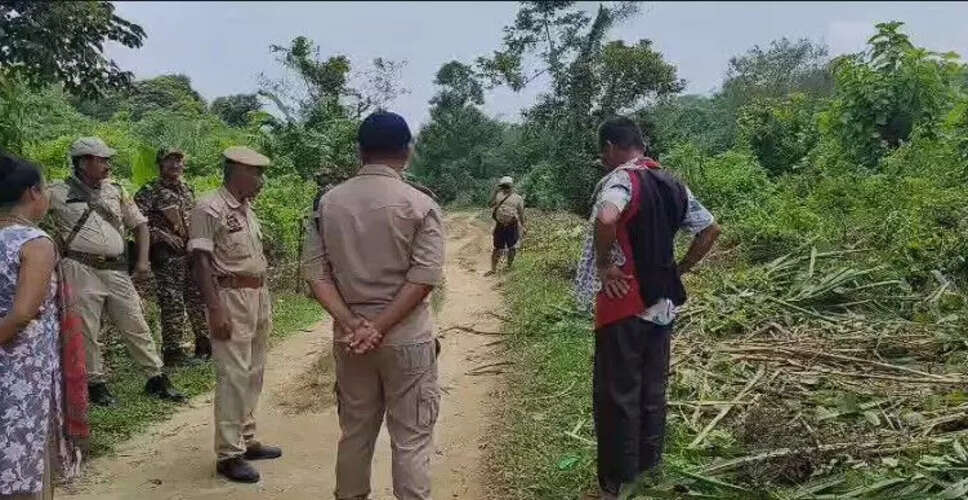

Renewed Tensions in Jorhat District
Work was allegedly stopped again on Thursday after unidentified Naga miscreants arrived at the site
Jorhat, June 25: Fresh tensions flared up along the Assam-Nagaland border in Jorhat district on Thursday, as road construction under the Mahatma Gandhi National Rural Employment Guarantee Act (MGNREGA) in Mariani was reportedly interrupted once more by unidentified Naga groups. This disruption occurred just a day after laborers had resumed work with the backing of local organizations.
Local residents reported that workers returned to the construction site in Katani Gaon Panchayat on Wednesday following persistent protests from community groups advocating for uninterrupted work on the Assam side of the border.
However, on Thursday, unidentified Naga individuals allegedly obstructed the construction efforts and issued new threats, causing panic among residents in the border area.
In response to these developments, Gyanashree Bora, a former candidate from the Raijor Dal in the Mariani Assembly constituency, claimed that the work had been progressing until it was halted again.
"Individuals from Nagaland, along with some officials, have prevented laborers from continuing their work. They have effectively established a boundary beyond which no work is permitted," she stated.
Bora further alleged that officials who visited the site instructed workers to cease operations instead of supporting the local populace.
"If this situation persists, the boundary will continue to expand. Residents live in fear as those coming from the other side often carry machetes, even during discussions," she asserted, calling on Chief Minister Himanta Biswa Sarma to visit Nagajanka and take action.
This renewed conflict has heightened concerns regarding the longstanding border dispute and has led to accusations that the Assam administration is failing to safeguard both residents and development initiatives in the region.
The Assam Tea Tribes Students' Association (ATTSA) and the All Adivasi Students' Association of Assam (AASA), which have been at the forefront of protests regarding this issue, claimed that despite numerous demonstrations and petitions, neither the Jorhat district administration nor the state government has taken effective measures to address what they describe as ongoing intimidation by Naga groups.
The current dispute revolves around a rural road being constructed under the MGNREGA scheme in Katani Gaon Panchayat.
Local organizations assert that the road is situated within Assam's territory, yet Naga groups have consistently opposed the project, asserting that the land belongs to Nagaland.
Protesters also alleged that after occupying nearly 80% of land across three reserved forests in the Mariani area, the focus of alleged encroachment has now shifted to road infrastructure being developed on the Assam side of the border.
They further contended that the inaction of police and civil authorities has emboldened such activities.
This latest incident follows a series of protests in the region over the past fortnight. On June 20, road repair work in the same area was similarly halted after a group from across the border allegedly claimed ownership of the land and warned laborers to stop work.
This incident triggered widespread protests on June 23, when residents, student organizations, and nearly 18 groups demonstrated in Mariani and Uriamghat.
They demanded a permanent resolution to the Assam-Nagaland border dispute, the adoption of a memorandum to Union Home Minister Amit Shah through the Assam government, and a tripartite meeting involving both state governments and local stakeholders.
The renewed dispute has also been associated with opposition to a proposed road-sharing arrangement in the Disputed Area Belt (DAB).
Earlier this month, local organizations on the Assam side objected to a proposal to transfer a 14.495-km segment of a 21.695-km road built by the Border Roads Organisation to Nagaland, arguing that such a move could bolster future territorial claims by the neighboring state.