
Temporary Ceasefire Between Israel and Lebanon: Key Developments

Overview of the Ceasefire Agreement
A ceasefire lasting 10 days between Israel and Lebanon commenced at midnight on April 16, halting hostilities between Israel and Hezbollah. This conflict has resulted in over 2,100 fatalities among Lebanese citizens and displaced more than 2.1 million individuals. The announcement was made by Donald Trump, who revealed he had discussions with Israeli Prime Minister Benjamin Netanyahu and Lebanese President Joseph Aoun, inviting both leaders for significant discussions at the White House. Both leaders expressed their support for the agreement. Although officials from both nations confirmed their commitment to the ceasefire, doubts linger regarding its sustainability. Hezbollah indicated a conditional acceptance, and both parties exchanged fire in the hours leading up to the truce. Concurrently, the US and Iran showed willingness to engage in further discussions to prolong their own ceasefire.
1. A Fragile Ceasefire Takes Hold in Lebanon
The 10-day truce, effective from midnight Friday, halts fighting between Israel and Hezbollah.
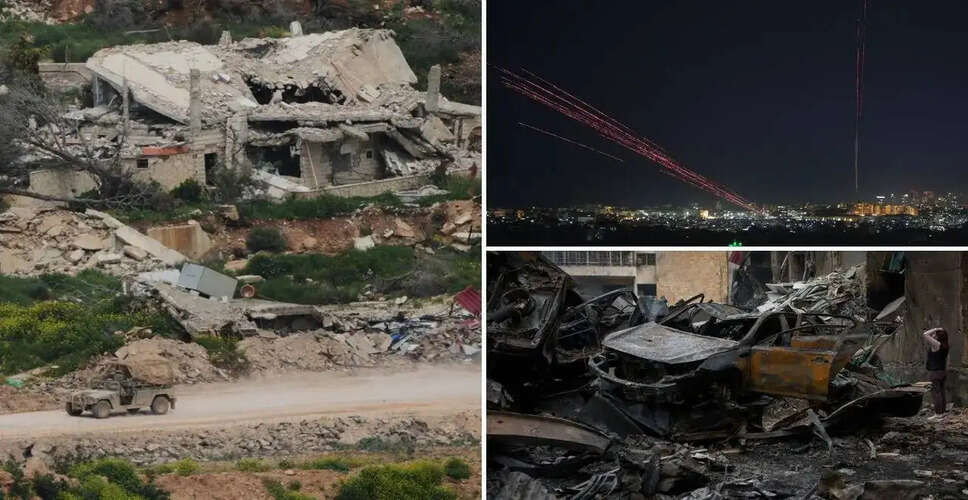
Israeli Prime Minister Benjamin Netanyahu stated that Israeli forces would maintain their positions in southern Lebanon during this pause. Hezbollah, on the other hand, mentioned it would adhere to the ceasefire only if Israel ceases its attacks, with a senior official asserting the group's right to retaliate. Despite the ceasefire declaration, tensions persisted in the region. Gunfire was reported in the southern suburbs of Beirut as the ceasefire took effect, according to journalists from AFP and footage from AFPTV. Reports indicated that shots and RPGs were fired shortly after midnight, continuing for over half an hour, with red bullet traces visible in the sky. Israeli military spokesperson Avichay Adraee also issued an urgent warning to residents of southern Lebanon, advising them to stay north of the Litani River despite the ceasefire's initiation.
2. Diplomacy Takes Center Stage
Trump indicated that the truce could facilitate renewed negotiations with Iran.
He mentioned that another round of discussions might occur as early as this weekend and suggested the possibility of hosting Israeli and Lebanese leaders at the White House within the next week or two, marking a rare high-level meeting between the two nations. The ceasefire followed a series of diplomatic efforts led by Secretary of State Marco Rubio, which included meetings with representatives from Israel and Lebanon and coordinated calls with President Joseph Aoun of Lebanon.
3. US Signals Readiness for Renewed Conflict
Despite diplomatic efforts, US officials reported that forces in the region are rearming.
They remain prepared to resume combat if negotiations with Iran do not succeed. A naval blockade imposed by Washington is still in effect, which Trump described as significant, asserting it has greatly limited Iran’s economic activities. The President also cautioned that fighting could quickly resume if no agreement is reached, even suggesting that a ceasefire with Iran, set to expire next week, might not require an extension.
4. The Red Lines
The details of the agreement highlight its temporary nature.
The US State Department stated that Israel retains the right to take necessary self-defense measures during the ceasefire. Lebanese officials have advised civilians against returning to southern regions due to ongoing risks. Meanwhile, Iran’s parliament speaker, Mohammad Bagher Ghalibaf, informed mediators that Lebanon must be included in any comprehensive ceasefire linked to US-Iran negotiations.
5. Stakes Remain High
Trump noted that Iran seems more willing to negotiate, claiming Tehran has agreed to terms it previously resisted.
He also mentioned the possibility of traveling to Pakistan to finalize a deal if negotiations are successful. Domestically, he downplayed concerns regarding rising energy prices, stating that gas prices are not excessively high and could drop below pre-war levels if an agreement is reached. Nevertheless, the situation remains precarious. The ceasefire between Israel and Hezbollah is viewed as a temporary solution, and its outcome may influence whether broader discussions between Washington and Tehran progress or if the region descends back into open conflict.