
Team India's Disappointing Exit from Women's T20 World Cup 2026: Key Factors Analyzed
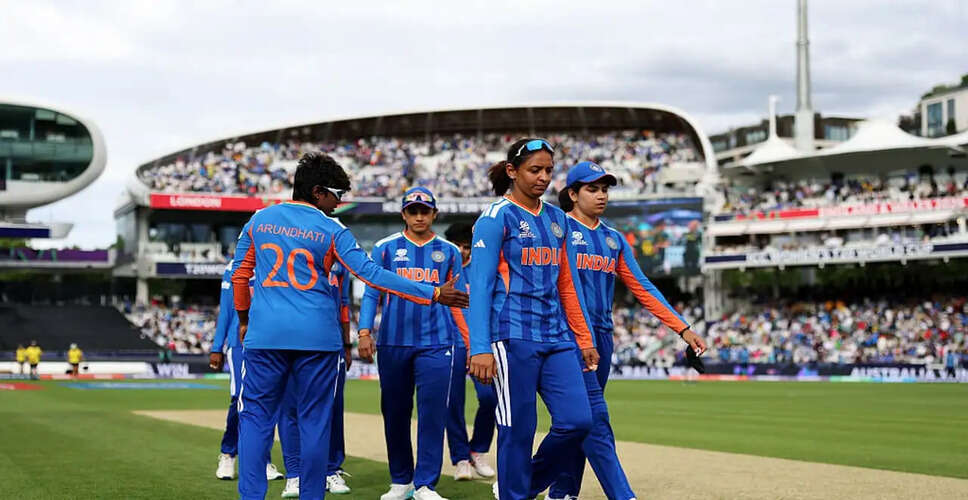

India's Journey in Women's T20 World Cup 2026
The Women's T20 World Cup 2026 concluded for Team India with a disappointing exit during the group stage, following a defeat against Australia. What began as a hopeful campaign quickly deteriorated due to a series of setbacks in crucial matches.
Final Group Stage Match Against Australia
India's aspirations for a semifinal spot were dashed after a six-wicket loss to Australia at Lord's in London on June 28. Earlier that day, South Africa's victory over Bangladesh meant India needed a significant win against the six-time champions to advance based on net run rate. However, Australia's successful chase of a 171-run target sealed India's fate.
Expectations vs. Reality
Entering the tournament as one of the favorites, Team India's group stage exit fell short of expectations, especially after their success in the Women's ODI World Cup last November.
Reasons for Group Stage Exit
Despite victories against Pakistan, Netherlands, and Bangladesh, India struggled against stronger teams like South Africa and England. In these matches, the team failed to defend competitive totals, revealing significant flaws in their strategy.
Fielding Issues
Fielding lapses were a major contributor to India's early exit. The team dropped 11 catches throughout the tournament, with a catching efficiency of just 71%, ranking among the lowest in the competition. Notably, crucial catches were missed against South Africa, which shifted the momentum in favor of their opponents.
Batting Order Challenges
India's batting heavily relied on top-order players like Smriti Mandhana and Shafali Verma. When early wickets fell, the middle order struggled to maintain momentum, leading to a decline in scoring rates. The middle-order batters, including Harmanpreet Kaur, Richa Ghosh, and Jemimah Rodrigues, failed to capitalize on strong starts.
Bowling Strategy Limitations
The team's over-reliance on spin bowlers and lack of express pace bowlers left them vulnerable on batting-friendly pitches. Out of 34 wickets taken in the group stage, 29 were by spinners, highlighting a lack of diversity in their bowling attack.
Inconsistencies in Batting
Individual brilliance often overshadowed the team's collective batting inconsistencies. In the match against Australia, despite strong performances from Harmanpreet Kaur and others, the lower-middle order's inability to finish strong ultimately led to their defeat.
Conclusion
Team India's performance in the Women's T20 World Cup 2026 serves as a reminder of the need for a more balanced and adaptable approach in both batting and bowling strategies to compete effectively at the highest level.