
Tawang's Salt Trek Celebrates Monpa Heritage and History
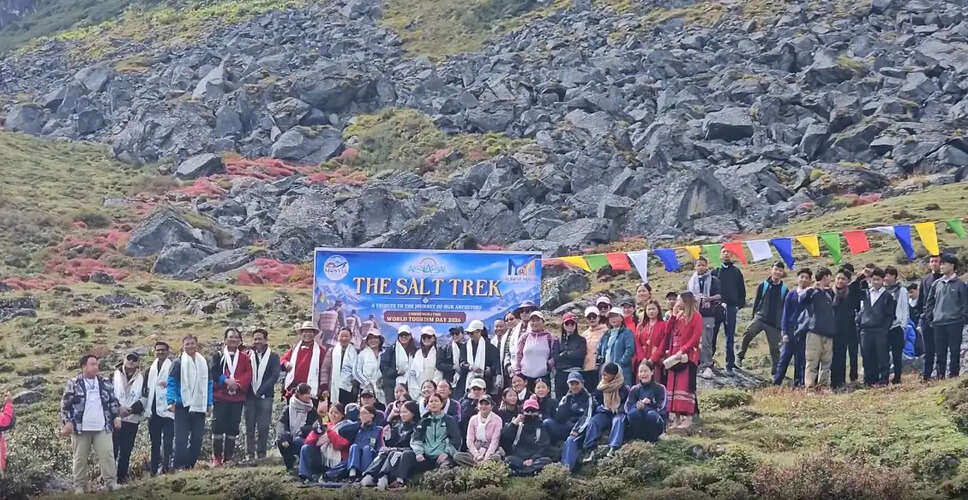

Tawang MLA Launches Heritage Trek
The trek started from the Griptsang Lake near Nagula and culminated at Chhu-shet Gyengo near the Klemta Lake.
Itanagar, Sept 21: On Sunday, Namgey Tsering, the MLA of Tawang, inaugurated the 'Salt Trek', a distinctive heritage initiative aimed at honoring the ancestors of the Monpa community who navigated challenging high-altitude paths and extreme weather to trade salt and vital goods with Tibet.
As per an official statement, more than 100 individuals, including members of the Army, students, young adults, and trekking aficionados, participated in the approximately 5.5-kilometer trek, which began at Griptsang Lake near Nagula and concluded at Chhu-shet Gyengo close to Klemta Lake.
This event was organized by the Monyul Heritage Tourism and Winter Sports Society in partnership with the Arunachal Pradesh Tourism Department and Monpa Media Mates, with support from the Indian Army as part of the forthcoming World Tourism Day festivities.
During the event, Tsering described the trek as a significant step towards reconnecting the younger generation with the rich history of Monyul. He reflected on the immense challenges faced by the traders of the past and encouraged the youth to safeguard the cultural heritage, traditions, and history of the region.
Having trekked the route himself a year prior, Tsering emphasized its potential to develop into a prominent destination for heritage and adventure tourism in the Tawang district.
Throughout the trek, local elders and knowledgeable individuals shared historical narratives about the trade route and nearby pilgrimage sites, highlighting the critical need to document oral histories and maintain the original names of places.
At the trek's conclusion, participants were honored with traditional khadas and were shown historical trade artifacts, including ancestral saddles, traditional matchboxes, silver coins, and authentic rock salt samples.