
Tamil Nadu's CM MK Stalin Shifts Election Campaign Focus to Delimitation Issues
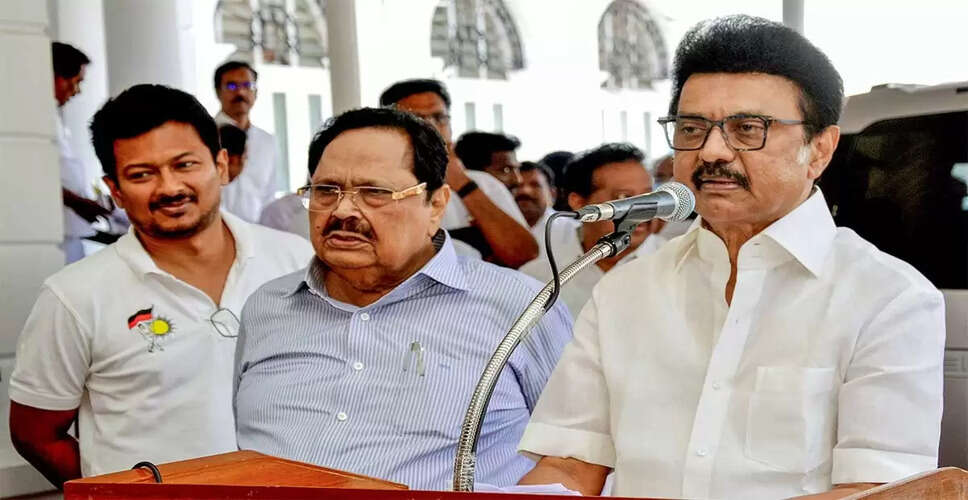

Change in Campaign Strategy
In Tamil Nadu, Chief Minister MK Stalin has altered the theme of the election campaign. Initially, the DMK's campaign revolved around issues such as regionalism versus nationalism, language, and development. However, these topics have now taken a backseat. The ruling DMK is now concentrating its efforts on the delimitation issue. Stalin has previously expressed strong opposition to delimitation, even protesting with a black flag against the proposal. The DMK is allied with the Congress party in Tamil Nadu, and Rahul Gandhi is also voicing opposition to delimitation.
The Delimitation Debate
The delimitation issue has recently come to the forefront, surprising many analysts during the special session of Parliament. The events in Parliament are expected to significantly influence the electoral narrative in Tamil Nadu, which is advantageous for the DMK. The party has adeptly positioned this issue as a major evidence of discrimination against the state.
Read More: Tamil Nadu Election Issues: Language War Resurfaces as CM Stalin and Dharmendra Pradhan Clash Over NEP
It is noteworthy that the bill introduced by the central government proposes to increase the number of Lok Sabha seats from 543 to 850. However, the bill does not guarantee any specific formula or ratio in writing. The central government has assured that there will be a uniform increase of 50% for the states, rather than based on population. Yet, such assurances are contentious as they undermine the principle of equal representation for all citizens.
The reasons behind this increase and the urgency surrounding it remain puzzling. The arguments are so complex that they may be difficult for the public to grasp amid the electoral noise. This issue is likely to foster emotional responses and propaganda rather than balanced debate, despite its potential to shape the democratic future of India.