
Tamil Nadu Government Cracks Down on Illegal Alcohol Revenue
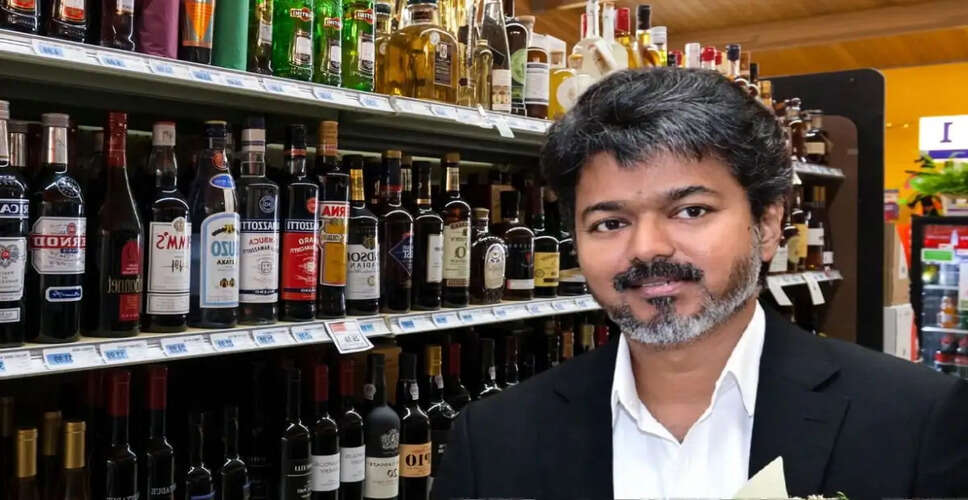

Major Decision by Chief Minister C. Joseph Vijay
Upon taking office, Tamil Nadu's Chief Minister C. Joseph Vijay made a significant decision. Following allegations from the BJP regarding a major liquor scam in the state last year, the initial investigation by the TVK government has revealed startling findings. It has come to light that a substantial portion of the revenue generated from alcohol sales was funneled into 'party funds,' estimated to be around ₹3,600 crores.
Strict Orders from the Chief Minister
Chief Minister Vijay has issued stern directives to officials to immediately dismantle the long-standing unofficial cash collection system associated with wholesale and retail alcohol sales. He emphasized that every rupee earned from alcohol sales must be transparently directed into the state treasury. The Tamil Nadu State Marketing Corporation, a government entity, holds a monopoly on alcohol sales in the state. To reform this system, IAS officer Pooja Kulkarni has been appointed as the new Excise Commissioner.
Cabinet Meeting Highlights
During a cabinet meeting on June 5, Chief Minister Vijay made it clear that the misappropriation of public funds would not be tolerated. Investigations revealed that illegal charges of ₹90 per case of liquor, ₹40 per beer carton, and ₹20 per wine carton were being collected, resulting in hundreds of crores in losses for the government annually.
End of Illegal Revenue Collection
Following the government order issued on June 5, this illegal revenue collection has been completely halted. The Chief Minister explained that approximately 8.8 million cases of alcohol were purchased annually in the state, with commissions lining the pockets of politically influential individuals. CM Vijay has dismantled this entire syndicate and warned that strict action would be taken against anyone found guilty of corruption. Excise Minister Vignesh also confirmed that the practice of overcharging for bottles has ceased.
Monthly Financial Irregularities Addressed
In Tamil Nadu, bottles are packaged into cases based on their sizes, such as 48 bottles of 180 ml, 24 bottles of 375 ml, and 12 bottles of 750 ml. Beer is also sold in cases of 12 bottles. Illegal collections were being made from warehouses, transport, and retail stores based on these cases. TASMAC outlets serve around 8.8 million customers monthly, leading to at least ₹102 crores in monthly fraud, which has now been completely stopped.
Closure of 717 Shops Near Religious and Educational Sites
Following CM Vijay's orders, a total of 717 liquor shops operating against regulations have been shut down across the state. This includes 276 shops near temples and churches, 186 near schools and colleges, and 255 near bus stands and transport hubs. According to statistics, the highest number of closures occurred in Madurai with 290 shops, followed by Coimbatore with 179, Tiruchi with 84, Chennai with 82, and Salem with 82.
Revenue Impact and Future Plans
The government acknowledges that closing these shops will result in an annual revenue loss of approximately ₹8,000 crores. However, Chief Minister Vijay has made it clear that no new shops will be opened, nor will alcohol prices be increased to compensate for this loss. TASMAC generates around ₹150 crores in daily sales, and the closed shops represent about 15% of total outlets.
New Regulations for Alcohol Purchase
In addition to closing shops, the TVK government has raised the legal drinking age to 21 to protect youth from substance abuse. Biometric and ID checks will now be mandatory at counters. Employees caught selling alcohol to underage individuals or charging above the set prices will be dismissed immediately. Public reactions to these significant reforms have been mixed. Excise Minister Vignesh also clarified that there are no plans for the privatization of alcohol sales. Currently, around 4,048 registered TASMAC shops remain operational in the state.