
Tamil Nadu Chief Minister Urges PM Modi to Halt Mekedatu Reservoir Project
In a significant move, Tamil Nadu's Chief Minister C. Joseph Vijay has reached out to Prime Minister Narendra Modi, urging him to take immediate action against the Mekedatu reservoir project on the Cauvery River. The Chief Minister argues that this initiative violates Supreme Court orders and the decisions of the Cauvery Water Disputes Tribunal, raising alarm among farmers dependent on the river for their livelihoods. He emphasizes the legal and environmental implications of the project, calling for a halt to its progress. This appeal highlights the ongoing tensions surrounding water rights in the region and the need for careful consideration of inter-state agreements.
| May 26, 2026, 18:23 IST
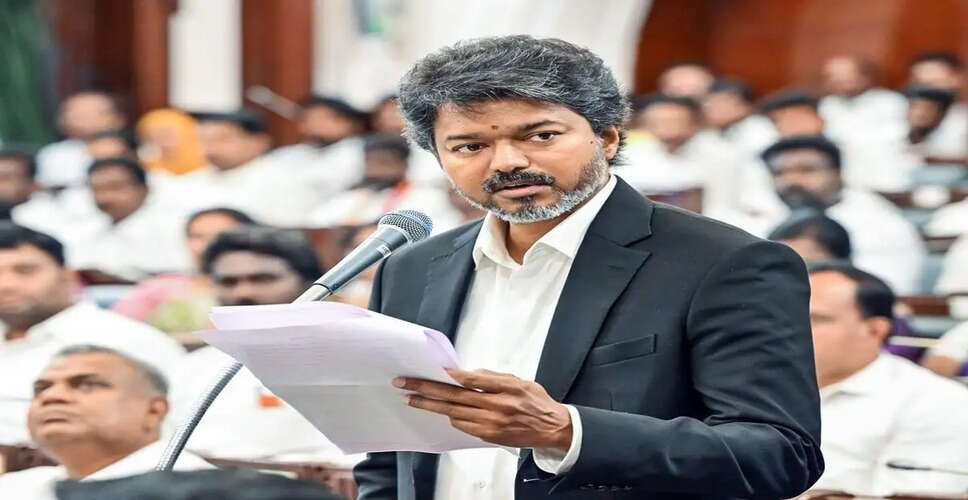

Chief Minister's Urgent Appeal
Tamil Nadu's Chief Minister, C. Joseph Vijay, made a formal request to Prime Minister Narendra Modi on Tuesday, urging him to intervene immediately to prevent the advancement of the proposed Mekedatu reservoir project on the Cauvery River. He accused the initiative of violating the Supreme Court's orders and the decisions made by the Cauvery Water Disputes Tribunal (CWDT). In a detailed letter addressed to the Prime Minister, the Chief Minister expressed serious concerns regarding Karnataka's announcement of land worship for the Mekedatu project. This development has sparked widespread anxiety among farmers in Tamil Nadu who rely on the Cauvery River for their agricultural needs and livelihoods.
Legal Concerns Raised
The Tamil Nadu government contended that the Mekedatu project was never approved under the final decision of the Cauvery Water Management Authority (CWMA), which was upheld by the Supreme Court in its landmark ruling on February 16, 2018. The letter emphasized that the Cauvery basin is already classified as a water-scarce area, with all available water allocated among the bordering states.
Historical Context of the Dispute
Vijay noted in his correspondence that the resolution of the Cauvery water dispute was achieved after nearly three decades of legal battles, and the ruling from February 16, 2018, is still pending implementation. The Mekedatu project is not included in the list of projects approved by the tribunal, as confirmed by the aforementioned ruling. There is no scope for additional usage or the creation of a new large storage reservoir, given that the Cauvery basin has been identified as water-deficient, with 50% of the available water already allocated to the respective states.
Impact on Water Flow
According to the Chief Minister, Karnataka's proposal to construct a massive reservoir with a storage capacity of 67.16 TMC near the Tamil Nadu border could disrupt the natural flow of water, which Tamil Nadu is entitled to under the tribunal's and Supreme Court's decisions. The letter further highlighted that the Supreme Court has explicitly ruled that upstream states should refrain from actions that could affect the designated water supply to downstream states. In this context, Tamil Nadu accused Karnataka of directly violating the court's ruling by proceeding with the reservoir construction.
Environmental Concerns and Government Criticism
The Chief Minister also pointed out that the Ministry of Environment, Forest and Climate Change (MoEF&CC) had previously denied terms of reference (ToR) for an environmental impact assessment due to unresolved inter-state disputes related to the project. Criticizing the Ministry of Water Resources and the Central Water Commission (CWC), the Tamil Nadu government questioned why Karnataka's proposal is still under consideration despite Tamil Nadu's strong objections. In light of this situation, he requested that the Prime Minister instruct the relevant officials to reject the Detailed Project Report (DPR) for the Mekedatu project, as it contradicts the final decision of the CWDT from February 5, 2007, and the Supreme Court's ruling. Additionally, he urged the Karnataka government to refrain from initiating any new projects without the consent of co-basin states and to fully comply with the Supreme Court's decision.