
Switzerland Denies US Military Overflight Requests Amid Ongoing Iran Conflict
Switzerland's Decision on US Military Flights
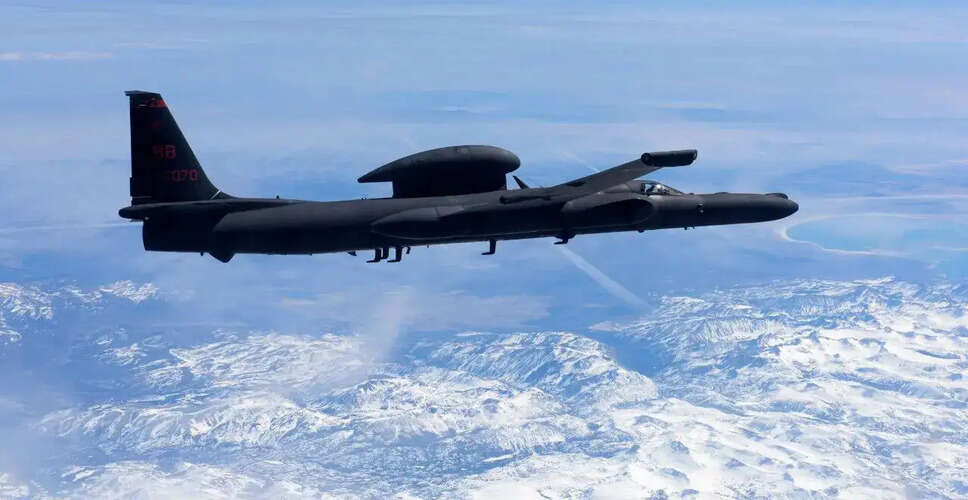
On Sunday, Switzerland announced its refusal of two requests from the US military for reconnaissance flights over its airspace, emphasizing its commitment to neutrality in international conflicts. The Swiss Federal Council confirmed that it had evaluated multiple overflight requests from US military and state aircraft, ultimately rejecting two that were directly associated with the ongoing conflict in Iran. However, it approved three other requests, including one for maintenance and two for transport aircraft.
SwissGov
2032890742520049804
The government statement clarified, "The Federal Council today decided on several overflight requests for US military aircraft. Two requests related to the war in Iran were rejected, while one maintenance flight and two overflight requests for transport aircraft were approved."
The Importance of Neutrality
Understanding Switzerland's Neutrality
Switzerland's stance on neutrality is not merely a principle; it is enshrined in law. The legislation mandates that the country refrains from involvement in conflicts between other nations, prohibits military alliances, and requires impartial treatment of all parties in a dispute. The Swiss government explicitly stated, "Since February 28, 2026, heavy fighting has been taking place in the Middle East. War is raging between the USA and Israel, as well as Iran. Neutrality law applies in relation to these states."
Reconnaissance flights, which involve gathering intelligence that could aid US military actions against Iran, are viewed as crossing a critical boundary, unlike transport flights, which is why Switzerland approved some requests while denying others.
Context of the Ongoing Conflict
Current Developments in the Iran Conflict
This announcement coincided with President Trump's call for other nations to deploy warships to the Strait of Hormuz, following Iran's threats of retaliation after US airstrikes on Kharg Island. Trump characterized Iran as "completely decimated" after these strikes. In response, Tehran vowed to retaliate and cautioned American businesses to exit the region.
The conflict, now in its third week, has resulted in over 2,000 fatalities, predominantly in Iran. It has also led to one of the most significant disruptions in oil supply in recent history, with prices soaring above $100 per barrel and the Strait of Hormuz largely closed to commercial shipping. Both parties have dismissed the possibility of peace talks and show no inclination towards negotiations.