
Supreme Court's Landmark Ruling on Uninsured Vehicles in India
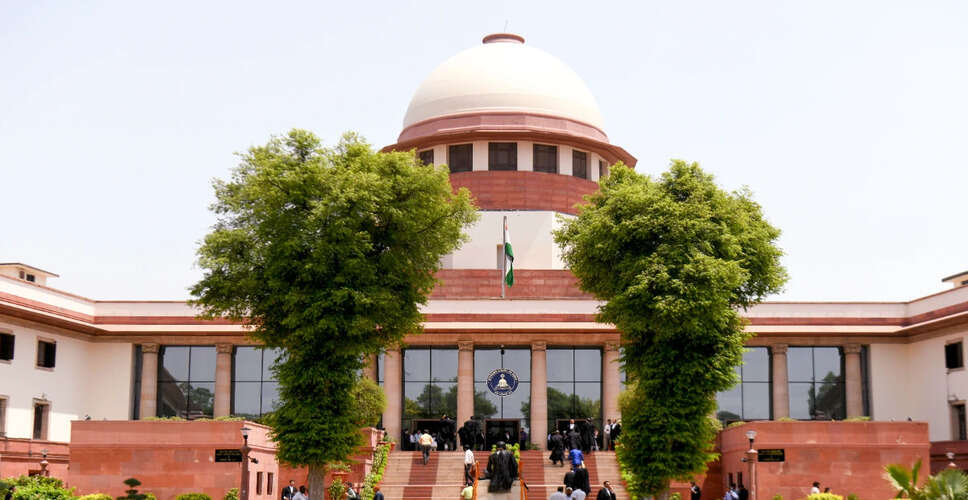

Supreme Court Takes Action Against Uninsured Vehicles
In a significant ruling aimed at curbing uninsured vehicles on Indian roads, the Supreme Court has mandated the central government to develop a pilot project. This initiative will ensure that vehicles lacking valid third-party insurance will be denied fuel at petrol stations. The bench, comprising Justices Sanjay Karol and Prashant Kumar Mishra, expressed concern over the rising number of road accidents and traffic congestion at toll plazas.
Implementation of Pilot Projects
On Tuesday, the Supreme Court emphasized the need to address road accidents in the country and instructed the government to implement test projects on select national highway corridors. These projects aim to replace traditional toll plazas with automatic vehicle detection systems and enhance compliance with mandatory motor vehicle insurance regulations.
Concerns Over Insurance Compliance
The bench highlighted the alarming rate of non-compliance with mandatory third-party insurance rules under the Motor Vehicle Act. According to a report from the Standing Committee on Finance for 2024-25, approximately 56% of vehicles on Indian roads are uninsured.
Linking Fuel Sales to Insurance Status
To improve adherence to insurance regulations, the court directed the Insurance Regulatory and Development Authority of India (IRDAI) to collaborate with the Ministry of Road Transport and Highways (MoRTH) to create a pilot project that links fuel sales to a vehicle's insurance status. Under this proposal, vehicles without valid insurance will be unable to purchase fuel until their insurance is renewed.
Details of the 'No Insurance, No Fuel' Initiative
The court noted that this system would assist in identifying uninsured and unregistered vehicles, encouraging owners to maintain valid insurance. The bench acknowledged that the Ministry of Petroleum and Natural Gas has no principled objections to this proposal and suggested using Automatic Number Plate Recognition (ANPR) cameras for implementation.
Extending Insurance Coverage Period
In light of road safety, the bench recommended extending the mandatory third-party insurance period to four years for new cars and six years for new two-wheelers. It urged the IRDAI to issue necessary directives promptly.
Statistics on Uninsured Vehicles
The court observed that out of 304.8 million registered vehicles in the country, 165.4 million lack insurance. It warned that the absence of insurance often hampers timely compensation for victims of road accidents, leading to prolonged legal battles.
Camera Implementation for Enforcement
To enforce regulations strictly, the court instructed the IRDAI and MoRTH to install ANPR cameras in select states. These cameras will be linked to the Insurance Information Bureau and VAHAN database to automatically identify uninsured vehicles and issue e-challans.
Enhancing Police Verification Systems
The bench noted the lack of a uniform system for police to verify insurance status during vehicle checks. It directed that state police be equipped with handheld devices or mobile apps connected to the Insurance Information Bureau and VAHAN portal for immediate compliance checks.
Diverse Policy Options for Vehicle Owners
Additionally, the court instructed the IRDAI to provide private vehicle owners with various policy options, including basic policies that meet minimum requirements under the Motor Vehicle Act, along with add-on covers, personal accident cover, and own damage cover.
Conclusion of the Ruling
These directives were issued during the hearing of a motor accident compensation case. The court observed that despite having a legal framework mandating third-party insurance, compliance remains inadequate, causing difficulties for accident victims and their families in obtaining compensation.