
Supreme Court's Landmark Ruling on Citizenship Matters
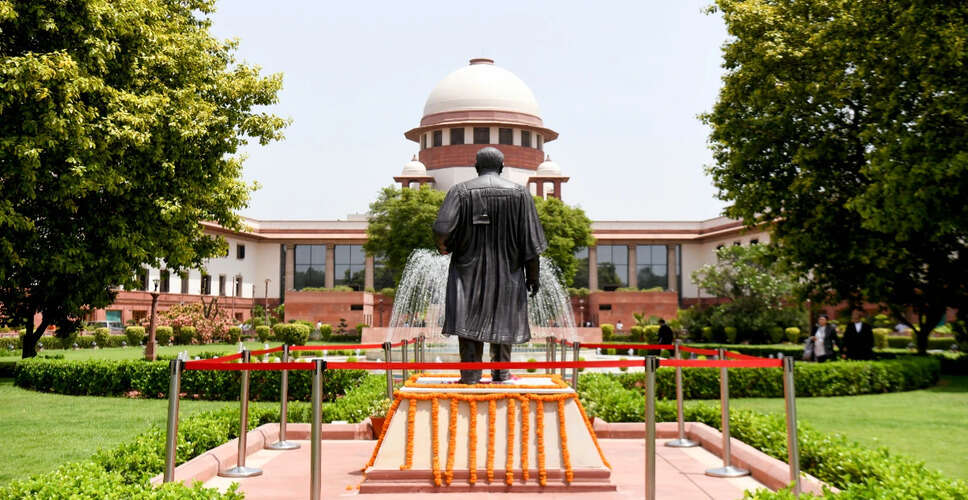

Significant Supreme Court Decision on Citizenship
On Monday, the Supreme Court delivered a crucial verdict regarding sensitive citizenship issues in the country. The court emphasized that decisions concerning an individual's citizenship or foreign status must be made solely through a "fair, legal, and just" process. This ruling effectively annulled the Guwahati High Court's decisions that had upheld the classification of 27 individuals from Assam as foreigners.
Reassessment of Appeals
A bench comprising Justices Vikram Nath and Sandeep Mehta approved 27 appeals and directed that these cases be sent back to the relevant Foreigners Tribunal for a fresh hearing. The court underscored that citizenship is a matter of significant constitutional and legal importance, necessitating strict adherence to principles of fairness during hearings.
Court's Stance on Fairness
According to reports, the bench stated, "The status of citizenship and being a foreigner holds substantial constitutional and legal significance. It is the state's legitimate interest to ensure that individuals who are not legally entitled to claim Indian citizenship do not exploit the process through false claims or delays." However, the court stressed that this objective should not override procedural safeguards.
Legal Responsibilities Under Foreigners Act
The court reiterated that the determination of such status must occur through a process that is fair, legal, and just, with the legal responsibilities under Section 9 of the Foreigners Act, 1946, remaining fully applicable.
Clarification on the Scope of the Ruling
The bench clarified that its order was limited to ensuring a new and legally sound determination of the cases and did not assess the merits of the citizenship claims made by the appellants. The court stated, "We have not evaluated the merits of the appellants' citizenship claims nor expressed any opinion on the authenticity, acceptability, relevance, or sufficiency of the documents presented by them. These matters must be decided independently by the relevant tribunal."
Implications of the Ruling
Furthermore, the Supreme Court made it clear that the directive to send the cases back should not be interpreted as providing any advantage or relief to those who fail to substantiate their citizenship claims before the tribunal. The bench emphasized, "The intent behind remanding the cases for a fresh hearing is not to benefit anyone who has not been able to prove their claim. The goal is to ensure that actions leading to serious consequences, such as being declared a foreigner, comply with the Foreigners Act, 1946, the Foreigners (Tribunal) Order, 1964, and constitutional principles of fairness."
Court's Instructions to the Tribunal
Following this order, the Supreme Court annulled the decisions of the Guwahati High Court and the opinions and orders of the relevant Foreigners Tribunal in these cases. The court instructed the tribunal to reconsider the cases and make independent decisions, unaffected by any comments made by the High Court or tribunal in previous proceedings.
Background of the Appeals
Among the 27 individuals were Sabitri Dey, Ajbahar Ali, Mohammad Akbar Ali, Abeda Khatun, and Anwara Khatun, who had appealed to the Supreme Court. They claimed they were declared foreigners due to minor technical issues, such as typographical errors or slight discrepancies in the spelling of their names on old voter lists.
Legal Challenges Against the Government
The appellants had challenged the orders declaring them foreigners during various proceedings related to citizenship against the central government, first in the Guwahati High Court and subsequently in the Supreme Court. These cases were linked to orders issued by different Foreigners Tribunals in Assam.