
Supreme Court's Bold Move: Judges to Inspect NEET's Security Measures Amid Paper Leak Concerns
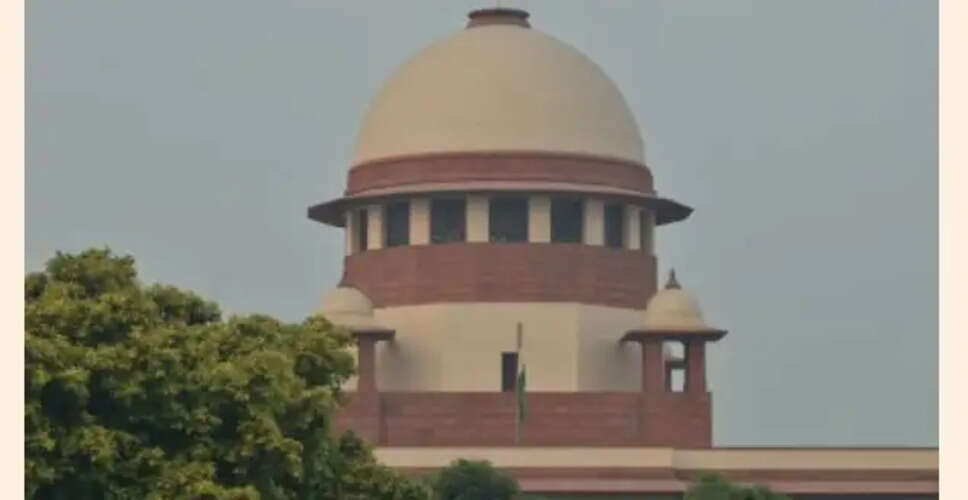

Supreme Court Takes Action on NEET Paper Leaks
New Delhi: The Supreme Court has emphasized the importance of enhancing the National Testing Agency's (NTA) infrastructure to prevent future leaks of the NEET exam papers. In an unusual move, the bench indicated that judges might personally visit the NTA to assess its upgraded facilities.
The NTA, responsible for conducting the NEET-UG for medical course admissions, has faced scrutiny due to repeated paper leaks. During a session with Justices PS Narasimha and Alok Aradhe, the agency claimed it has revamped its entire operational framework to ensure a secure examination process.
Justice Narasimha expressed a desire to inspect the NTA's new facilities, stating, "It's vital to strengthen the NTA's institutional framework to avoid future leaks. Temporary fixes won't be enough; a permanent solution is essential."
The judges stressed the need for a stable setup with dedicated staff to ensure the integrity of the examination process.
The Centre informed the court that a high-powered panel led by Nandan Nilekani has been formed to propose structural reforms for NEET and is expected to deliver its first interim report soon.
Solicitor General Tushar Mehta mentioned that all stakeholder suggestions have been reviewed by the panel, which has also consulted with a previous committee led by former ISRO chairman K Radhakrishnan.
The bench requested the joint secretary from the Department of Personnel and Training to submit an affidavit detailing the progress made so far.
The court highlighted the necessity for the government to focus on institutionalizing the NEET process.
The education department has assured that a new, improved system is in place, although it currently lacks complete human resources.
Justice Narasimha noted that while the Radhakrishnan committee had made recommendations for reforms, the challenge lies in their implementation.
Mehta reassured the bench that the government prioritizes these recommendations and will provide necessary support.
The court directed that the NTA's affidavit be made available on its website for public feedback and requested the Centre to appoint a nodal counsel for suggestions.
On August 19, the Supreme Court reiterated the need for institutional reforms within the NTA and requested updates on the implementation of the Radhakrishnan and Nilekani committee recommendations.
The apex court was reviewing multiple petitions, including one from advocate Tanvi Dubey representing the Federation of All India Medical Association (FAIMA).
In a previous affidavit, the Centre indicated that transitioning NEET from a pen-and-paper format to a computer-based system is under consideration.
The government has committed to a thorough overhaul of NEET to address paper leaks and systemic issues.
This affidavit was submitted in response to the Supreme Court's directive from May 29, which sought clarity on future NEET conduct and how regulatory bodies would maintain institutional memory for continuous improvement.
The Centre also noted that Parliament has strengthened legal measures against examination fraud through the Public Examinations (Prevention of Unfair Means) Amendment Act, 2026, building on previous legislation that criminalized various exam-related offenses.
The Radhakrishnan Committee was established by the Ministry of Education following the NEET-UG 2024 paper leak to recommend reforms in the examination process and enhance data security protocols.
In response to student protests in July, the Union government formed a high-powered task force led by Infosys co-founder Nilekani to propose structural changes in competitive examinations.
The NTA had to cancel the NEET-UG 2026 exam held on May 3 due to allegations of paper leaks, which are currently under investigation by the Central Bureau of Investigation.
A re-test was conducted on June 21, with results announced on July 16.
After the 2024 NEET-UG paper leak, the Supreme Court opted not to annul the exam but issued directives aimed at preventing future leaks and establishing criteria for canceling public examinations.