
Supreme Court Urges Quick Hearings for Voter List Appeals in West Bengal
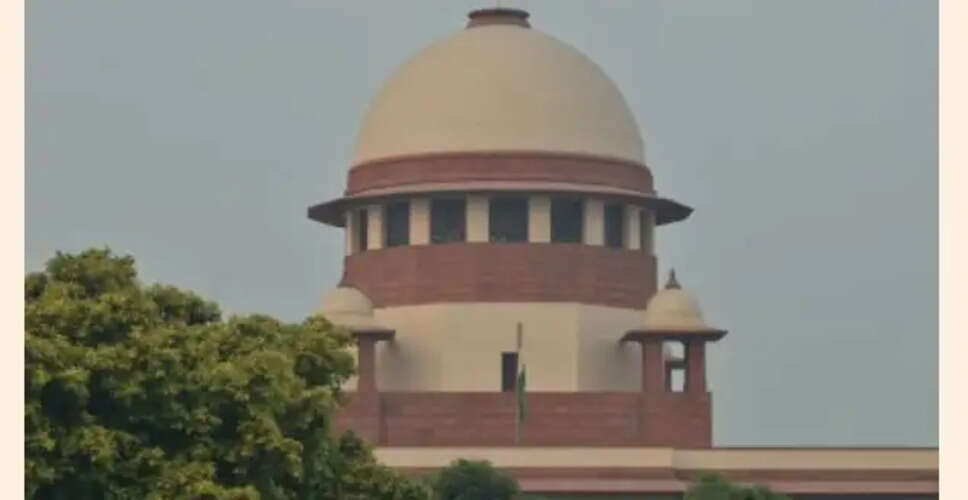

Supreme Court's Directive on Voter List Issues
New Delhi: On Friday, the Supreme Court instructed appellate tribunals to prioritize hearings for individuals who demonstrate a need for urgent consideration regarding their removal from voter lists following the special intensive revision of electoral rolls in West Bengal.
During the proceedings, Chief Justice Surya Kant expressed satisfaction with the impressive voter turnout observed in the initial phase of the West Bengal assembly elections held on Thursday.
The state recorded an extraordinary voter turnout of 92.72% across 152 constituencies during this first voting phase.
The Chief Justice remarked, "As an Indian citizen, I felt immense joy witnessing such a high voting percentage. When citizens exercise their voting rights, it fortifies our democratic framework."
The bench, which included Justices Joymalya Bagchi and Vipul M Pancholi, was reviewing several petitions, including one from Chief Minister Mamata Banerjee concerning the special intensive revision of electoral rolls.
Solicitor General Tushar Mehta also praised the high voter turnout and acknowledged the central forces' role in maintaining peace during elections in a state known for its history of electoral violence.
The Supreme Court directed individuals excluded from the voter lists to seek resolution through the 19 appellate tribunals appointed by the court regarding their concerns, including name deletions.
It emphasized that these tribunals should expedite hearings for those who present a case for urgent inclusion in the voter lists.
Regarding the matter of voter list exclusions or inclusions, the Chief Justice granted individuals the option to approach the Chief Justice of the Calcutta High Court for both administrative and judicial remedies.
The bench stated, "Most concerns have been thoroughly addressed in our April 13 ruling. However, we recognize that new issues may arise daily, necessitating the attention of the High Court Chief Justice or the Appellate Tribunal. Individuals are permitted to approach the Chief Justice for administrative resolutions of ongoing issues."
Previously, the Supreme Court had mandated that individuals whose appeals were accepted by the Appellate Tribunals before April 21 or 27 should be allowed to vote in the first or second phases of the elections, respectively.
However, it clarified that the mere existence of an appeal before the appellate tribunals does not grant anyone the right to vote.
Around 700 judicial officers from West Bengal, Odisha, and Jharkhand were assigned to manage approximately 60 lakh claims and objections from those removed from the voter lists during the electoral roll revision.
Following the Supreme Court's directive, the Chief Justice of the Calcutta High Court established 19 tribunals led by former High Court chief justices and judges to adjudicate appeals concerning the removal of names from the voter lists.
During the hearing, Justice Bagchi noted that the bench would later assess the more significant right to remain on the electoral rolls.
Senior advocate and TMC MP Kalyan Banerjee also commended the record voter turnout in the first phase of the assembly elections, stating that citizens came out in large numbers to vote, fearing removal from the electoral rolls if they did not participate this time.
He pointed out that only 139 claims or appeals from those deleted from the voter lists had been resolved by the appellate tribunals, leaving 27 lakh individuals awaiting hearings.