
Supreme Court Urges Immediate Action on Delhi's Air Quality Crisis
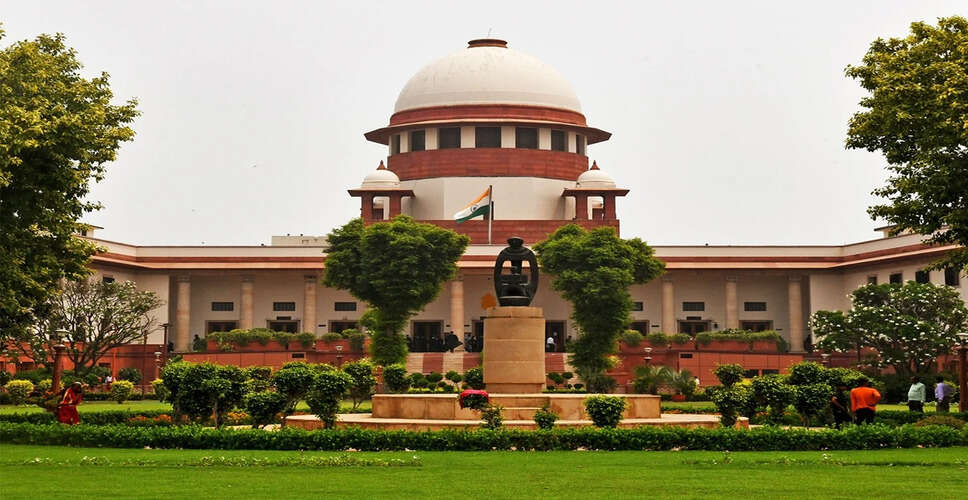
Supreme Court Addresses Air Quality Concerns in Delhi
The Supreme Court has expressed serious concerns regarding the deteriorating air quality in Delhi, directing the Air Quality Management Commission (AQMC) to promptly identify the primary causes behind the worsening Air Quality Index (AQI) before proposing solutions. During the hearing of multiple petitions related to air pollution in the national capital, the bench led by Chief Justice of India, Justice Surya Kant, emphasized that without a clear diagnosis, remedial measures would be ineffective. The court instructed the AQMC to compile a list of relevant experts and convene a meeting within two weeks to collectively determine the main contributors to air pollution in Delhi. The court stressed that it is the AQMC's responsibility to bring together experts from various fields for a comprehensive and data-driven assessment.
Court's Stance on Transparency and Accountability
The court stated that findings should be made public to ensure transparency and accountability. Clarifying its role, the bench noted that the Supreme Court will not position itself as the "ultimate expert" on air pollution but will ensure that decisions guided by experts are made in a timely and transparent manner. The Chief Justice remarked that the first step is to identify the causes, with solutions to follow. He cautioned against vague or generalized claims regarding pollution sources without precise information. Expressing strong disapproval of the AQMC's approach, the court indicated that the agency appears to show "no urgency" in identifying the causes of the declining AQI or in working on long-term solutions. The bench warned that significant delays in expert evaluation and action would only lead to more complications, especially as Delhi faces pollution crises year after year.
Long-term Solutions Required
The court directed the AQMC to also begin considering long-term solutions, focusing specifically on the factors contributing most to pollution. It emphasized that immediate or piecemeal actions would not suffice to address a recurring issue of this magnitude. Once the causes are identified and disclosed, public suggestions could also be invited, adding credibility to the process.